

Vijay Mallya and Kingfisher Airlines: Vijay Mallya’s name is etched in Indian business and political history as a flamboyant figure whose grand lifestyle, political connections, and the collapse of Kingfisher Airlines made headlines both nationally and internationally. In the late 2000s and early 2010s, Mallya’s airline faced bankruptcy, but it was his corrupt and irresponsible behavior that left everyone shocked. This article explores the rise and fall of Vijay Mallya and how his mismanagement led to the eventual collapse of Kingfisher Airlines.
(You can now subscribe to our Ponder Page WhatsApp channel)

Table of Contents
Political Journey and Controversies
Vijay Mallya’s journey to becoming a member of the Rajya Sabha (Upper House of Parliament) is quite intriguing. In June 2010, he became a Rajya Sabha MP with the support of the Bharatiya Janata Party (BJP) and Janata Dal. Despite being continuously re-elected as an MP, Mallya was nothing more than a nominal presence in Parliament. He did not actively participate in debates, rarely raised any questions, and his overall contribution to parliamentary work was minimal.
The few written questions he did submit, mainly related to Karnataka, were also suspected to have been drafted by his managers rather than him. As a Member of Parliament, Mallya had the privilege of raising important issues under ‘Special Mentions.’ However, he never used this tool during his tenure. He also failed to introduce any private member bills. Despite this inactivity, political parties consistently supported his candidacy, raising questions as to why he received such backing.
The Decline of Kingfisher Airlines
Soon after being re-elected as an MP, Mallya secured a loan of ₹1,600 crores from SBI for Kingfisher Airlines. This happened at a time when the airline was already in financial distress. Instead of stabilizing the company, Mallya went ahead and purchased a Boeing 777 airplane soon after receiving the loan.
Over time, Kingfisher Airlines accumulated over ₹7,000 crores in debt by taking loans from multiple banks. Some reports even suggest that the debt could have been as high as ₹9,000 crores. What was shocking, however, was that the banks issued these loans without demanding any significant security or collateral, a privilege not extended to ordinary citizens.
Kingfisher Airlines’ financial troubles worsened due to rising operational costs, particularly because of increasing oil prices. The global recession further affected its profitability. Slowly but steadily, the airline stopped paying its vendors, leading to major oil companies like HPCL and Bharat Petroleum cutting off fuel supplies due to unpaid bills. Indian Oil continued supplying fuel but demanded advance payments.
Airports and Vendors’ Frustration
It wasn’t just the oil companies that stopped supporting Kingfisher Airlines. Airports in Bangalore and Hyderabad also began demanding advance payment for landing fees, as the airline was notorious for landing its planes without paying the required charges.
Kingfisher’s financial misconduct also extended to its catering services and other suppliers. The airline began issuing checks that would bounce due to insufficient funds. As a result, vendors and suppliers took legal action against the airline. Hyderabad International Airport went as far as securing a conviction for Kingfisher’s CFO after a ₹50 lakh check bounced.
Employee Strikes and Financial Losses
The company’s downfall affected its employees the most. Kingfisher Airlines stopped paying salaries to its staff for several months, leading to strikes and widespread dissatisfaction. In 2009 alone, the airline incurred a loss of ₹400 crores. This wasn’t a one-off incident; Kingfisher had never turned a profit since its inception in 2005. Despite this, Mallya continued to secure loans and purchase new aircraft without scaling down his expenses.

Public Outrage
As Kingfisher’s financial situation deteriorated, Mallya’s extravagant lifestyle became the subject of public outrage. He would throw lavish birthday parties that lasted for days, featuring international celebrities like Spanish singer Enrique Iglesias and holding auditions for calendar models. These events cost millions, but they continued unabated, even as his airline spiraled into debt.
Mallya also continued to draw a salary of over ₹33 crores from Kingfisher Airlines, paying himself on time while withholding salaries from his employees. His lifestyle showed no signs of restraint, despite the company’s failing fortunes. Mallya was known for hosting themed parties and flying in private jets with expensive hybrid dogs worth millions.
The Shell Companies Scandal
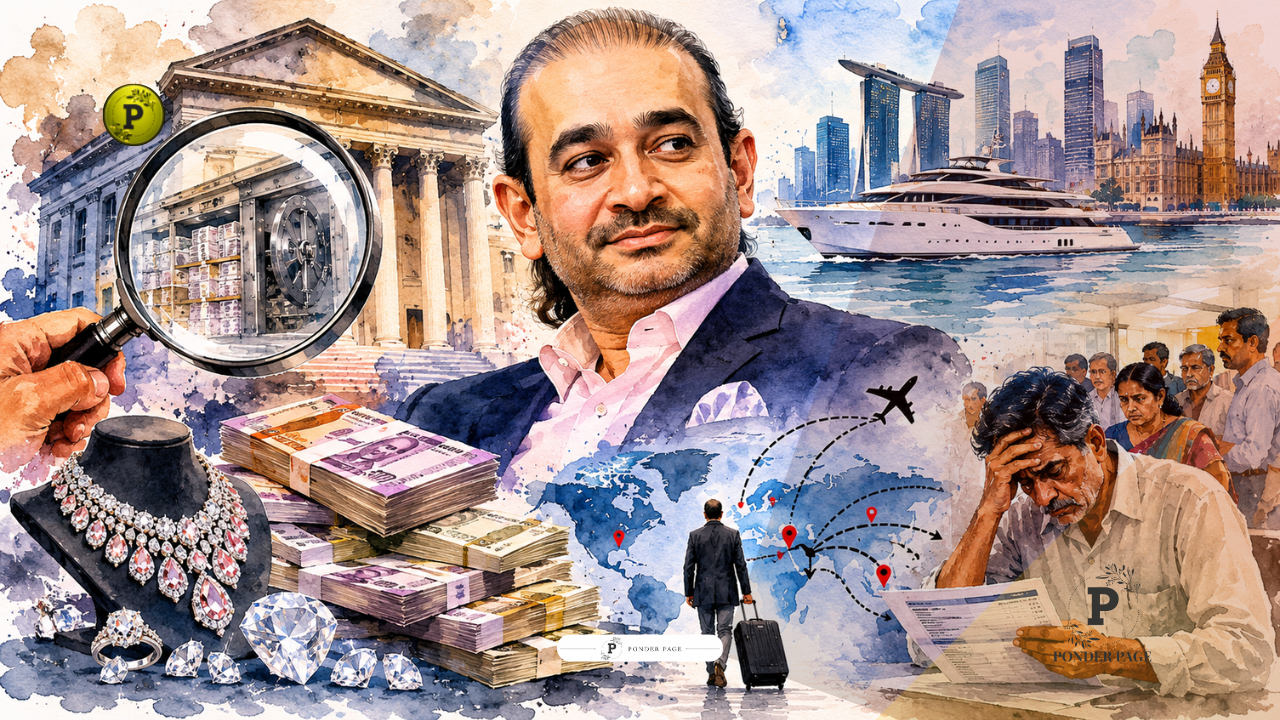
As Kingfisher’s downfall progressed, reports emerged that Mallya was funneling money out of India through shell companies. These shell companies were allegedly used to siphon off the loans he had taken from Indian banks, transferring the funds to foreign accounts and assets. This revelation fueled public anger even further.
At the same time, Mallya’s bounced checks, defaulted loans, and misuse of public funds made daily headlines. By the end of 2011, another bombshell dropped when a Union Minister revealed in Parliament that Kingfisher Airlines had not paid over ₹150 crores in taxes for two consecutive years. This tax evasion added to the mounting evidence of Mallya’s mismanagement.
Government Intervention and Declaring a Defaulter
By this time, banks had realized that Mallya’s business practices were unsustainable. Several banks declared Kingfisher Airlines as a ‘non-performing asset’ (NPA). Some banks even went a step further, labeling Mallya a “willful defaulter”—someone who deliberately refuses to repay loans despite having the means to do so. PP


Vijay Mallya and Kingfisher Airlines: Conclusion
Vijay Mallya’s story is not just one of corporate fraud, but also of a man who used his personal wealth, political influence, and social clout to evade responsibility for his failures. The collapse of Kingfisher Airlines left a deep scar on the Indian aviation industry and the country’s banking sector. While Mallya has since fled the country, efforts are still underway to bring him back to face justice in India.
His tale remains a cautionary example of how unchecked power, political favoritism, and financial mismanagement can bring down even the most promising of enterprises. Kingfisher Airlines may be gone, but the legacy of its rise and fall will continue to serve as a reminder of what happens when corporate accountability is sacrificed for personal gain.
What are your thoughts on this article? Let us know in the comments below.
If you enjoyed this article, be sure to subscribe for more engaging content in the future! Stay updated on the latest developments and discussions by clicking the subscribe button above. Thank you for your support!
📢 Dive into the latest discussions on social & trending topics! 🌍💬 Subscribe to Ponder Page for thought-provoking articles and interviews that dissect current issues. Don’t miss out on insightful content—hit that like & subscribe button now!


Leave a Reply