

The 2002 Godhra Train Burning and Gujarat Riots: The Gujarat riots of 2002 remain one of the most debated and tragic episodes in modern Indian history. The violence that engulfed the state led to significant loss of life, widespread destruction of property, and long-lasting social and political consequences. The events were triggered by the burning of a coach of the Sabarmati Express near Godhra on 27 February 2002, which resulted in the deaths of 59 passengers.
To understand the riots, it is important to examine the sequence of events that unfolded before and after the Godhra incident, as well as the major episodes of violence that followed across Gujarat.
(You can now subscribe to our Ponder Page WhatsApp channel)

Table of Contents
Background: The Ram Janmabhoomi Movement and Karsevaks
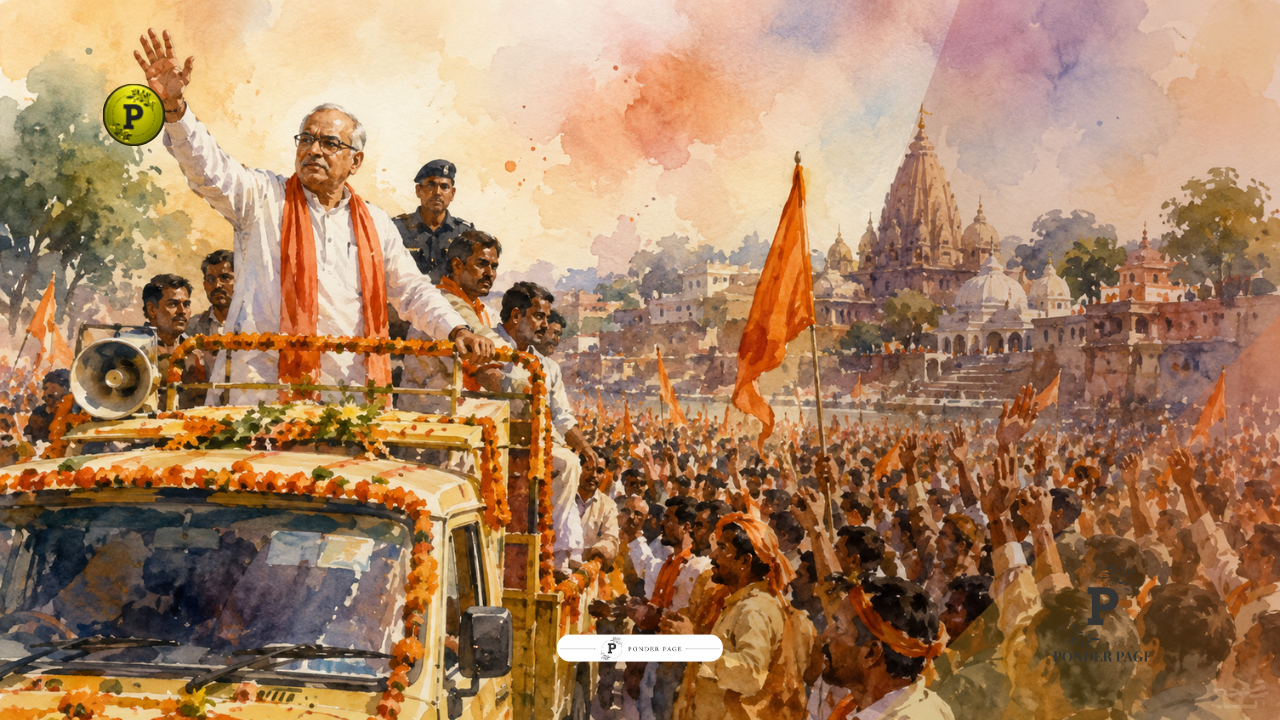
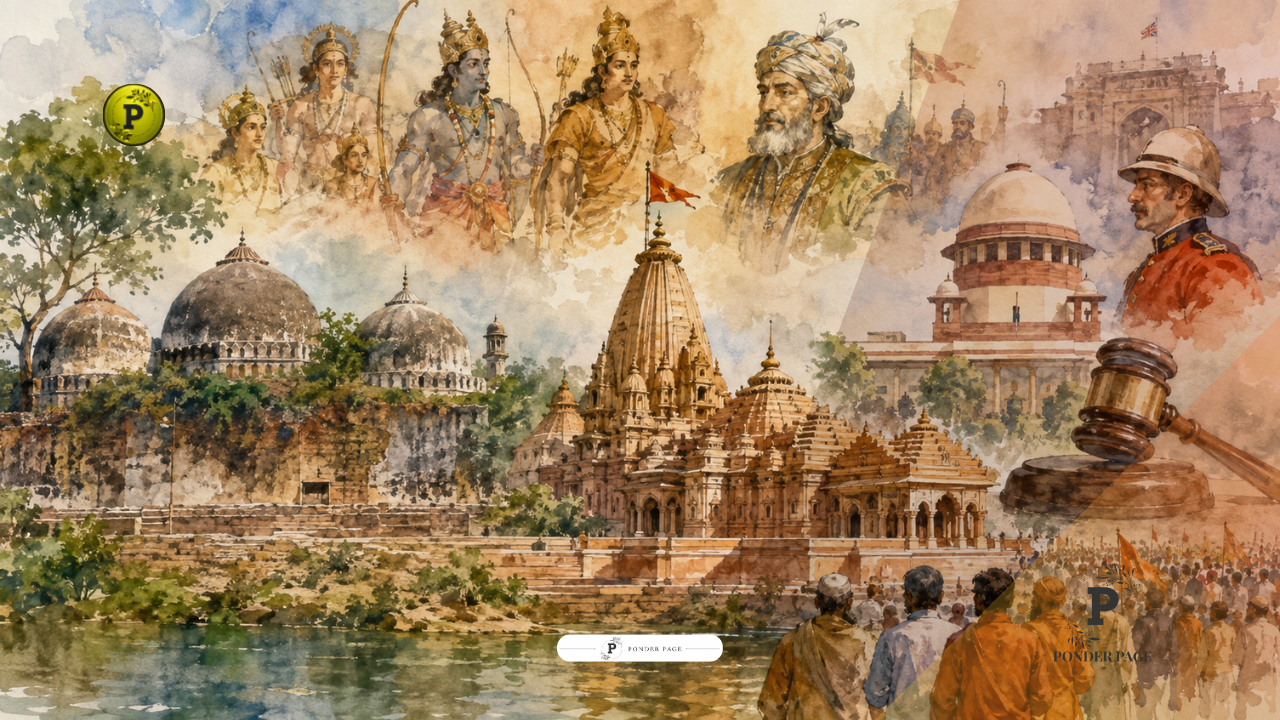
By 2002, nearly a decade had passed since the demolition of the Babri Masjid in Ayodhya in 1992. The dispute surrounding the Ram Janmabhoomi movement continued to influence religious and political organizations across India.
In February 2002, the Vishva Hindu Parishad (VHP) organized a 100-day Purnahuti Mahayajna in Ayodhya. Devotees and volunteers from different parts of the country participated in the event. Many of these participants were known as “Karsevaks,” a term used for volunteers who offered their services for religious causes. They were also commonly referred to as Ram devotees.
Among the participants were hundreds of Karsevaks from Gujarat. They travelled to Ayodhya by train to attend the religious gathering and were scheduled to return home after the conclusion of the event.
The Return Journey of the Sabarmati Express
The religious ceremony concluded on 25 February 2002, after which participants began returning to their respective states. The Gujarat contingent boarded the Sabarmati Express for their journey back to Ahmedabad.
The train, which had a capacity of approximately 1,100 passengers, was reportedly carrying nearly 2,000 people. Around 1,700 of them were said to be Karsevaks returning from Ayodhya.
Among the train’s coaches, S-5 and S-6 reportedly carried a large number of these passengers. These two coaches would later become the focal point of investigations and inquiries into the incident that followed.
The train was already running behind schedule. Instead of reaching Ahmedabad in the afternoon as planned, it arrived at Godhra during the morning hours of 27 February 2002.
The Godhra Train Burning
After stopping at Godhra railway station, some passengers reportedly got down to purchase food and other items. Shortly after the train departed from the station, emergency chains were pulled multiple times, forcing the train to halt.
Subsequent investigations confirmed that the chain-pulling had occurred. Testimony from railway personnel and mechanical examinations supported this finding.
According to official investigations, a large crowd gathered near the halted train. Reports stated that the focus of the attack was primarily on coaches S-5 and S-6. Stones were allegedly thrown at the coaches, and attempts were made to attack the compartments.
Passengers inside reportedly shut doors and windows in an effort to protect themselves. During the chaos, a fire broke out in coach S-6. By the time emergency services arrived, the blaze had already caused devastating damage.
A total of 59 people lost their lives in the incident, including men, women, and children. Many victims were trapped inside the burning coach and were unable to escape.
The Godhra train burning immediately became one of the most shocking incidents in independent India’s history.
The Arrival of the Victims’ Bodies in Ahmedabad
The burnt train eventually reached Ahmedabad carrying the bodies of those who had died in the fire. Initially, many people only knew that a fire had occurred on the train and were unaware of the full extent of the tragedy.
As information spread, the atmosphere in Ahmedabad became increasingly tense. The bodies were transported through parts of the city and later taken to the VHP office before being moved to hospitals for identification and other formalities.
Television coverage and public processions attracted large crowds. The sight of the victims deeply affected many residents, and emotions ran high.
Reports indicated that concerns were raised by law enforcement officials regarding the possibility of communal tensions escalating. As funeral arrangements proceeded, crowds gathered in various locations, and anger began to spread among several groups.
Escalation into Statewide Violence
Over the next few days, Gujarat witnessed widespread communal violence. What began as anger over the Godhra incident quickly transformed into large-scale riots affecting several cities and towns.
News channels at the time provided extensive live coverage. Critics later argued that unrestricted reporting sometimes contributed to the rapid spread of information and heightened tensions. Information about incidents occurring in one locality quickly reached other parts of the state, creating an atmosphere of fear and retaliation.
Major urban centers including Ahmedabad, Gandhinagar, Vadodara, Surat, and Godhra experienced significant violence.
The riots continued for several days and resulted in hundreds of deaths. According to official figures, approximately 790 Muslims and 254 Hindus were killed during the riots, in addition to the 59 victims of the Godhra train burning. Various unofficial estimates have suggested higher casualty figures.
The Gulberg Society Massacre
One of the most infamous incidents occurred at Gulberg Society in Chamanpura, Ahmedabad.
The residential complex was home to many middle-class and upper-middle-class Muslim families. Former Congress Member of Parliament Ehsan Jafri was among its residents.
On the morning of 28 February 2002, crowds began gathering around the society. Residents reportedly became alarmed and repeatedly contacted the police for assistance. Appeals were also made to senior officials and political leaders.
As the day progressed, the crowd entered the society. Houses were attacked and set on fire. The violence resulted in the deaths of Ehsan Jafri and many other residents.
In total, 69 people lost their lives during the attack. Numerous homes were destroyed, and large portions of the residential complex suffered severe damage.
Subsequent investigations led to prosecutions, and in 2016 several individuals were convicted and sentenced in connection with the massacre.
The Naroda Patiya Massacre
The same day witnessed another major episode of violence at Naroda Patiya, an area in Ahmedabad that became the site of one of the deadliest incidents of the riots.
A large mob gathered and violence continued for nearly ten hours. Houses were attacked and set ablaze. Reports described widespread destruction, killings, and assaults.
Official records state that 97 people were killed during the violence at Naroda Patiya.
The incident later became the subject of extensive investigations, trials, and public debate. One of the prominent figures associated with the case was Babu Bajrangi, who was eventually convicted and sentenced to life imprisonment.
A sting operation conducted years later attracted national attention when claims were made regarding the events of the massacre. However, several allegations made outside the courtroom could not be conclusively established during judicial proceedings.
Another prominent name linked to the case was Maya Kodnani. She was initially convicted and sentenced, but later legal proceedings resulted in her acquittal due to insufficient evidence.
The Best Bakery Case
On 1 March 2002, another tragic event occurred in Vadodara at a bakery known as Best Bakery.
Several individuals had taken shelter inside the building in an attempt to escape the violence raging outside. Among them were both Muslim and Hindu employees associated with the bakery.
During the attack, the building was set on fire. Fourteen people lost their lives after being trapped inside.
The Best Bakery case became one of the most widely discussed legal cases arising from the Gujarat riots. Despite multiple investigations and court proceedings over the years, the case remained controversial and highlighted concerns regarding witness protection, evidence, and the challenges of securing convictions in riot-related crimes.
Government Response and Political Debate
As criticism mounted over the handling of the riots, the Gujarat government maintained that it had taken all possible measures within its capacity to restore order.
Government officials argued that the scale of violence and the size of the crowds created extraordinary challenges for law enforcement agencies. Requests were reportedly made to neighboring states for additional police forces and assistance.
Opposition parties, human rights organizations, and various commentators questioned whether sufficient steps had been taken quickly enough to prevent the violence from spreading.
Over the years, multiple commissions, Special Investigation Teams (SITs), court proceedings, and independent inquiries examined different aspects of the riots. Their findings often became subjects of political and legal debate.


The 2002 Godhra Train Burning and Gujarat Riots: Legacy of the 2002 Riots
The events of 2002 left a deep mark on Gujarat and on India’s social and political landscape. Thousands of families were displaced, communities were divided, and survivors carried the trauma of the violence for years.
The Godhra train burning and the riots that followed continue to be studied, debated, and discussed by historians, legal experts, journalists, and political analysts. Numerous investigations, court judgments, and academic studies have attempted to understand what happened, who was responsible, and how similar tragedies can be prevented in the future.
More than two decades later, the events remain a reminder of how quickly communal tensions can escalate into large-scale violence and how essential effective law enforcement, responsible leadership, and social harmony are during times of crisis.
What are your thoughts on this article? Let us know in the comments below. If you enjoyed this article, be sure to subscribe for more engaging content in the future! Stay updated on the latest developments and discussions by clicking the subscribe button above. Thank you for your support!
📢 Dive into the latest discussions on social & trending topics! 🌍💬 Subscribe to Ponder Page for thought-provoking articles and interviews that dissect current issues. Don’t miss out on insightful content—hit that like & subscribe button now!



Leave a Reply