
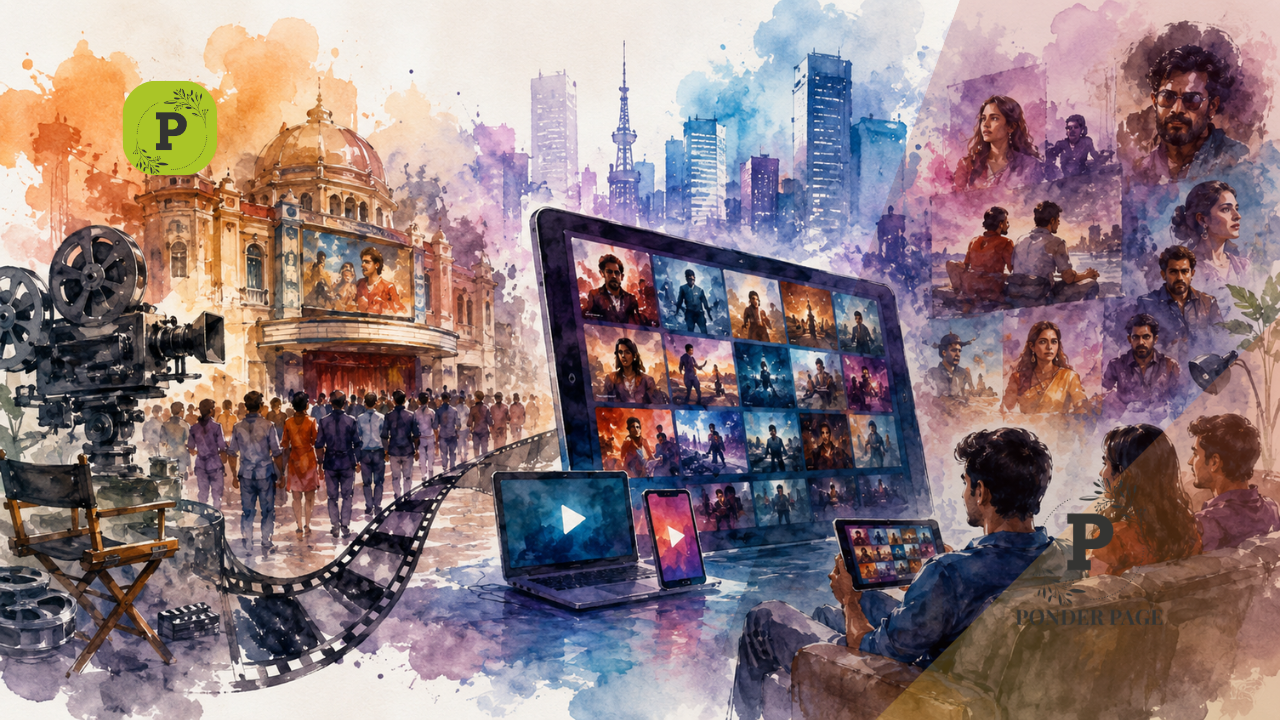
How OTT Platforms Are Transforming Bollywood and Changing Entertainment Forever: Over the past decade, the entertainment industry has witnessed a dramatic transformation. The rapid rise of Over-The-Top (OTT) platforms has significantly altered the way audiences consume content, challenging the traditional dominance of Bollywood and theatrical cinema. What once revolved around cinema halls, television broadcasts, and fixed schedules has now shifted toward personalized, on-demand entertainment experiences accessible anytime and anywhere.
The growing popularity of streaming platforms has reshaped audience behavior, production strategies, storytelling formats, and distribution models. Bollywood, which long relied on theatrical releases and box office collections as the primary measure of success, has had to adapt to an industry increasingly driven by digital accessibility and viewer convenience.
The emergence of OTT platforms has not only opened new opportunities for filmmakers and producers but has also democratized content creation, allowing diverse voices and unconventional narratives to reach audiences worldwide. This transformation marks one of the most significant shifts in the history of Indian entertainment.
(You can now subscribe to our Ponder Page WhatsApp channel)

Table of Contents
The Evolution of Television and Digital Entertainment in India
To understand the rise of OTT platforms and their influence on Bollywood, it is essential to examine the evolution of television and digital media in India.
The year 1982 marked a historic milestone in Indian broadcasting with the introduction of satellite color television. This development revolutionized the viewing experience for Indian audiences and laid the foundation for technological advancements in the entertainment sector. Television became more visually engaging, gradually transforming into a central medium of information and entertainment for households across the country.
As technology progressed, the television industry underwent further transformation. In the early 2000s, Direct-to-Home (DTH) television emerged as a groundbreaking innovation. DTH services enabled viewers to access a wider range of channels with improved picture and sound quality. More importantly, it provided audiences with greater control over their viewing preferences, significantly changing content consumption patterns.
At the same time, the rise of Web 2.0 reshaped the digital landscape globally. The internet evolved from a static information platform into an interactive ecosystem driven by user participation and engagement. Social media platforms became increasingly influential, encouraging content sharing, communication, and community building across borders.
This convergence of technological advancement, internet accessibility, and changing audience preferences created the perfect environment for OTT platforms to flourish. Streaming services leveraged internet technology to deliver content directly to viewers, eliminating the need for traditional broadcasting infrastructure. As a result, entertainment consumption became more flexible, personalized, and accessible than ever before.

The Rise of OTT Platforms and the Streaming Revolution
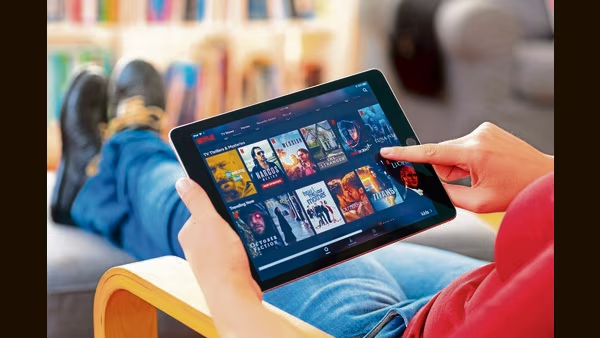
OTT platforms fundamentally changed the entertainment ecosystem by offering viewers instant access to vast libraries of content through internet-enabled devices. Unlike traditional television or cinema, streaming services allowed audiences to watch content according to their own schedules rather than adhering to fixed programming times.
One of the earliest pioneers of this revolution was Netflix. Founded in 1997 as a DVD rental service, Netflix initially operated by delivering DVDs to subscribers through mail services. However, the company’s decision to adopt the streaming model transformed the entertainment industry worldwide.
In 2009, Netflix strategically expanded its reach by partnering with Smart TVs and gaming consoles, making streaming directly accessible through connected devices. This innovation marked a major departure from physical rental systems and accelerated the shift toward digital entertainment consumption.
The streaming giant further disrupted the industry in 2013 by entering the realm of original content production. Series such as House of Cards and Orange Is the New Black demonstrated that streaming platforms could produce high-quality, globally successful content independent of traditional television networks and studios.
This transition reshaped the entertainment landscape. Streaming services were no longer merely distributors of content; they became powerful creators and producers capable of competing with established film studios and television channels.
Another major innovation introduced by Netflix was the binge-watching model, where entire seasons of shows were released simultaneously. This transformed audience viewing behavior and redefined engagement patterns. Viewers could now consume multiple episodes or entire series in a single sitting, fundamentally changing how stories were experienced.
Different Business Models of OTT Platforms
As OTT platforms evolved, they adopted various monetization models to cater to different audience preferences and consumption habits. These business models have played a crucial role in expanding the accessibility and profitability of digital entertainment.
The Advertising Video On Demand (AVOD) model allows viewers to access content free of charge while generating revenue through advertisements displayed before, during, or after the content. This model appeals to audiences who prefer free access to entertainment despite occasional interruptions from advertisements.
Subscription Video On Demand (SVOD) is another widely adopted model in which users pay a recurring subscription fee to access a platform’s entire content library without advertisements. This model prioritizes convenience, uninterrupted viewing, and personalized content recommendations.
Transactional Video On Demand (TVOD) follows a pay-per-view approach, allowing users to rent or purchase specific content individually rather than subscribing to an entire platform. This model caters to viewers who prefer one-time payments for selected movies or shows.
Many modern streaming services also employ hybrid models that combine elements of AVOD, SVOD, and TVOD. These platforms may offer free ad-supported content alongside premium subscription plans and individual rental options, thereby accommodating a broader audience base with varying preferences and budgets.
The adoption of these diverse business strategies reflects the OTT industry’s adaptability and commitment to meeting the changing demands of contemporary viewers.
The Transformation of Bollywood in the OTT Era
The rise of OTT platforms has significantly impacted Bollywood’s traditional structure. Producers, filmmakers, and distributors now operate in an environment where theatrical releases coexist with digital premieres and streaming exclusives.
Traditionally, Bollywood relied heavily on cinema halls and box office collections as the primary indicators of commercial success. However, OTT platforms introduced a new distribution model capable of reaching audiences directly across geographical boundaries. This shift challenged long-standing industry norms and compelled filmmakers to rethink production strategies, storytelling formats, and marketing approaches.
One of the most notable transformations has been in storytelling. OTT platforms have encouraged filmmakers to experiment with unconventional narratives, character-driven plots, and socially relevant themes that may not have found space in mainstream commercial cinema.
The episodic structure of streaming content has further expanded creative possibilities. Unlike films constrained by limited runtime, web series and long-form digital narratives allow deeper character development and more intricate storytelling.
Genres previously considered niche or commercially risky in Bollywood have also gained prominence through OTT platforms. Crime thrillers, psychological dramas, documentaries, dark comedies, and regional storytelling have found substantial audiences online. This shift has broadened the scope of Indian entertainment and diversified viewer experiences.
Democratization of Filmmaking and Independent Content
OTT platforms have also democratized the filmmaking process by reducing dependence on traditional theatrical distribution networks. Independent filmmakers and smaller production houses now have the opportunity to showcase their work to global audiences without requiring large-scale cinema releases.
This accessibility has contributed to a more inclusive entertainment landscape where diverse voices, regional stories, and unconventional perspectives can thrive. Content creators are no longer restricted by rigid commercial formulas or the limitations of mainstream cinema.
The creative freedom offered by digital platforms has encouraged filmmakers to explore complex social issues, experimental narratives, and culturally nuanced stories. As a result, audiences are exposed to a richer variety of content reflecting different experiences, identities, and viewpoints.
Additionally, OTT platforms provide creators with greater flexibility regarding storytelling style, pacing, and thematic depth. Long-form storytelling enables more immersive narratives and allows creators to develop intricate plots that resonate deeply with viewers.
The Indian OTT Boom and the Role of Internet Accessibility
India’s OTT landscape underwent a major transformation after 2013 with the launch of several streaming platforms catering specifically to Indian audiences. Services such as Sony LIV and Ditto TV expanded digital entertainment options across the country.
The arrival of Netflix in India in 2016 significantly elevated industry standards in terms of content quality, production value, and global accessibility. However, the most transformative moment for India’s OTT ecosystem came with the launch of Reliance Jio.
Reliance Jio revolutionized internet accessibility by drastically reducing mobile data costs and expanding high-speed internet availability across India. Affordable internet access removed major barriers to digital streaming and enabled millions of users to consume OTT content regularly.
This data revolution played a critical role in the rapid growth of India’s OTT audience. Streaming services became accessible not only to urban viewers but also to audiences in smaller cities and rural regions. Consequently, OTT platforms experienced exponential growth in subscriptions, engagement, and content consumption.
The increased accessibility also intensified competition among streaming services, leading to greater investment in regional content, multilingual storytelling, and original productions tailored to Indian audiences.
OTT Platforms and Creative Freedom
One of the most significant contributions of OTT platforms has been the creative freedom they provide to filmmakers and storytellers. Digital platforms offer creators the opportunity to experiment without many of the commercial and structural constraints traditionally associated with mainstream cinema.
The absence of rigid gatekeeping mechanisms allows creators to address bold themes, controversial subjects, and socially relevant issues more openly. Many OTT productions have explored topics related to politics, mental health, social inequality, gender dynamics, and cultural identity with greater authenticity and depth.
OTT platforms have also enabled more inclusive representation within entertainment. Diverse cultures, regional narratives, and underrepresented communities now have greater visibility on streaming platforms. This inclusivity enhances both the quality and relatability of content for audiences worldwide.
Furthermore, the global reach of OTT services enables Indian creators to connect with international audiences, fostering cultural exchange and expanding the global influence of Indian storytelling.
Changing Audience Behavior and Viewing Habits
The rise of OTT platforms has fundamentally changed audience expectations and viewing habits. Modern viewers prioritize convenience, flexibility, and personalized experiences over fixed broadcasting schedules or theatrical exclusivity.
Streaming platforms allow audiences to watch content whenever and wherever they choose. This convenience has become particularly important in today’s fast-paced lifestyle, where viewers seek entertainment options that fit into their individual routines.
Another significant shift is the increasing demand for diverse content. OTT platforms provide access to movies, series, documentaries, and international productions across multiple genres and languages. Viewers are no longer limited to mainstream commercial entertainment and can explore content that aligns with their personal interests and cultural preferences.
Personalized recommendation systems further enhance the viewing experience by suggesting content based on user behavior and preferences. These algorithms help audiences discover new shows and films tailored to their tastes, increasing engagement and satisfaction.
Additionally, OTT platforms have blurred geographical boundaries by making international content accessible to global audiences. Indian viewers can now easily explore Korean dramas, Spanish thrillers, American series, and regional Indian cinema from various states, contributing to a more interconnected global entertainment culture.
The Future of Bollywood and OTT Platforms
The relationship between Bollywood and OTT platforms continues to evolve as both industries adapt to changing technologies and audience expectations. Rather than replacing traditional cinema entirely, OTT platforms have expanded the entertainment ecosystem by offering alternative avenues for storytelling, distribution, and audience engagement.
The future of the industry is likely to involve a hybrid model where theatrical releases and digital platforms coexist strategically. Certain films will continue to thrive in cinema halls due to their large-scale visual appeal and communal viewing experience, while others may find greater success through direct digital releases.
Producers and filmmakers now face the challenge of balancing theatrical spectacle with the accessibility and global reach of OTT platforms. Strategic decisions regarding release timing, platform selection, and marketing approaches have become increasingly important in maximizing both audience reach and commercial success.
As technology continues to advance and internet penetration expands further, OTT platforms will remain a powerful force shaping the future of entertainment. Their influence on storytelling, production, and audience engagement is expected to grow even stronger in the years ahead.


How OTT Platforms Are Transforming Bollywood: The Evolution of Entertainment Consumption
The rise of OTT platforms has ushered in a transformative era for Bollywood and the global entertainment industry. What began as an alternative mode of content delivery has evolved into a dominant force reshaping storytelling, distribution, and audience behavior.
OTT platforms have democratized filmmaking, expanded creative freedom, diversified content offerings, and provided audiences with unprecedented convenience and choice. Simultaneously, they have challenged traditional cinema models, compelling Bollywood to innovate and adapt to a rapidly changing media landscape.
This evolution reflects a broader shift in how entertainment is created, consumed, and experienced in the digital age. As Bollywood and OTT platforms continue to coexist and evolve together, the future of entertainment promises greater accessibility, inclusivity, and creative possibilities for creators and audiences alike.
What are your thoughts on this article? Let us know in the comments below. If you enjoyed this article, be sure to subscribe for more engaging content in the future! Stay updated on the latest developments and discussions by clicking the subscribe button above. Thank you for your support!
📢 Dive into the latest discussions on social & trending topics! 🌍💬 Subscribe to Ponder Page for thought-provoking articles and interviews that dissect current issues. Don’t miss out on insightful content—hit that like & subscribe button now!


Leave a Reply