
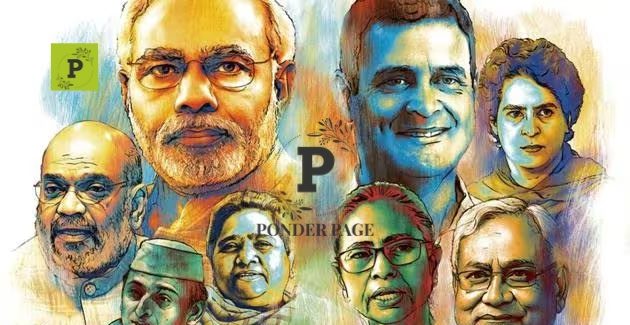
Will Modi win 400 seats in India’s election? The BJP unleashed what could be termed as the election’s grandest maneuver. They’ve woven a narrative that stretches beyond the imagination, aiming for a colossal victory count of 400 seats.
Their strategy is twofold: Firstly, they meticulously align facts, achievements, and pledges to bolster their case for surpassing the 400 mark. Secondly, they deflate opposition morale by asserting the inevitability of Modi’s triumph, questioning the rationale of resistance. Should the BJP and its allies breach the 370-400 threshold, the repercussions for the Congress would be seismic, plummeting from 50 seats to a mere 25. But is this ambitious 400-seat target merely lip service? A mere slogan, a fabricated narrative, or a political toolkit? No, it’s more than that. The BJP’s aspiration is genuine, albeit daunting. It’s a formidable task, yet not insurmountable.
Table of Contents
Congress Conundrum: Internal Demoralization and BJP’s Strategic Electoral Maneuvers
Congress and its leaders are grappling with a profound sense of demoralization, stemming from years of neglect towards their grassroots cadre. This neglect has led the party to its lowest point in history. In direct confrontations with the BJP, Congress consistently finds itself on the losing end, a trend that the BJP hopes to exploit further in the upcoming 2024 elections. Opposition parties are facing internal turmoil and external pressure, with the BJP actively seeking to exploit these vulnerabilities. A dedicated committee within the BJP is focused on wooing MPs from rival parties, regardless of their ethical standing, in a bid to weaken the opposition.
Under Mission 370, the BJP identified and targeted 144 initially weak seats for strategic attention. This number has since been revised to 160 seats, crucial for the BJP’s ambition of crossing the 400-seat mark. However, achieving this goal relies heavily on the support of the NDA alliance partners, comprising nearly 40 parties. These partners will contest on 100 seats, the outcome of which will significantly influence the BJP’s electoral success.
Beyond Paper Politics: Unpredictability in India’s Electoral Landscape
It appears that BJP might secure victory on paper, but politics’ outcome isn’t dictated by paper strength alone. The last-minute decisions can change everything, as a significant portion of voters remain undecided until the eleventh hour before casting their votes. This uncertainty makes all the meticulously conducted opinion polls prone to error.
The recent actions, such as the freezing of Congress accounts by the IT department and the extension of Kejriwal’s custody by the ED, hint at a lack of absolute confidence within the BJP camp. If they were assured of their victory, such measures wouldn’t be necessary. Moreover, the inclusion of allegedly corrupt leaders into their fold raises questions about their strategy and priorities.
To truly gauge the political landscape, we must delve into the intricate dynamics between parties across the country. What motivates them? And if BJP aims to surpass the 400-seat mark, where will the additional 100 seats come from? Similarly, where does the NDA anticipate gaining the 50 seats needed for their aspirations? These are the questions that will define the upcoming electoral scenario beyond mere paper predictions.
BJP’s Pursuit of 400 Seat
The Lok Sabha comprises 543 seats, with a majority mark set at 272. In the 2019 elections, BJP secured a significant victory by winning 303 seats alone. When combined with NDA allies, they reached a formidable tally of 353 seats, making the target of 400 seats not merely a distant dream but a realistic possibility.
The 2019 elections witnessed BJP’s remarkable performance in Gujarat and the Hindi heartland, along with substantial gains in Karnataka, the North East, Bengal, and Odisha. The electoral landscape was shaped by factors like the Pulwama attack and the subsequent Balakot airstrikes, creating a wave of Modi-led nationalism. Additionally, the opposition’s fragmentation further bolstered BJP’s dominance.
However, the scenario for the upcoming elections presents some differences. There’s now a concerted effort by the opposition, with the formation of the India Block alliance, although its effectiveness remains to be seen. Moreover, with a decade of Modi’s rule, there’s the challenge of double anti-incumbency, which BJP is well aware of.
Acknowledging the likelihood of discontent among certain segments of the population and potential losses in some seats, BJP strategizes to counter this by targeting new constituencies and working to secure their position. The dynamics of the upcoming elections will undoubtedly be shaped by these factors.

Categorizing States: Understanding Electoral Dynamics for the 2024 Elections
Let’s simplify things by categorizing states into three groups: In the first group, these states consistently show the same results in elections, and it’s expected that the trends will continue in 2024. The overall numbers remain unchanged, providing a clear indication of BJP’s expected seats.
In the second group, these states are where the real political battles happen. Seats here can swing either way, making them crucial not only for BJP but also for the opposition. Every seat in these states holds significant importance.
Then comes the third group, these states are the epicenter of uncertainty. While they are battlegrounds like the previous category, the stakes are higher, with around 20-25 seats up for grabs. Until the last moment, it’s hard to predict which way these states will lean, making them decisive in determining the outcome of the 2024 elections.
Southern States: BJP’s Quest for Seat Surge Amidst Regional Dynamics
Alright, let’s dive into the dynamics of the southern states. Starting with the Herculean task of crossing the 400 mark, particularly challenging with 130 seats hanging in the balance down South. Seems like the BJP’s already tapped out its potential in the North and West. So, if they’re eyeing a seat surge, the South is their ticket. But, hold your horses, because in this region, you’ll find a couple of steadfast states – Kerala and Tamil Nadu.
In Kerala, it’s pretty much a rerun of the same old script, with the India block securing a comfortable 20 seats. And in Tamil Nadu, the DMK-Congress-left alliance is poised for yet another dominant performance, leaving Modi’s crew with little room for optimism.
Now, onto Andhra Pradesh, where both BJP and Congress drew a blank in 2019. Here, it’s a showdown between the YSR Congress and TDP. BJP’s throwing its hat into the ring with TDP, but with five defectors in the mix, loyalty’s anyone’s guess.Yet, there’s a glimmer of hope for the BJP in Andhra.
Now, onto the battlegrounds: Karnataka and Telangana. Karnataka’s a tale of BJP versus Congress, with the JDS adding its own twist. Last time, despite the Congress-JDS combo, BJP still clinched 26 out of 28 seats. This time, BJP’s cozying up to the JDS, but reports suggest they might struggle to replicate their previous success.
Congress, buoyed by state election victories, sees Karnataka as a golden opportunity, especially with heavyweights like Siddaramaiah, D. K. Shivakumar, and Kharge leading the charge and promising five guarantees to voters.
Though BJP’s waving the Modi flag and highlighting security concerns like the Rameshwaram bomb blast, Congress isn’t backing down. They’re eyeing a potential grab of 10-15 seats from BJP’s tally.The recent state election seems to have deflated BRS’s spirits, with leaders fleeing the ship and some defectors finding refuge in BJP’s camp. Congress, on the other hand, is riding high, even poaching some BRS members.All in all, it’s evident that the South won’t be a jackpot for the 400+ seat formula this time around.
-
 Ceasefire Politics and Rise of Pakistan as a Global Mediator
 -
 From Protest to Turning Point: The Story of Jallianwala Bagh and Its Aftermath
 -
 The Roots of the India China Border in Ladakh
 -
 The Origins of the Indian National Congress: A Turning Point in Colonial India
 -
 The Evolution of Money: Life Before Currency
 -
 The Cabinet Mission Plan of 1946: A Turning Point in India’s Freedom Struggle
Electoral Déjà Vu: BJP and BJD Face Off in Odisha’s Political Arena
Shifting our focus to Odisha, a bastion of relative stability amidst the electoral turbulence. With a total of 21 seats up for grabs, the landscape might seem familiar from 2019, with BJD securing 12 seats, BJP trailing with 8, and Congress grasping just 1.
This time around, don’t expect seismic shifts. Surveys and reports indicate a nail-biting battle between BJP and BJD, reminiscent of the last electoral showdown. It’s like déjà vu all over again.
West Bengal: The High-Stakes Battleground Shaping India’s Political Destiny
Now, let’s unravel the intrigue of West Bengal, the ultimate battleground state that keeps politicos on the edge of their seats. In the last electoral bout, TMC secured a hefty 22 seats out of 42, while BJP’s unexpected haul of 18 sent shockwaves through the political landscape.
Historically, BJP’s presence in West Bengal was akin to a whisper in a thunderstorm. But come 2024, they’re locking horns with TMC for all 42 seats, turning the state into a veritable political cauldron.Meanwhile, the INC and Left have joined forces, adding another layer of complexity to the electoral equation. However, BJP’s 18-seat feat from the previous election poses a formidable challenge to increase, while TMC’s grip on its tally might prove equally hard to loosen.
While a few seats may shuffle hands, it’s unlikely that the Bengal battleground alone will pave the way for the coveted 400+ seat mark.
Northeast’s Political Labyrinth: BJP’s Ambitions and Challenges
Venturing into the enchanting landscape of the Northeast, where political dynamics are as diverse as the region’s breathtaking vistas. In 2019, BJP and its allies secured a commendable 19 seats, setting the stage for an ambitious target of 22 seats this time around.
However, the path to that target is fraught with challenges. Post-Manipur, alliances like the MNF have withdrawn their support from the NDA coalition, citing various grievances such as the end of the free movement regime and concerns over CAA implementation. These issues have catalyzed sentiments against the BJP, compounded by the looming specter of anti-incumbency.
In this intricate tapestry of politics, it’s plausible that BJP might experience setbacks, potentially losing some seats. Yet, amidst these headwinds, a substantial boost seems elusive for the party.
North India: BJP’s Fortified Stronghold Faces Limited Electoral Growth
Now, let’s turn our gaze to the heartland of North India, where BJP’s dominance has been formidable. With more than 50% of the vote share in most constituencies, it’s safe to say that BJP has hit the ceiling of its potential in this region.
Despite the BJP’s Herculean efforts, it’s challenging to envision a significant increase in seat share here. States like Madhya Pradesh and Chhattisgarh appear relatively stable, with reports suggesting minimal shifts in seat allocations.
Thanks to its robust party machinery and strong state leaders, BJP maintains a firm grip, even amidst challenges posed by issues like Congress’s narrative on unemployment, MSP, and tribal rights. Interestingly, in these states, Congress leaders have jumped ship to BJP, blurring party lines and complicating the electoral landscape.While a minor reshuffling of seats might occur, the situation in Uttarakhand and Himachal Pradesh seems relatively stable.

Regional Turbulence: Dissecting Electoral Challenges Across India’s Diverse Landscapes
Meanwhile, Gujarat presents a paradoxical scenario. Despite being a stronghold for BJP over the years, internal dissent has brewed, with disgruntled BJP leaders contesting independently after being denied tickets. Although these rebel candidates might not clinch victory, their presence could tilt the scales, potentially aiding a Congress and AAP alliance.In essence, while North India remains a bastion for BJP, it’s not without its share of internal rifts and external challenges.
Let’s delve into the political cauldron of Punjab, where the stage is set for a fierce battle royale featuring AAP, Congress, BJP, and the Shiromani Akali Dal (SAD).
In the last electoral tango, the NDA secured a modest 4 seats, but the departure of the Shiromani Akali Dal from the alliance speaks volumes. SAD recognizes the uphill battle of aligning with BJP, especially in the aftermath of the farmer protests, signaling a turbulent road ahead.
Turning our attention to the Kashmir Valley, BJP’s hopes dwindle, with negligible prospects in this region. While Jammu might yield a couple of seats, Ladakh remains a distant dream, its populace grappling with neglect and deprivation.
The electoral math in the Hindi belt battleground states is unforgiving, where every seat is a precious commodity. Take Rajasthan, Haryana, and Delhi, for instance, where BJP swept the board in 2019. However, whispers of change loom large this time around.In Rajasthan, despite BJP’s recent triumph in the assembly elections, ground reports hint at potential losses, attributed to schemes like Agni Veer and the lingering impact of the farmer protests, particularly in areas bordering Haryana and Punjab. The simmering discontent within the Jat community adds another layer of complexity, potentially denting BJP’s fortunes by 5-6 seats.
Haryana mirrors a similar tale of turmoil, with the Agni Veer scheme and the farmer movement stoking anti-BJP sentiments, particularly among the Jat community. While certain constituencies remain tightly contested, BJP’s strategic move to change the Chief Minister and field new candidates might tip the scales. However, the assimilation of Congress defectors into BJP’s fold raises questions about the party’s retention in Haryana.
Amidst this maelstrom, BJP acknowledges the tightrope walk ahead, cognizant that the path to the coveted 400-seat mark won’t be paved through these territories.
Delhi and Jharkhand: Sympathy Waves and Political Calculations in Electoral Chess
Delhi’s political landscape presents an intriguing dynamic, with AAP and Congress forming an alliance and sharing seats. Initial analyses suggest a smooth transfer of votes between the two parties, ensuring minimal hiccups in their electoral calculus.
However, the real wildcard lies in the overlap between AAP and BJP supporters. Historically, there’s been a peculiar phenomenon where voters who back AAP in assembly elections tend to lean towards BJP in Lok Sabha contests. The question now is whether this pattern will hold true in the upcoming elections. AAP’s resilience has been put to the test, with attempts to destabilize the party, exemplified by Kejriwal’s imprisonment. Yet, AAP believes this could potentially backfire, rallying sympathy among Delhiites and bolstering their electoral prospects.
A similar narrative unfolds in Jharkhand, where Hemant Soren’s arrest failed to fracture the Jharkhand Mukti Morcha (JMM). Instead, the sympathy wave for the former CM appears to be in full force, setting the stage for an intriguing electoral showdown.

Uttar Pradesh: The Electoral Epicenter of Power Struggles and Alliance Gambits
Now comes Uttar Pradesh as the battleground that could tilt the electoral scales. With a whopping 80 seats up for grabs, every contest here is critical.
In the last electoral showdown, BJP clinched a remarkable 62 seats, with 2 seats going to BJP allies, while SP secured 5 and BSP 10. This time around, Congress attempted to orchestrate an alliance between SP and BSP, but Mayawati’s decision to contest all seats scuttled those plans. However, a Congress-SP alliance has emerged, with hopes of a smooth vote transfer. Yet, even with this coalition, the collective opposition vote share might still fall short of challenging BJP’s supremacy.
Moreover, BJP wields the Yogi-Modi factor, coupled with a robust Hindutva agenda, the promise of a grand Ram Mandir, and a slew of welfare schemes and initiatives targeting various demographics. With meticulous social engineering tactics in play, BJP exudes confidence that not only will they replicate their stellar 2019 performance, but they’ll secure even more seats this time around.
Bihar and Maharashtra: The Final Showdowns of Electoral Drama and Strategic Maneuvers
Indeed, Bihar and Maharashtra stand as the final battlegrounds, each with 90 crucial seats up for grabs, and the competition couldn’t be tighter.
In Bihar, the political landscape has seen dramatic shifts, with JDU initially aligning with the India alliance before swiftly returning to the NDA fold alongside BJP and LJP, securing a formidable 39 out of 40 seats in the last election.
However, Tejashwi Yadav’s strategic maneuvering and relentless campaigning have injected new vigor into the opposition. He’s emerged as one of the most dynamic opposition leaders, rallying crowds with impassioned speeches and focusing on issues like Agniveer and Rozgar, resonating deeply with Bihar’s electorate.
While NDA boasts arithmetic prowess, financial clout, and the Modi factor, Tejashwi is leveling the playing field by localizing the election narrative, advocating for Bihar’s special status and deftly sidestepping national issues.JDU’s lackluster performance, coupled with its wavering alliances and absence of a clear succession plan, has left them vulnerable. This vulnerability could potentially benefit the India alliance, especially in JDU versus RJD strongholds.
Ultimately, Maharashtra is poised to deliver a political spectacle that rivals the intensity witnessed in Bihar. In the 2019 elections, the BJP-Shiv Sena alliance swept a staggering 41 out of 48 seats, leaving the Congress-NCP alliance with a mere 5.
However, these numbers hold little sway in the current electoral landscape. The fracturing of alliances has led to a complex scenario, with factions of Shiv Sena and NCP aligning with both the India alliance and BJP. Even Maharashtra Congress stalwart Ashok Chavan made the leap to BJP.
Yet, amidst this political drama, can BJP maintain its dominance, clinching another 41 out of 48 seats? The ground reality suggests otherwise. Reports indicate that NDA might face losses of up to 20 seats, with the agrarian crisis and strong state pride sentiments playing pivotal roles. Uddhav Thackeray’s efforts to consolidate the Maratha community and mobilize state pride sentiments are evident, yet BJP’s Hindutva ideology and the Ram Mandir narrative still wield significant influence.
Nevertheless, with the winds of change blowing unpredictably, as many as 30 seats could swing in any direction. Maharashtra, therefore, stands poised to emerge as a game-changer in the 2024 elections, its outcome shrouded in uncertainty till the very end.
Will Modi win 400 seats in India’s election? Editorial Opinion
The BJP’s strategy is clear: consolidate power in the Hindi belt and Gujarat, strive to increase seats in Uttar Pradesh while defending their ground in Bengal and South India.
On the other hand, the India allies aim to sweep South India and bolster TMC in Bengal while containing BJP’s growth in UP.
In other Hindi-built states like Delhi, Haryana, Rajasthan, and Jharkhand, the plan is to chip away at BJP’s victories, ensuring the overall figure remains modest. Bihar and Maharashtra present opportunities for BJP to reverse the tide, but the wildcard remains the performance of regional parties in Odisha and Andhra Pradesh.
Indeed, the fate of the 400 mark hinges on the performance of these regional players. It’s a stark reminder that no matter how much resources and efforts are invested, the ultimate decision lies in the hands of the voters. The significance of each vote cannot be overstated—it’s not just a right but a duty, shaping the destiny of our democracy.
If you enjoyed this blog post, be sure to subscribe for more engaging content in the future! Stay updated on the latest developments and discussions by clicking the subscribe button above. Thank you for your support!
You can now subscribe to our Ponder Page WhatsApp channel




Leave a Reply