
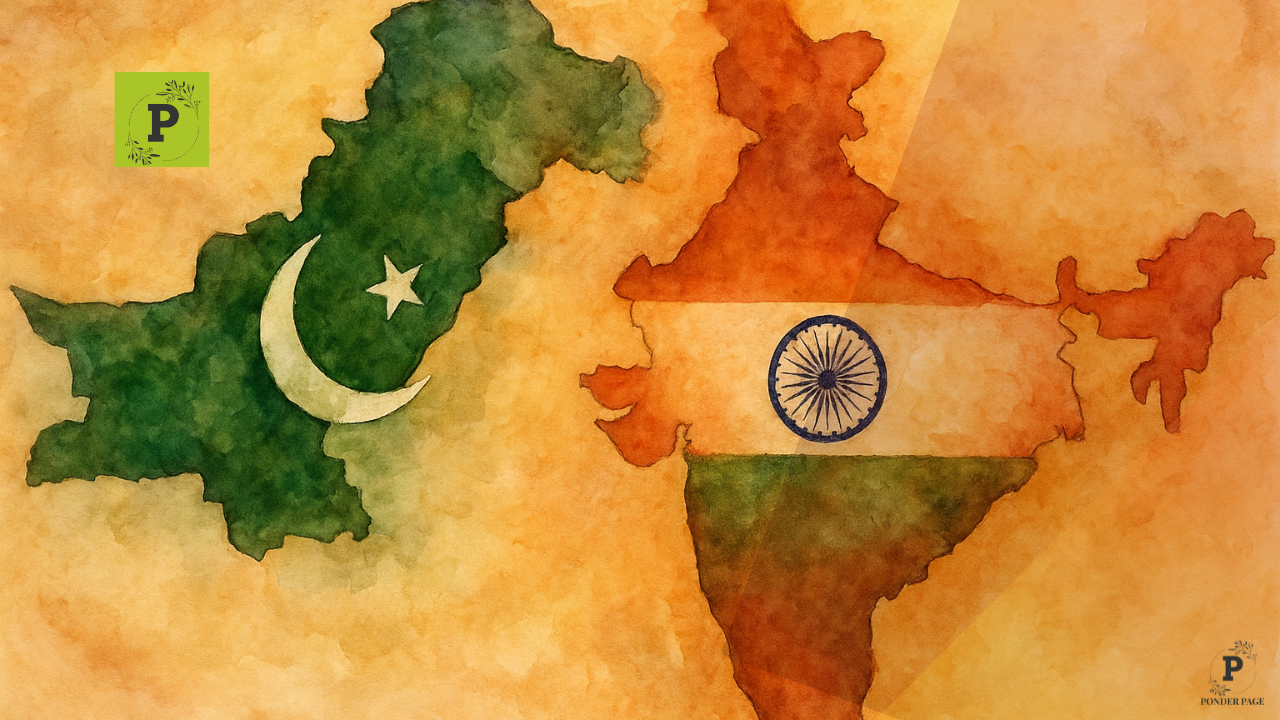
Pakistan Never Got Independence: In 1947, Pakistan claimed it had achieved independence. Firecrackers went off, flags were hoisted, and slogans echoed in the streets. But if you scratch beneath the surface, the so-called “independence” looks more like a trade—freedom was bartered away for chaos, poverty, and dependency. Instead of gaining a future, Pakistan seems to have misplaced it somewhere between Karachi and Rawalpindi.
(You can now subscribe to our Ponder Page WhatsApp channel)

Table of Contents
The Great Independence Illusion
Independence usually means standing on your own feet. Pakistan, however, seemed quite comfortable crawling—first towards the West for aid, then towards China for loans, and now towards the IMF for survival packages. Within months of its creation, it was borrowing grain from the United States just to feed its population.
So, was it independence, or just a hurried separation followed by a lifetime subscription to “foreign aid monthly”?

Partition: An Expensive Divorce
Economically, Pakistan started as the poor cousin at the family inheritance. India kept the industries, factories, and infrastructure. Pakistan got wheat fields, a few offices, and a very big headache. Jinnah had to admit that Pakistan had no central bank, no institutions, and no clue how to run a country.
Had it stayed united, the regions of today’s Pakistan could have prospered as industrial hubs within a booming India. Instead, they ended up as debt hubs, begging for bailouts every few years. Independence? More like a one-way ticket to economic dependency.
The Identity Crisis: Who Are We, Really?
Culturally, Pakistan was supposed to be “the land of pure”. Instead, it became the land of confusion. Torn away from centuries of shared traditions, it now tries to reinvent itself as “not India.” The problem? Its food, music, clothes, languages, and even cricket celebrations still look suspiciously Indian.
And in its attempt to look different, it borrowed Middle Eastern identities that don’t quite fit. The result? A nation that doesn’t know whether to call itself South Asian, Islamic, or just “whatever the IMF wants it to be.”
Politics: From Democracy to Dictatorship (on Fast-Forward)
While India was busy experimenting with democracy, Pakistan quickly got bored and handed the keys to the army. Military rule became less of an exception and more of a tradition. Civilian governments came and went like guest appearances, but generals stayed like permanent cast members.
If independence means being ruled by your own military instead of the British, then yes, Pakistan did achieve independence—just with fewer accents and more uniforms.
Strategic Blunders: Pawn on the Chessboard
Instead of being a confident nation charting its own course, Pakistan volunteered to be the West’s “frontline state.” First against communism, then against terrorism, and now against its own economic collapse. Each time, it played the pawn, sacrificed on the global chessboard while the bigger powers played their game.
Ironically, had Pakistan remained part of a united India, it would have been part of a rising Asian giant. Instead, it chose the shortcut to irrelevance.
A Tale of Two Neighbors
The contrast today couldn’t be starker. India, despite corruption, chaos, and politics, became one of the largest economies in the world, a space power, and a global voice. Pakistan, meanwhile, exports little besides cricketing talent and conspiracy theories.
Muslims in India, whom Partition was supposed to “save,” now enjoy greater global recognition and opportunities than those in Pakistan, where the struggle for stability seems never-ending.


Pakistan Never Got Independence: Is it a Self-Inflicted Wound?
So, did Pakistan truly gain independence in 1947? Or did it simply lose the chance to be part of a united, stronger, and more prosperous India? Looking at its economic failures, cultural confusion, political instability, and endless begging bowl diplomacy, the answer seems obvious.
Independence was supposed to be freedom. For Pakistan, it turned out to be a lifetime lesson in how to waste opportunities. What it celebrates every August may not be independence at all, but the anniversary of the biggest self-inflicted wound in South Asian history.
What are your thoughts on this article? Let us know in the comments below. If you enjoyed this article, be sure to subscribe for more engaging content in the future! Stay updated on the latest developments and discussions by clicking the subscribe button above. Thank you for your support!
📢 Dive into the latest discussions on social & trending topics! 🌍💬 Subscribe to Ponder Page for thought-provoking articles and interviews that dissect current issues. Don’t miss out on insightful content—hit that like & subscribe button now!




Leave a Reply