
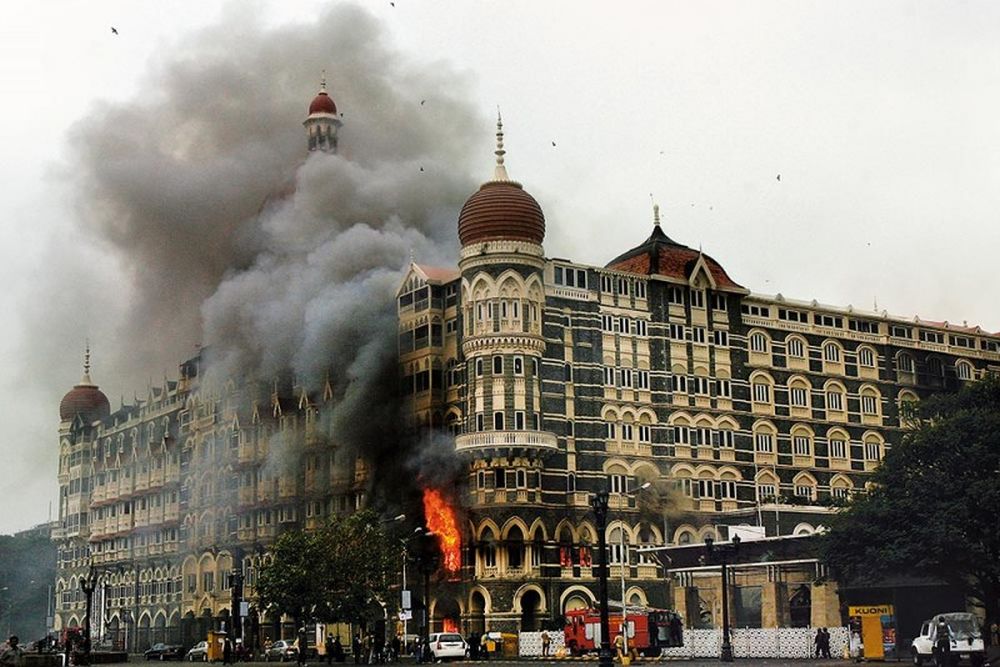
Part 2 of the Truth behind 26/11 Mumbai Attacks: In our earlier blog post – The Truth behind the 26/11 Mumbai Attacks, we dived deep into the intricate web of conspiracy, the interconnections, the training, and the various preparatory stages leading up to the ominous events of November 26, 2008. That groundwork has effectively laid the foundation for the unfolding narrative that continues in this subsequent blog installment.
Now, in this blog post Unveiling the Truth behind the 26/11 Mumbai Attacks [Part II], we embark on a journey to recount the unfolding aftermath, exploring the chain of events that transpired once the perpetrators set foot on the soil of our nation. Join us as we delve further into the riveting saga that ensued in the wake of that fateful day.
(You can now subscribe to our Ponder Page WhatsApp channel)

Table of Contents
The Pivotal Encounter
In the 2008 Mumbai attacks, the assailants, operating in pairs, were assigned specific targets, including CST station, Leopold Cafe, Taj Hotel, Nariman House, and Oberoi Hotel. Amidst this calculated chaos, one man, Bharat Tamore, became an unwitting key figure in the unfolding tragedy.
Tamore, an employee of the Taj Hotel, left his home for duty, setting the stage for a fateful encounter. He witnessed a boat carrying 10 individuals, aged 20-25, landing, with two remaining in the boat. Tamore, driven by intuition, stopped the group, questioning their destination. Some claimed to be students, but Kasab, seething with anger, retorted with hostility.
In an act of extraordinary courage, Tamore reported the suspicious encounter to the police. Unfortunately, his alert fell on deaf ears, as law enforcement failed to grasp the gravity of the situation. A timely response might have thwarted the impending attack.
The eight assailants proceeded along the main road towards their designated targets. Imran Babar and Nasir headed towards Nariman House on foot, while Shoaib and Nazir Ahmad took a taxi to Leopold Cafe. Following closely, Hafiz and Javed departed for Taj Mahal Hotel.
In the final leg of their journey, the last pair, Kasab and Ismail Khan, took a taxi to CST station. Each step recounted here contributes to the intricate tapestry of events that culminated in the tragic night of 26/11, emphasizing the missed opportunities and the courage displayed by individuals like Bharat Tamore amidst the unfolding chaos.
The Brutal Assault on CST Station by Kasab and Ismail Khan
In the sinister timeline of the 2008 Mumbai attacks, Kasab and Ismail Khan’s taxi journey to CST station marked a turning point in the night’s unfolding horror. Seated in the taxi, Ismail engaged the driver in conversation while Kasab discreetly set up a deadly bomb beneath the driver’s seat, armed with a 9 Volt battery set to detonate in 1 hour and 15 minutes.
Arriving at CST station, the duo disembarked, leaving the rigged taxi to move forward. Unbeknownst to them, Mr. Laxmi Narayan Goel took the taxi. Tragically, an explosion in Vile Parle claimed the lives of Goel and the driver, leaving numerous bystanders severely injured.
Kasab and Ismail, fueled by frustration at the sparse crowd compared to their expectations, reached CST station. Unable to contact Abu Hamza due to a network issue, they proceeded inside. In the station, Kasab prepared the bomb in the washroom, while Ismail readied their weapons.
The assailants launched their attack, with Ajmal firing bullets and Ismail hurling grenades. Witnesses described Ajmal’s laughter as he fired, reminiscent of playing a video game. Despite police resistance, Kasab and Ismail maintained their onslaught, confident in their superior firepower.
Vishnu Dattaram’s announcements urged passengers to evacuate the station. The attackers emptied six magazines and a bag of grenades, resulting in a chilling aftermath: 58 lives lost, 104 people injured, and 8 police officers martyred. The CST station, once bustling with life, stood empty, bearing witness to the devastating impact of this brutal assault.

Escape and Chaos on Badruddin Tayabji Marg
The perpetrators beginswith crossing a footbridge from platform number 1, a seemingly inconspicuous action that sets the stage for the ensuing chaos.
Frustrated in their efforts to secure a taxi, they shift focus to a car parking area, resorting to attempting to open a car. When this proves unsuccessful, their only recourse is to traverse the road on foot.
The situation escalates when the police, seemingly alerted to their presence, launch a forceful attack. Faced with imminent danger, the perpetrators hastily retreat, seeking refuge at Cama hospital. Amidst the chaos, the lack of a concrete plan or detailed knowledge of the hospital’s layout poses challenges for the perpetrators. Undeterred, they ascend through the hospital’s floors, encountering locked gates and darkened spaces. This frustration becomes the catalyst for a daring leap from the hospital wall, landing them on a side road.
Police Response and the Capture of Kasab
At the Police Control Room, the unfolding chaos reaches the ears of Hemant Karkare, the head of Mumbai ATS. Interrupted during dinner, Karkare swiftly takes action, enlisting the assistance of ACP Ashok Kamte and Vijay Salaskar. Responding to wireless updates indicating armed individuals near Cama hospital, Karkare commandeers a white police vehicle driven by Salaskar, with Kamte and other officers in tow.
As the vehicle approaches the reported location, Kasab and Ismail, the perpetrators of the earlier attacks, observe and retreat into hiding. Seizing the opportunity, they launch a blind attack on the police vehicle, injuring Kasab in both hands. Subsequently, the assailants discharge two magazines into the police vehicle, causing casualties among the officers.
Taking advantage of the limited technological capabilities of police firearms, Kasab and Ismail wait until they believe the officers are incapacitated. Approaching the vehicle, they discover the head constable, Arun Jadhav, and others still alive. In an attempt to secure a getaway vehicle for their journey to Malabar Hills, the attackers dispose of the deceased officers.
Heading towards Malabar Hills, the assailants encounter a shocking revelation. Arun Jadhav, though injured, remains conscious in the back seat, silently listening to Kasab and Ismail’s conversation. Despite being in close proximity to a revolver, Jadhav is unable to intervene due to his own injuries. Meanwhile, another surviving officer, Yogesh Patil, is unconscious, and his sudden phone ring draws Kasab’s attention, leading to Patil’s demise.
The stolen police vehicle, now hampered by a damaged tire, becomes unsuitable for escape. However, the attackers opportunistically stop a Skoda car, carjacking it but sparing the occupants in their haste. As they change vehicles, Arun Jadhav seizes the chance to inform the police control room of their whereabouts. The police respond swiftly, barricading the road to thwart the assailants.
Approaching the barricade, Kasab and Ismail realize the impossibility of crossing it with the car. As they contemplate an escape, a short divider becomes their only option. In a desperate attempt to evade capture, Ismail attempts to maneuver the car around the divider but fails, leading to the vehicle getting stuck. As the police close in, Kasab attempts to retrieve a weapon, but the intervention of Tukaram Omble, a retired Army personnel and ASI in the Mumbai Police, proves decisive. Tragically, Omble loses his life in the process.
Kasab is captured alive, signaling a triumph for law enforcement amid the tragic events. Ismail, on the other hand, succumbs to his injuries before reaching the hospital, bringing a tumultuous chapter of terror to a close.
Continuation of Terror: Shoaib and Nazir’s Attack
As the authorities successfully apprehend the first pair, Ismail and Kasab, another sinister plot is unfolding simultaneously. A different duo, Shoaib and Nazir, diligently execute their plan in tandem. Their target is the iconic Leopold Cafe, a renowned establishment frequented by both locals and international visitors.
In a chilling parallel to the previous pair, Shoaib and Nazir discreetly plant a bomb within the taxi during their journey. Arriving at Leopold Cafe, the heart of the bustling Mazgaon area, the explosive device detonates, claiming the lives of the taxi driver, Fhulchand, and two passengers, Zarina and Reema Mohammad. Additionally, 19 pedestrians on the road suffer injuries in the blast.
Within the confines of Leopold Cafe, chaos ensues as the assailants open fire indiscriminately and lob hand grenades. The horrifying aftermath leaves 11 people dead and 28 others injured. The choice of Leopold Cafe, known for attracting a significant number of American visitors, adds a layer of international significance to the terrorists’ actions.
Following the brutal attack on Leopold Cafe, Shoaib and Nazir swiftly proceed to their next designated target: Taj Hotel. En route, they attempt to plant another bomb in Gokul Wine shop lane, adhering to their plan. However, fortune takes a turn as an alert bystander notices their sinister activities and promptly notifies the Mumbai Police.
Responding with swiftness and precision, the Mumbai Police intercept the assailants at the critical moment, preventing the intended explosion. Their timely intervention averts further catastrophe, showcasing the critical role played by law enforcement in the face of a coordinated and heinous terrorist assault.

Hafiz Hayazi and Javed’s Assault on Taj Hotel
In the relentless wave of terror gripping Mumbai, the third pair of assailants, Hafiz Hayazi and Javed, execute a chilling plan targeting the illustrious Taj Hotel. Choosing a taxi as their mode of transport, they arrive at the hotel’s main gate, ready to unleash havoc. Upon entering the lobby, they indiscriminately open fire, plunging the hotel into chaos.
Undeterred by the pandemonium, Hafiz and Javed ascend the stairs, reaching the fifth floor, identified as the hotel’s business center. Their nefarious objective is to kidnap a prominent figure, setting the stage for negotiations with the Indian government. However, finding little of interest on this floor, they ascend further to the sixth floor, where their pursuit intensifies.
Around 11:30 at night, on the sixth floor, the assailants face a hurdle in their communication strategy. Needing a room to make phone calls, they attempt to forcibly open room number 520. Unbeknownst to them, this particular room is occupied by KR Ramamoorthy, the chairman of a corporate bank. Aware of the ongoing attack, Ramamoorthy refuses to open the door, prompting the terrorists to resort to violence. Breaking into the room, they locate Ramamoorthy hiding in the washroom. Subduing him with his own clothes, they proceed to make a crucial 30-minute call to someone in Pakistan, referred to as “Chacha.”
Meanwhile, Shoaib and Nazir, the second pair of attackers, arrive at Taj Hotel. As they enter, they navigate to the swimming pool area, firing indiscriminately. During this chaos, they capture four individuals, subsequently holding them hostage in the same room (room number 520) where Hafiz and Javed had established their control center.
By 2:30 in the morning, the sixth floor becomes a battleground. The assailants initiate a series of fires, focusing particularly on the room they designated as their control center. Room number 520 transforms into a hub for communication with their handlers in Pakistan. Concurrently, they assess the identity of their hostages, searching for potential high-profile figures to leverage in negotiations with the Indian government.
Despite the terrifying circumstances, the hostages, numbering four, maintain an astonishing composure. Unfazed, they move about the room casually, eating when they find sustenance. The assailants, in their communication with handlers, receive instructions to set fire to bed sheets and execute indiscriminate firing in the Taj lobby.
In a cruel turn of events, the terrorists claim the lives of over 30 people within the Taj Hotel, strategically taking positions and firing blindly.
Nariman House Siege: Imran Babar and Nasir’s Ruthless Tactics
Simultaneously with the chaos unfolding at other locations, the fourth team of attackers, comprised of Imran Babar and Nasir, reaches Nariman House. On their way, they strategically place a bomb at SBS road, near the Xpress petrol pump, adding another layer of terror to their rampage. Upon entering Nariman House, they promptly plant another bomb in the parking area, setting the stage for a devastating siege.
Nariman House, a five-story building, had been acquired two years prior by the Chabad of Indian Trust, an organization affiliated with the Jewish community. Within its walls, Jews congregated for prayers and communal activities. Gavriel and Rivka, a couple from Israel serving as priests, lived there permanently with their two-year-old son, Moshe. Notably, their helper was absent on the fateful day, having stepped out, while some guests were present.
Upon breaching Nariman House, Imran Babar and Nasir refrain from immediately resorting to violence. Instead, they opt to take everyone within the building hostage, leveraging their captives as bargaining chips in potential negotiations with the Indian government. The terrorists receive instructions from their handlers in Pakistan, emphasizing the need to allow a Mexican citizen named Norma to communicate with the media. However, the communication must be carefully controlled to avoid divulging critical details. The potential media interaction is designed to highlight her perilous situation without disclosing the number of captors or hostages.
While the terrorists are busy orchestrating their siege in Nariman House, they indiscriminately fire upon nearby buildings and throw hand grenades, resulting in further casualties. Despite persistent attempts to engage with the Indian government and even reaching out to Israel’s embassy, the situation remains in a stalemate. Frustration mounts among the attackers, leading to a tragic outcome within Nariman House.
Ultimately, the siege at Nariman House culminates in the loss of nine lives. The assailants, driven by a ruthless agenda and unrelenting tactics, bring terror and tragedy to a place that symbolized communal harmony but, on this tragic day, became a symbol of violence and despair.
Oberoi Hotel Siege: Abdul Rehman and Fahad Ullah’s Ruthless Onslaught
In the final wave of the coordinated terrorist attacks, the fifth pair, consisting of Abdul Rehman (also known as Chota) and Fahad Ullah, embarks on a sinister mission. They navigate the waters to reach the Oberoi Hotel, disembarking and entering the lobby with ruthless determination. The duo unleashes a barrage of aggressive gunfire, creating chaos and panic.
Their violent spree extends to the hotel’s restaurant, where a significant number of patrons are enjoying dinner. In response to the gunfire, the restaurant’s main entrance is hastily closed, providing a momentary respite for the diners. Remarkably, most manage to escape the impending danger. However, two hotel staff members, Jordan and Pradeep, find themselves caught by the assailants, facing threats of harm if they attempt to flee.
Under duress, Jordan is coerced into gathering alcohol and igniting furniture and windowsills as per the terrorists’ demands. Shaken with fear, Jordan’s trembling hands impede his ability to light the fire, enraging Fahad Ullah, who shoots him in frustration. Subsequently, Pradeep is tasked with the same dangerous duty. Despite successfully setting the fire, Pradeep exhibits a moment of quick thinking when asked about the location of the VIP guests’ floor. He cleverly misdirects the terrorists, prompting them to take the elevator to the upper floors.
Seizing an opportune moment, Pradeep enters the lift, closing the doors behind him. In a hail of bullets, the terrorists unleash their fury on the elevator, but Pradeep manages to escape unscathed. The assailants then resort to throwing hand grenades, firing indiscriminately, and perpetrating further violence, resulting in the tragic loss of 35 lives within Oberoi Hotel.
As the chaos unfolds, the broader picture of the terrorist operation becomes clearer. The police, initially grappling with the scale of the attacks, now concentrate their efforts on three key locations: Taj Hotel, Nariman House, and Oberoi Hotel. The precision and scale of the attack dispel any notions of a mere gang war, revealing a meticulously planned and executed terrorist onslaught orchestrated by a group of only ten individuals.
To compound the confusion, the terrorists send misleading emails to various Indian media houses, falsely attributing the attacks to an Indian group named Muzahiddin Hyderabad Deccan. The strategic manipulation of information adds an element of deception, further complicating the unfolding crisis in Mumbai. The coordinated attacks, executed with ruthless precision, underscore the severity and magnitude of the threat that unfolded on that fateful day.

Government Response and NSG Commando Operation
As the night unfolds and the gravity of the situation becomes apparent, the Maharashtra Government takes decisive action and seeks assistance from the Central government, specifically requesting the deployment of NSG (National Security Guard) Commandos. Three hours after the onset of the attacks, Maharashtra authorities urgently contact Delhi to solicit aid.
Simultaneously, the marine commandos of Maharashtra, stationed in Mumbai, are alerted to the crisis. However, the initial response faces logistical challenges. While 360 NSG commandos are ready for deployment, they encounter delays due to the unavailability of the designated aircraft, which is located in Chandigarh. After an hour of contemplation, a decision is made to utilize an available aircraft at Palam airport in Delhi. Another hurdle arises as the smaller size of the aircraft can accommodate only 120 NSG commandos. Despite these challenges, a decision is reached to proceed with the available aircraft, leading to additional delays in crew preparation and fueling, consuming another 1.5 hours.
The 120 NSG commandos depart on the aircraft, which typically takes 2-2.5 hours for the journey. However, due to unforeseen circumstances, it takes three hours to reach Mumbai airport instead of their intended target locations. The delay is attributed to a combination of factors, including aircraft availability, size constraints, and the lack of immediate access to the targeted sites.
Upon arrival, the NSG commandos are divided into three groups, each assigned to one of the three targeted locations: Taj Hotel, Oberoi Hotel, and Nariman House. Simultaneously, the marine commandos based in Mumbai also mobilize, taking three hours to reach their designated destinations.

Media’s Unintentional Assistance and NSG’s Crucial Turning Point
Amid the unfolding chaos of the coordinated terrorist attacks in Mumbai, media coverage emerges as a double-edged sword. Live updates provided by the media play a pivotal role in shaping the narrative of the events. Notably, the terrorists’ communications with their handlers in Pakistan are inadvertently broadcasted, providing security forces with vital insights.
The unintentional revelation of key details through the media becomes a strategic advantage for the perpetrators. Information regarding the delayed arrival of NSG commandos and the presence of marine soldiers is exposed, allowing the perpetrators to adapt their approach and refine their strategies in real-time.
Upon finally reaching the targeted sites, the NSG commandos encounter a series of challenges that further underscore the complexity of the situation. The absence of pre-prepared maps detailing critical information, such as entry and exit points and the layout of areas like CCTV rooms, poses a significant hindrance to the effectiveness of their operations. Despite facing delays and grappling with insufficient information, the NSG commandos bravely initiate operations to neutralize the terrorists and secure the impacted locations.

End of the Siege: Mumbai Terror Attacks
The horrifying chapter of the Mumbai terror attacks, which commenced on November 26, 2008, concluded with a series of courageous encounters by security forces. On the morning of November 28, 2008, at 7 o’clock, the security forces launched a decisive operation at the Oberoi Hotel, confronting and neutralizing two of the terrorists.
Later that evening, at 8:30 pm on the same day, security forces engaged in another intense encounter with terrorists at Nariman House. The prolonged and challenging ordeal continued until the morning of November 29, 2008, lasting approximately 60 hours. Around 9 o’clock, the security forces successfully neutralized the remaining four terrorists at the Taj Hotel.
Tragically, the heroic efforts were not without sacrifice. During these encounters, Sandeep Unnikrishnan, a brave officer, and Rahul Shinde, a reserve Police force officer, lost their lives in the line of duty. Their selfless commitment and unwavering courage became emblematic of the resilience displayed by security forces during this unprecedented crisis.
The toll of the Mumbai terror attacks was devastating, claiming the lives of 176 people and leaving more than 300 others injured. The scars of this tragic event remain etched in the collective memory, serving as a somber reminder of the need for steadfastness and unity in the face of terror. The sacrifices made by those who fought valiantly to protect others will forever be honored, and the resilience of Mumbai and its people in the aftermath of this dark chapter is a testament to the indomitable spirit that prevails even in the face of adversity.
If you enjoyed this blog post, be sure to subscribe for more engaging content in the future! Stay updated on the latest developments and discussions by clicking the subscribe button above. Thank you for your support!



Leave a Reply