
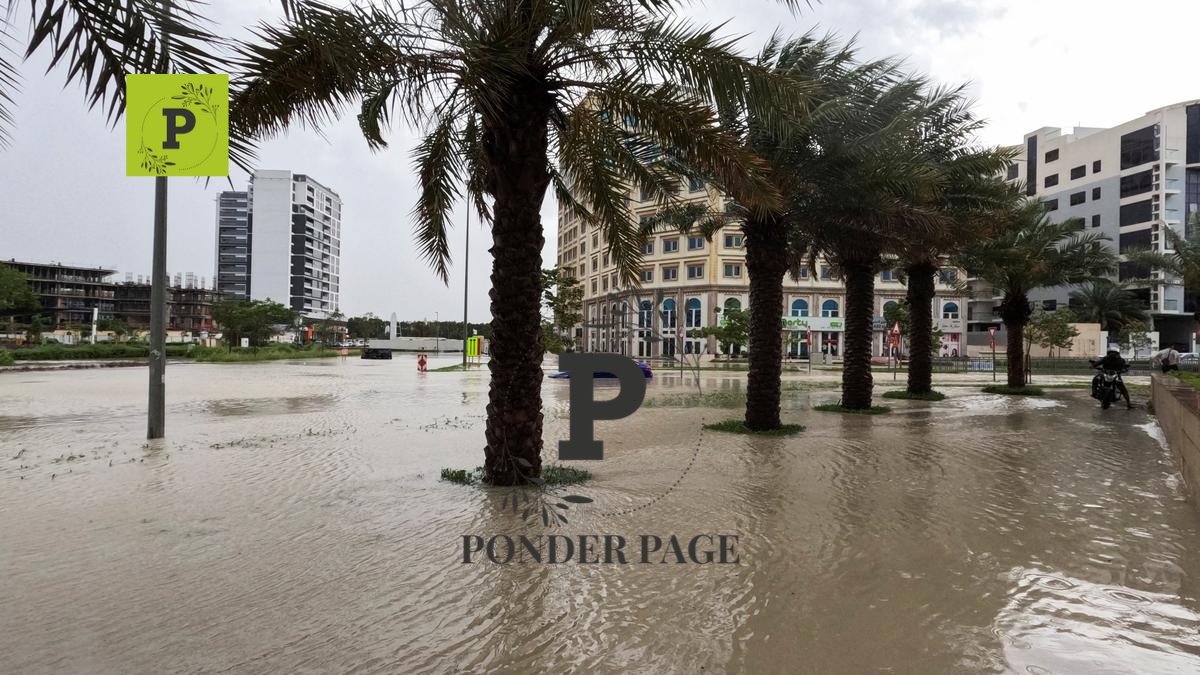
Dubai Flood Explained: Dubai, synonymous with its scorching desert climate and unyielding heat, witnessed an unusual sight on Tuesday i.e., April 16, 2024 – a deluge of rain, triggering widespread flooding across the arid landscape. This unexpected downpour not only disrupted the city’s usual rhythm but also raised concerns about the escalating impact of climate change on extreme weather events in the region.
Table of Contents
Understanding Dubai’s Rain Woes
In a country where annual rainfall barely exceeds 200 millimeters and summer temperatures soar to a staggering 50 degrees Celsius, water scarcity looms large. The United Arab Emirates (UAE) grapples with the dual challenge of limited water resources and heavy reliance on groundwater reserves.
To confront this pressing issue, the UAE has pioneered innovative solutions, one of which is cloud seeding – a form of weather modification aimed at augmenting precipitation. But how does this technology work?

Cloud seeding involves the introduction of “seeding agents” into clouds to stimulate the condensation process and induce rainfall. The process begins with meteorologists monitoring atmospheric conditions and identifying suitable clouds for seeding based on precipitation patterns.
The UAE embarked on cloud seeding experiments as early as 1982, and by the early 2000s, its efforts were bolstered by collaborative research with institutions like the National Center for Atmospheric Research (NCAR) in the USA, Witwatersrand University in South Africa, and NASA. Managed by the Emirates’ National Centre of Meteorology (NCM), UAE’s Rain Enhancement Program (UAEREP) spearheads the country’s cloud seeding initiatives.
The Mechanics of Cloud Seeding
Specialized aircraft, equipped with hygroscopic flares containing salt material components, take to the skies to deploy seeding agents into target clouds. Once released, these salt particles act as nuclei around which water droplets condense, eventually precipitating as rain.
The NCM operates a sophisticated network of weather monitoring stations, weather radars, and aircraft outfitted with state-of-the-art technologies for cloud seeding and atmospheric research.
-
 From Protest to Turning Point: The Story of Jallianwala Bagh and Its Aftermath
 -
 The Roots of the India China Border in Ladakh
 -
 The Origins of the Indian National Congress: A Turning Point in Colonial India
 -
 The Evolution of Money: Life Before Currency
 -
 The Cabinet Mission Plan of 1946: A Turning Point in India’s Freedom Struggle
 -
 A New Political Dawn in Nepal: The Inspiring Rise of Balendra Shah
Environmental Considerations
While cloud seeding holds promise for addressing water scarcity, concerns linger regarding its environmental impact and the safety of seeding agents. In response, the NCM has adopted measures to ensure the sustainability and safety of its operations.
Unlike some other cloud seeding programs that utilize potentially harmful chemicals like silver iodide, the UAE’s program opts for natural salts as seeding agents. Moreover, the NCM has developed its own seeding agent – nano material, comprising fine salt coated with titanium oxide, currently undergoing trials to evaluate its efficacy.

Despite the potential benefits, critics warn against the risks of “tinkering” with nature. With the region witnessing unprecedented weather events like storms and floods, some caution against interfering with natural processes, viewing such occurrences as nature’s response to human intervention.
Some experts are reevaluating the origins of the recent floods. While the city’s cloud seeding endeavors aim to alleviate water scarcity, a few voices in the scientific community speculate whether these artificial interventions inadvertently contributed to the unprecedented deluge.
As the UAE continues to innovate in its quest for sustainable water management, it becomes increasingly important to scrutinize the unintended consequences of such interventions. Balancing the immediate benefits of technology-driven solutions with a nuanced understanding of their long-term implications remains essential in navigating the complex terrain of climate adaptation and environmental stewardship.

Dubai Flood Explained: Harnessing Innovation for Sustainability
Dubai’s foray into cloud seeding exemplifies its proactive approach to addressing environmental challenges. By harnessing innovative technologies and scientific collaborations, the UAE strives to mitigate water scarcity and adapt to changing climatic conditions. However, as with any intervention, striking a balance between progress and environmental stewardship remains paramount as the nation navigates its path towards sustainability in the face of a changing climate.
If you enjoyed this blog post, be sure to subscribe for more engaging content in the future! Stay updated on the latest developments and discussions by clicking the subscribe button above. Thank you for your support!
You can now subscribe to our Ponder Page WhatsApp channel






Leave a Reply