
When Power Feels Threatened by Questions: There was a time in the history of this country when rulers genuinely feared questions from the press. Journalists were not treated as irritants or enemies but as essential watchdogs of democracy. Questions mattered because answers mattered. Accountability was not optional; it was expected.
In today’s so-called new India, that uneasy relationship between power and the press has been replaced by an unusually comfortable friendship. Large sections of the mainstream media appear so aligned with the system that questioning power feels almost unnatural. Press conferences often resemble fan interactions rather than democratic exercises, where trivial curiosities about personal habits replace serious inquiries into governance, failures, and public safety.
(You can now subscribe to our Ponder Page WhatsApp channel)

Table of Contents
Journalism Reduced to Flattery
This closeness has reached a point where even accidental questioning is seen as provocation. If an anchor strays from the script and asks two real questions by mistake, leaders react with visible irritation. Instead of answers, viewers are offered outrage, deflection, or ridicule. The expectation seems clear: ask about historical figures, political rivals, or ideological distractions, and you will receive long, animated responses. Ask about governance failures or human loss, and you are told not to waste time.
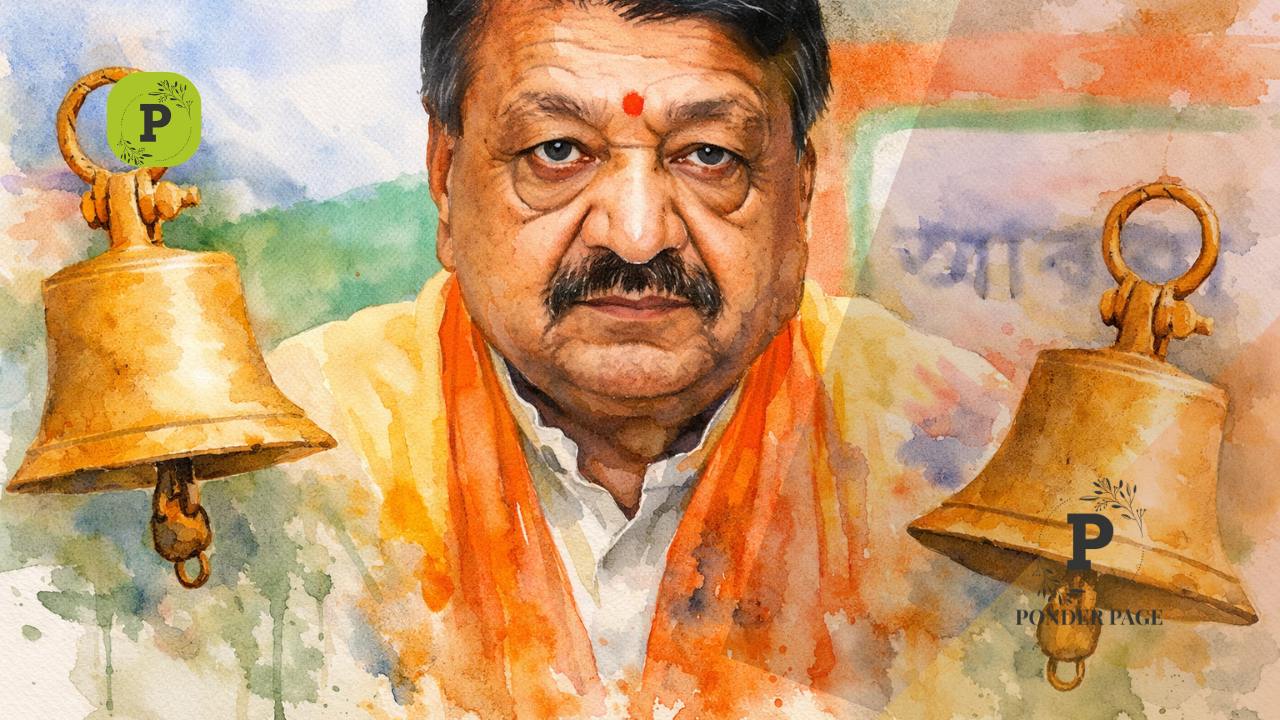
This culture was laid bare during a disturbing exchange involving senior journalist Anurag Dwary and Madhya Pradesh’s Urban Development and Housing Minister, Kailash Vijayvargiya.
The Indore Tragedy That Demanded Answers
The question raised was neither political nor ideological. It was painfully simple and devastatingly urgent. In Indore, a city repeatedly projected as the cleanest in the country, toilet waste mixed with drinking water. Ten people lost their lives, more than a hundred were hospitalized, and thousands fell ill. Families were shattered. A city’s trust in its basic infrastructure collapsed overnight.
The journalist asked what any responsible citizen would ask. How did this happen? Who is accountable? What is being done for the victims? Instead of an explanation, apology, or accountability, the response was hostility. The minister dismissed the question as unnecessary and used language that shocked many watching.
Language That Reveals a Mindset
Rather than clarifying facts or expressing remorse, the minister used dismissive and offensive words. When corrected and urged to maintain decorum befitting a senior constitutional authority, the response only highlighted the arrogance embedded in power. The issue was no longer just the tragedy in Indore but the contempt shown toward anyone daring to question authority.
Supporters quickly jumped in to shield the minister, repeatedly asserting his status as a leader. The unspoken implication was disturbing. Leadership, in their view, placed him beyond scrutiny. The loss of ten lives was treated as secondary to protecting political stature.
Why Questioning Power Is Patriotic
There can be no greater act of patriotism than questioning those who govern. Democracies survive not on blind loyalty but on constant scrutiny. Journalists do not weaken nations by asking questions; they strengthen them by preventing complacency and corruption.
If journalists and media owners did their jobs honestly for even a short period, governance would be forced to improve. Development would accelerate not because of slogans but because inefficiency and negligence would no longer remain hidden.
Damage Control After Public Outrage
Once the video of the exchange went viral, the tone changed. The minister appeared online with an apology, attributing his behavior to stress and sleeplessness after seeing the condition of the people. The apology, however, did not address the core issue. How did ten people, including a small child, die due to poisoned drinking water? Why were warnings ignored for months?
The technical details that emerged were horrifying. Indore’s drinking water comes from the Narmada River through a long pipeline. A leakage developed in a specific area. Instead of repairing it properly, a toilet was constructed directly above the pipeline without a septic tank. Human waste seeped into the leaking pipe, contaminating the water supply.
This was not an unforeseeable accident. Residents had been complaining for weeks. Reports indicate protests and repeated warnings that something was wrong with the water. No meaningful action was taken until lives were lost.
Administrative Failure at Every Level
The tragedy exposed not just infrastructural negligence but administrative apathy. Victims included infants and healthy adults with no prior illnesses. Many suffered extreme diarrhea after consuming contaminated water. Some died.
Even after the crisis erupted, reports emerged that hospitals discharged patients prematurely despite official assurances of free treatment. Families claimed they were forced to pay large sums. In some cases, victims’ families refused to meet visiting ministers, expressing complete loss of faith in the system.
The government’s response followed a familiar pattern. A few lower-level officials were suspended. Responsibility was deflected downward. The political leadership remained untouched.
A City Asking Uncomfortable Questions
Indore has been governed by the same political party for over two decades. The pipeline project itself was promoted as a symbol of development. Today, that same project has become a source of fear and anger.
People are now asking a question that goes beyond Indore. If this can happen in a city branded as the cleanest in India, what is happening elsewhere? Where is the waste going in other cities? How safe is the water people drink every day?
Media, Silence, and Selective Courage
Amid this, there is some relief that a few journalists still insist on doing their job honestly. Anurag Dwary’s refusal to back down became symbolic of what journalism is meant to be. Yet even media houses showed hesitation. Supportive posts were quietly deleted. Pressure worked as it often does.
Experienced politicians understand this ecosystem well. They know outrage is temporary. Another controversy will soon replace this one. Voters will be distracted, compensated, or pacified. Accountability will dissolve with time.
A Pattern, Not an Isolated Incident
The Indore tragedy is not an exception. It follows a pattern where governance failures lead to deaths, followed by statements, blame-shifting, and silence. Whether it is contaminated medicine, toxic air, or polluted water, the cost is always paid by ordinary citizens.
Public anger rarely sustains long enough to force structural reform. Leaders remain in headlines not for their work but for their statements. The real issues fade, while narratives are carefully managed.


When Power Feels Threatened by Questions: The Real Question Before the Nation
The question before the country is not which party will win the next election. It is whether those who win will be forced to work. Whether they will be held accountable. Whether citizens will demand clean air, safe water, and basic dignity instead of settling for slogans and distractions.
If people remain silent, nothing will change. Once, citizens struggled for food, clothing, and shelter. Now, the struggle is for something even more basic: the right to breathe clean air and drink safe water.
Until questioning power becomes normal again, tragedies like Indore will not be the last.
What are your thoughts on this article? Let us know in the comments below. If you enjoyed this article, be sure to subscribe for more engaging content in the future! Stay updated on the latest developments and discussions by clicking the subscribe button above. Thank you for your support!
📢 Dive into the latest discussions on social & trending topics! 🌍💬 Subscribe to Ponder Page for thought-provoking articles and interviews that dissect current issues. Don’t miss out on insightful content—hit that like & subscribe button now!





Leave a Reply