
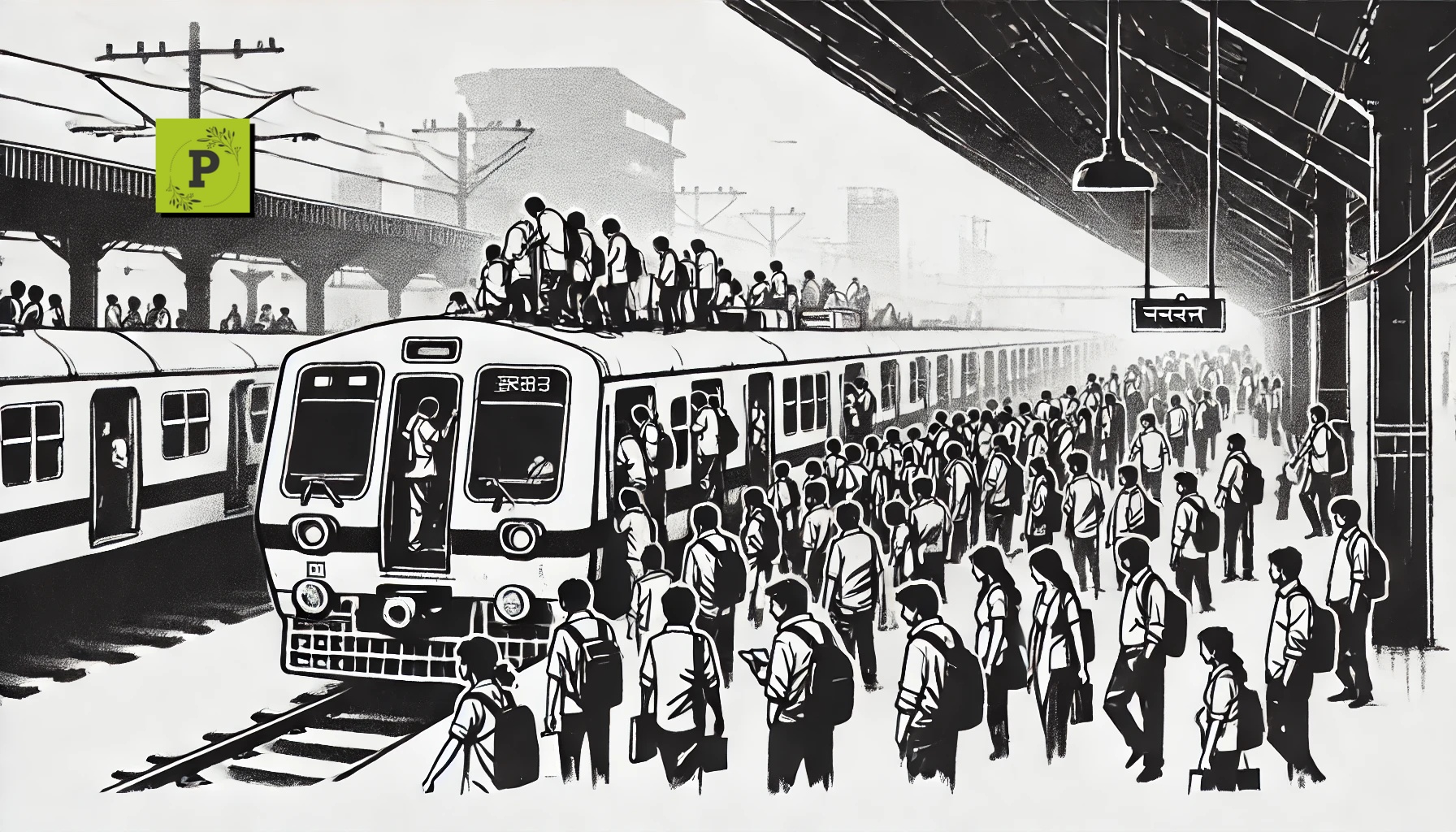
Harsh Reality of Mumbai Local: Mumbai Local is the lifeline of the city, carrying over 70 lakh passengers daily. It is not just a mode of transport; it is a struggle, a survival game, and for some, a daily battle between life and death. To understand the commuter experience, we researched the challenges of traveling in Mumbai Local through commuters to understand the difficulties faced by passengers.
(You can now subscribe to our Ponder Page WhatsApp channel)

Table of Contents
The Unbearable Rush and Dangerous Boarding
The first challenge starts even before stepping inside the train. Commuters push and shove to board the moving train, leading to severe injuries and fatalities. One passenger recounted a horrifying incident where a woman attempted to board a moving train, got stuck, and was torn from the waist down. Her blood splattered on nearby passengers, traumatizing onlookers.
Injuries Are a Daily Affair
Regular passengers have accepted getting hurt as part of their routine. A woman shared that she gets injured every day while boarding or standing inside the train. The struggle does not end once inside the train; it continues till they reach their destination.
Alarming Statistics
The dangers of Mumbai Local are not just anecdotal. The numbers are staggering. In the last 20 years, over 51,000 people have died due to falling off the train, slipping, or electrocution.
The Chaos at Dadar Station
Dadar is one of the busiest junctions in Mumbai, connecting multiple train lines. But despite its importance, the infrastructure is crumbling:
- Non-functional Lifts & Escalators: Passengers with heavy luggage struggle due to broken lifts.
- Filthy Drinking Water: The water meant for public use is visibly dirty.
- Unhygienic Toilets: The stench is unbearable, making it impossible to use the facilities.
Why Is Public Transport in This Condition?
Despite serving crores of people, Mumbai’s public transport is severely neglected. With so many commuters depending on it daily, why can’t we improve it?

The Art of Survival: Local Train Travel Tips
Navigating Mumbai Local requires strategy. Commuters have developed their own set of survival rules:
- Keep your bag in front.
- Tie your hair to avoid getting pulled in the crowd.
- Push ahead—there is always space, even if it doesn’t seem like it.
There is also a technique for boarding: hold onto a seat before the train halts, or, as per unwritten rules, board and deboard while the train is still moving.
Commuters’ Voices: The Daily Struggle
Praying Before Boarding
A daily commuter shared how she prays before boarding, hoping to find a seat without getting hurt. The fear of accidents looms large over passengers, who often chant mantras before jumping in.
Fights Over Space
The struggle for space doesn’t end inside the train. Fights break out over seats, foot space, and even standing positions. A commuter shared how these arguments often escalate into verbal and physical altercations.
The Concept of “Downing” and “Fourth Seater”
Passengers who travel for long hours have developed their own survival techniques:
- Downing: Traveling in the opposite direction first to secure a seat before heading towards the actual destination.
- Fourth Seater: Even though a bench has only three seats, a fourth person squeezes in, making the journey even more uncomfortable.
The Never-Ending Struggle for Space
Even at the first stop, there are no available seats. The fight for a spot begins from the very first station and continues throughout the journey.
The Plight of Station Facilities
- Dadar’s Toilets: Barely usable, emitting a foul stench, and covered with just a curtain instead of a proper door.
- Drinking Water Crisis: The drinking water areas are contaminated, forcing commuters to buy bottled water.
- Poor Accessibility: Ramps and facilities for the elderly and disabled are located in inconvenient spots, making them almost inaccessible.
Why Do People Still Use Mumbai Local?
Despite the struggles, millions continue using the Mumbai Local because:
- It’s the cheapest transport option: Covering 120 km for just Rs. 30.
- Unmatched connectivity: The network connects almost every part of the city.
- Job Compulsion: Most high-paying jobs are located in South Mumbai, and commuting from suburban areas is the only feasible option for many.
The Crumbling Infrastructure
The Mumbai local train system is over 150 years old. Built by the British in 1853, it has barely evolved despite the drastic increase in population and demand. During peak hours, a train designed for 1,700 passengers carries over 5,000 people.
Government Apathy and Delayed Projects
In the 2025 budget, Rs. 16,400 crore was allocated for Mumbai Rail. However, infrastructure projects are perennially delayed:
- Mumbai Urban Transport Project: Announced in 2010, it was initially supposed to be completed in 2015. The deadline was pushed to 2022, and now it’s set for 2027.
The Increasing Population, Same Number of Trains
With each passing year, the number of daily commuters rises, but the number of trains remains the same. Students, office-goers, and laborers all squeeze into the same limited spaces, leading to extreme overcrowding and increasing fatalities.
The Cry for Change
Passengers, who have been commuting for decades, say that conditions have only worsened. They demand:
- Increased frequency of trains.
- Expansion of railway lines.
- Better station facilities.
- More safety measures to prevent accidents.


Harsh Reality of Mumbai Local: India’s Most Dangerous Train
Mumbai Local is more than just a transportation system—it’s a testament to the resilience of Mumbaikars. However, the daily suffering of millions cannot be ignored. The government needs to prioritize public transport improvements, ensuring a safer, more comfortable journey for everyone.
If Mumbai is the financial capital of India, it deserves a transport system that matches its stature. Until then, millions will continue their daily battle, hoping for a better tomorrow.
What are your thoughts on this article? Let us know in the comments below. If you enjoyed this article, be sure to subscribe for more engaging content in the future! Stay updated on the latest developments and discussions by clicking the subscribe button above. Thank you for your support!
📢 Dive into the latest discussions on social & trending topics! 🌍💬 Subscribe to Ponder Page for thought-provoking articles and interviews that dissect current issues. Don’t miss out on insightful content—hit that like & subscribe button now!






Leave a Reply