
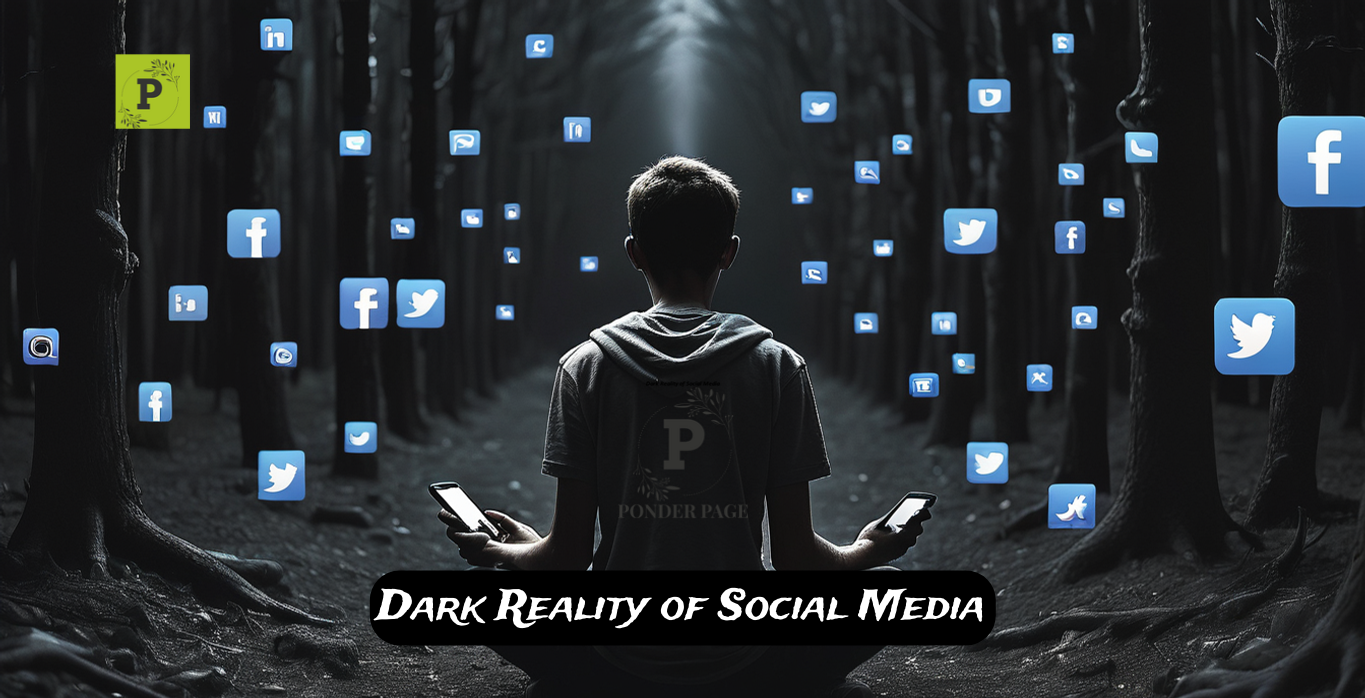
The Dark Reality of Social Media: In an era dominated by the digital realm, social media platforms have become ubiquitous in our daily lives. From connecting with friends to shaping public opinion, these platforms wield immense influence. However, beneath the glossy surface lies a darker reality that often goes unnoticed. This article delves into the shadows of social media, revealing the hidden truths that lurk behind the screens.
(You can now subscribe to our Ponder Page WhatsApp channel)

Table of Contents
The Facade of Perfection
One of the most striking aspects of social media is the illusion of perfection it cultivates. Users meticulously curate their profiles, showcasing only the highlights of their lives while concealing the struggles and imperfections. This perpetuates unrealistic standards and fosters feelings of inadequacy among users who compare their lives to carefully crafted façades.

The Pressure to Conform
Social media exerts a profound pressure to conform to societal norms and trends. From body image ideals to lifestyle choices, users are bombarded with expectations that may not align with their authentic selves. This pressure to fit in can lead to identity crises and a loss of self-esteem as individuals strive to mold themselves into an idealized image dictated by the online community.
-
 Ineffectiveness of Cybercrime Awareness Caller Tune: A National Appeal to Rethink
 -
 How a DJB Customer Nearly Fell Victim to a Data Leak Scam
 -
 Digital Arrest Scams: How Scammers Exploit Fear and Technology
 -
 How to Protect Against Truecaller Impersonation Scam
 -
 Jumped Deposit Scam: How to Identify, Prevent, and Protect Yourself
Validation Seeking Behavior
Likes, comments, and shares have become the currency of validation on social media. The quest for approval drives users to engage in validation-seeking behaviors, such as posting for the sake of likes rather than genuine expression. This incessant pursuit of external validation can fuel addiction-like behaviors and detract from meaningful human connections in the real world.
The Echo Chamber Effect
Social media algorithms are designed to prioritize content that aligns with users’ preferences and beliefs, creating echo chambers where divergent viewpoints are silenced. This phenomenon reinforces existing biases and polarizes societies by amplifying extreme ideologies. As a result, meaningful discourse and critical thinking are stifled, giving rise to echo chambers that breed ignorance and intolerance.

Cyberbullying and Harassment
The anonymity afforded by social media platforms emboldens individuals to engage in cyberbullying and harassment with impunity. Behind the veil of a screen, perpetrators unleash vitriol and hate speech, causing profound psychological harm to their victims. Despite efforts to combat online abuse, platforms often struggle to effectively address this pervasive issue, leaving many users vulnerable to harassment and trauma.
Mental Health Implications
The detrimental impact of social media on mental health is well-documented. Excessive use has been linked to increased rates of depression, anxiety, and loneliness, particularly among adolescents and young adults. The constant comparison, fear of missing out, and cyberbullying contribute to a toxic online environment that takes a toll on users’ psychological well-being.

The Commodification of Personal Data
Behind every click, like, and share lies a treasure trove of personal data that fuels the lucrative business model of social media companies. From targeted advertisements to algorithmic manipulation, user data is commodified and exploited for profit without adequate regard for privacy and consent. This commodification raises serious ethical concerns regarding the surveillance capitalism that underpins the social media industry.


The Dark Reality of Social Media: Its Conclusion
While social media offers unparalleled connectivity and communication, it also harbors a dark underbelly that demands scrutiny. From the cultivation of perfection to the proliferation of cyberbullying, the impact of social media extends far beyond the digital realm, shaping our perceptions and behaviors in profound ways. As users, it is imperative that we go through these platforms mindfully, questioning the narratives they propagate and advocating for a more responsible and ethical digital landscape. Only then can we begin to unravel the shadows and reveal the true potential of social media as a force for positive change.
If you enjoyed this blog post, be sure to subscribe for more engaging content in the future! Stay updated on the latest developments and discussions by clicking the subscribe button above. Thank you for your support!





Leave a Reply