
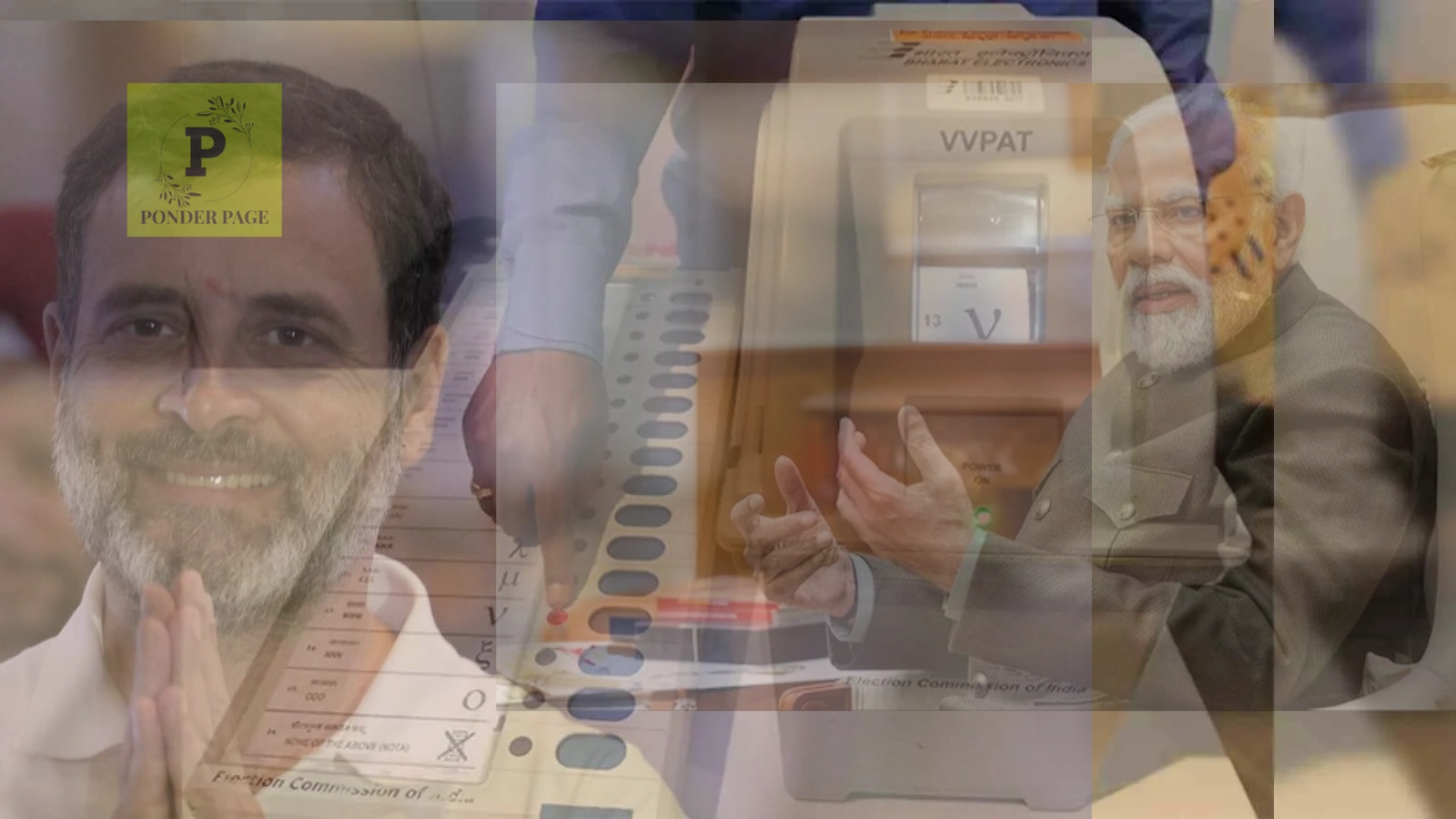
Can EVM Machine be Hacked? Let’s delve into this question in this article.
You can now subscribe to our Ponder Page WhatsApp channel
Table of Contents
Addressing Electoral Challenges with Electronic Voting Machines (EVMs)
In India, there are over 900 million registered voters. When these voters cast their ballots using paper-based voting systems, the demand for millions of ballot papers arises. This, unfortunately, leads to the felling of countless trees to meet the demand. Additionally, the extensive manpower required for the meticulous counting of these votes involves thousands of individuals. Given the frequent occurrence of elections in India, this process becomes exceedingly intricate and burdensome. To address this challenge, Electronic Voting Machines (EVMs) were introduced.
Enhancing Electoral Transparency with Voter Verifiable Paper Audit Trail (VVPAT)
Some concerns have been raised regarding the completeness and potential shortcomings of the EVM system. In response, during the 2014 elections, Voter Verifiable Paper Audit Trail (VVPAT) was introduced alongside the EVM machines. But what exactly is VVPAT?
Previously, without VVPAT, voters would press a button and a corresponding light would indicate that their vote had been cast for their chosen candidate. However, with the addition of VVPAT, a printed slip is generated beside the EVM. This slip displays the name of the candidate for whom the vote was cast, providing voters with visual confirmation. Although voters cannot retain this slip, it serves as a tangible verification of their chosen candidate.
Subsequently, the slip is returned to the secure container. VVPAT offers transparency in the voting process, providing voters with the assurance of their selections and facilitating double verification. The votes from both the EVM and VVPAT can be tallied, enabling officials to cross-verify that the same votes have been cast.
-
 Vijay Mallya: The Rise of Kingfisher, the Making of a Lifestyle Empire, and the Road to Kingfisher Airlines
 -
 The Origins of Waqf: How Continuous Charity Became a Pillar of Islamic Social Welfare
 -
 The True Story That Sparked the Revolt of 1857 | Mangal Pandey and the Greased Cartridges
 -
 The Bermuda Triangle Mystery: The Shocking Truth Behind Flight 19, Mary Celeste, and Ghost Ship Disappearances
 -
 Pakistan Army Business Empire Explained | How the Military Controls Pakistan's Economy, Real Estate & Politics
Components of the Enhanced Voting Process
Following the introduction of VVPAT, there are now three units involved in the voting process.
The first unit is the ballot unit, where voters select their preferred candidate by pressing the corresponding button. The second unit is the VVPAT, where voters can verify their selected candidate before finalizing their vote. The third unit is the control unit, which remains under the supervision of election officers. This unit contains the programming and data for all the machines involved in the voting process.
When a voter arrives to cast their vote, the election officer activates this unit by pressing a button. This action illuminates a green light on the ballot unit, indicating that the voter can proceed to cast their vote. Another significant advantage of this system is that it prevents individuals from voting for their favourite party multiple times, ensuring the integrity of the electoral process. All three machines are interconnected, and no external connections are permitted, making it a Standalone Independent Machine. This means there is no internet, Wi-Fi, or frequency receiver involved, thus safeguarding against tampering or unauthorized alterations.
Manufactured by Bharat Electronics Limited and Electronic Corporation of India Limited, these machines are proudly Indian-developed products. They feature a self-diagnostic system and a tamper detection program, ensuring any attempt to manipulate the system at any stage will be promptly detected and addressed.

Management and Distribution of Electronic Voting Machines (EVMs)
Let’s delve into the election process followed with these machines. Bharat Electronics oversees the management of EVM machines. However, when the election dates approach, Bharat Electronics distributes these machines across India. They are dispatched to secure strong rooms located at district headquarters in areas designated for elections. These strong rooms are highly fortified, equipped with live cameras, and guarded by specialized security forces.
The distribution process employs EVM randomization, where each machine is assigned a unique serial number. This randomization ensures that no one knows which machine will be deployed to which polling booth. Using a computerized selection process, the serial numbers are allocated, determining the placement of machines across various locations. Once assigned, the machines are securely stored in the strong rooms.
Throughout this process, representatives from political parties such as the BJP, Congress, and others are present. Election commission officers oversee the placement of machines, ensuring transparency and accountability.
Once the machines are securely stored in the strong room and locked, they remain inaccessible until the commencement of voting, safeguarding the integrity of the electoral process. It’s imperative for representatives of all political parties to be present throughout the entire process. Continuous live recording is conducted within the strong room, and any political party can review this footage for transparency.
As the election date approaches, the machines are transported to the strong rooms of different constituencies where voting will take place. The same rigorous procedures are followed during this transfer and storage phase as outlined earlier.
For instance, in Delhi, with its seven constituencies, the machines first arrive at the strong room for the entire city. Subsequently, they are dispatched to the respective constituencies. From there, they are further transported to individual polling stations, where voters cast their ballots. Each step of this process is executed with the same level of security and scrutiny to maintain the integrity of the electoral process.
Ensuring Integrity and Accountability in the Electoral Process
Another crucial aspect of these machines is their unique identification. Each machine is assigned a distinct ID, which is linked to a specific polling station. Upon the machine’s arrival at the designated polling station, all election officials and representatives from political parties verify this ID. It’s emphasized that any discrepancy in the machine’s ID triggers an immediate halt to the entire process. This stringent verification procedure ensures the integrity of the voting system.
Moreover, the presence of political party representatives plays a significant role, especially in preventing fraudulent voting. These representatives typically stationed outside the polling stations in tents or benches, assist voters by verifying their names on the voter list and directing them to the correct booth.
In cases where someone attempts to vote on behalf of another voter, the representative can detect this by observing a pre-existing mark next to the voter’s name on the list. In such instances, they provide assistance to rectify the situation, thereby safeguarding the integrity of the electoral process and ensuring that every vote counts accurately.
Rigorous Testing and Validation Process Ensuring Electoral Integrity
Once the machine is set up, it undergoes thorough testing before the commencement of voting. Representatives from all political parties are invited to participate in this testing phase. Each representative casts a test vote for every candidate, and the process is validated by the VVPAT. If any discrepancies arise during this testing, the process is halted immediately. Once all representatives and election officials approve the functionality of the machine, they provide their signatures as validation, signalling the readiness to begin voting.

Addressing Allegations of Electoral Manipulation and Logistical Challenges
Critics of the system often argue that testing a machine with only a few thousand votes is insufficient. They claim that the machine is designed to function properly up to a certain threshold, typically around one lakh votes. Beyond this threshold, they argue, the machine may allegedly manipulate votes in favor of one party. However, executing such manipulation would require a series of highly sophisticated and logistically challenging steps.
Firstly, the individuals attempting manipulation would need to steal the machine mid-process, bypassing live cameras, security measures, and tamper-proof systems within the strong room. Then, they would need to alter the machine’s programming before returning it undetected. Even if successfully tampered with, the question remains of how many machines one would need to manipulate, and how they would ensure that the targeted machine would end up in the desired constituency. This scenario could only occur if the individual who programmed the machines had prearranged the manipulation, which is highly improbable.
Additionally, even in such a case, the risk of exposure would remain high, as machines undergo random selection and testing by casting a large number of votes. Another crucial point is that the individual who built the machine would need to know both the party to which all the votes are to be transferred and the allotted serial number of that party’s machine. However, this information is generated at the end of the allocation process, making it extremely difficult to obtain beforehand.
Misconceptions Surrounding Double Voting
Furthermore, there is a misconception that pressing the button once on the Ballot unit can result in two votes being cast for a party, as observed in the VVPAT. However, if such a discrepancy were to occur, it would immediately be flagged during the counting process, leading to the dismissal of the votes in question. Once voting concludes, the polling booth in-charge seals the machine in the presence of all party representatives. These representatives verify that the machine has been sealed properly, ensuring the integrity of the voting process.

Another important aspect is the meticulous tracking of votes by all political representatives. For instance, if 1900 votes are cast on a particular machine, it is duly noted by all members that this number of votes has been recorded under the ID of that specific machine. Once verified, all members sign off on the count, and the list is sent to the respective candidates for transparency.
During the voting process, the Presiding Officer initiates the start of voting by pressing the machine’s start button, with the exact time duly recorded. Similarly, upon the completion of voting, the close button is pressed, and the time is again noted. This timestamp serves as a safeguard against any potential tampering attempts after voting has concluded. Once all present parties agree, the machine is sealed.
Each political party representative is provided with a unique slip, with another retained by the officer. Importantly, the machine can only be reopened when the codes from both parties are jointly presented. This stringent protocol ensures that incidents like booth capturing are prevented, and the machine remains impervious to theft or misuse, rendering it useless for unauthorized individuals.
Ensuring Transparency and Accuracy in the Counting Process of Indian Electronic Voting Machines
Following this, the machines are securely returned to the strong room with utmost security, employing the same meticulous process as during their initial deployment. In the presence of all concerned parties, the room is locked, and 24/7 surveillance ensures continuous monitoring. The footage from these cameras is displayed on LED screens, allowing representatives from all political parties to closely monitor the proceedings.
On the day designated for counting, the strong room’s lock is opened in the presence of political party representatives and election officials. The seals on each machine are meticulously inspected, and if any seal appears broken, the process is halted immediately. Only when all present parties agree is a machine opened for counting. During counting, the total number of votes recorded on each machine’s ID is cross-checked against the provided list. The counting commences once all parties agree, and the Presiding Officer reveals the results by pressing the machine’s button. Subsequently, the results are verified using a random selection of VVPAT machines to ensure accuracy and transparency.
Addressing Accusations and Ensuring Confidence in Electronic Voting Machine (EVM) Security
In the scenario where the EVM indicates that the Party A received 100 votes and the Party B received 90 votes, it’s imperative that the corresponding VVPAT numbers align with these figures. Random checks are conducted to ensure the accuracy of the VVPAT numbers alongside the EVM results. As the counting progresses, media outlets begin reporting on the vote differentials and eventually announce the final results.
However, it’s a common occurrence that the party that loses the election often accuses the EVM of being hacked, while the winning party typically remains silent on the matter. Notably, no party has refrained from criticizing EVMs when faced with defeat, but interestingly, no victorious party has criticized the machines after winning.
To address doubts regarding EVM security, the Election Commission challenged all political parties on June 3, 2017, to invite experts from around the globe to attempt to hack the machines. Strikingly, no party accepted this challenge, raising questions about the validity of their concerns. In India, the Supreme Court holds the highest authority, and despite several political parties filing Public Interest Litigations (PILs) against EVM usage, the Supreme Court has consistently upheld the integrity of EVMs, praising their reliability.


Can EVM Machine be Hacked? The Answer is No!
Ultimately, while conspiracy theories may captivate attention swiftly, it’s essential to rely on verifiable facts and evidence rather than succumbing to baseless allegations.
If you enjoyed this blog post, be sure to subscribe for more engaging content in the future! Stay updated on the latest developments and discussions by clicking the subscribe button above. Thank you for your support!





Leave a Reply