
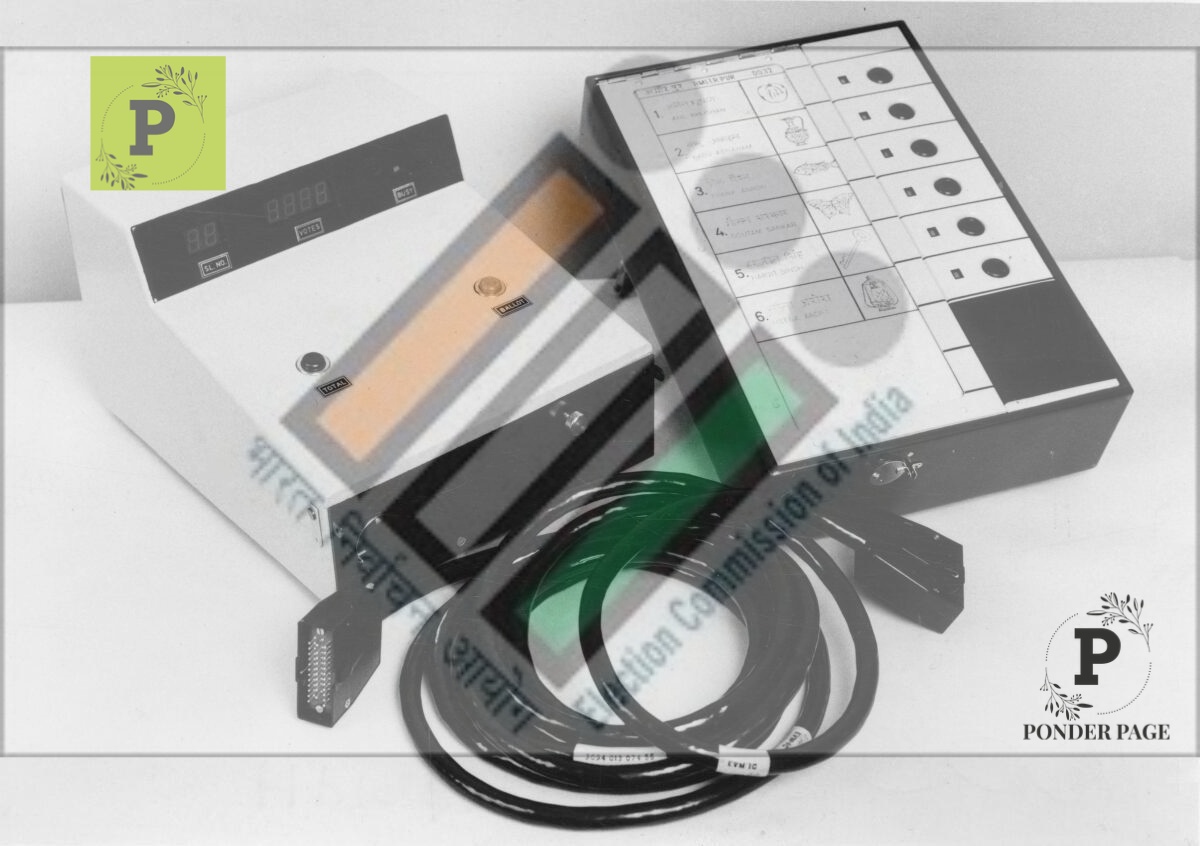
A brief history on how EVMs came into being: Elections are the lifeblood of any democracy, serving as the ultimate expression of citizen voice and choice. When India gained independence in 1947, many doubted whether a nation grappling with poverty and illiteracy could sustain a democratic system. History suggested that democracies tended to thrive in affluent societies. Yet, India defied this expectation, emerging as a shining beacon of democratic resilience amid the tumult of post-colonial upheaval.
Table of Contents
India’s Democratic Exceptionalism
In the wake of decolonization, most newly independent nations struggled to maintain democratic governance. Among them, only a handful, such as Mauritius, Belize, and Jamaica, managed to sustain democratic institutions. India, however, stood out as a remarkable outlier, steadfastly committed to the democratic path despite facing formidable challenges. Notably, the country weathered a turbulent period during Partition, demonstrating a remarkable resolve to uphold democratic principles even in the face of adversity.

The Role of the Election Commission of India
Central to India’s democratic journey is the Election Commission of India (ECI), entrusted with the crucial task of conducting free and fair elections. Over the years, the ECI has implemented various measures to safeguard the electoral process, from the iconic indelible ink marking to leveraging technology for enhanced transparency and efficiency.
A significant milestone in India’s electoral history was the introduction of Electronic Voting Machines (EVMs), marking a paradigm shift from traditional paper ballots. Championed by Sham Lal Shakdher, the then Chief Election Commissioner, the transition to EVMs was driven by a need to address issues such as booth capturing and logistical challenges associated with manual voting methods.

-
 The Rath Yatra of 1990: Advani, Ayodhya and the Turning Point in Indian Politics
 -
 The Ram Janmabhoomi Dispute: The Long History Behind India’s Most Contentious Land Dispute
 -
 How IPL Teams Actually Make Money: The Business Model Behind the World’s Biggest Cricket League
 -
 Nirav Modi Scam Explained: How the PNB Fraud Worked and How a Billionaire Empire Collapsed
 -
 How Bernard Arnault Took Control of Louis Vuitton and Built a Luxury Empire
Evolution of EVM Technology
The journey towards adopting EVMs was marked by innovation and collaboration between government entities such as the Electronic Corporation of India Limited (ECIL) and Bharat Electronics Limited (BEL). Engineers at these organizations worked tirelessly to develop prototypes that could streamline the voting process and enhance the integrity of elections.
Despite the promise of EVMs, their widespread adoption faced legal obstacles, requiring amendments to electoral laws to recognize electronic voting as a valid method. The Supreme Court’s intervention and subsequent legislative amendments paved the way for the use of EVMs in elections, reaffirming the government’s commitment to modernizing the electoral infrastructure.

Following legal clearance, EVMs underwent rigorous testing and refinement to ensure their reliability and efficacy in real-world electoral scenarios. Through field trials and feedback from political stakeholders, the Election Commission fine-tuned the design and functionality of EVMs, culminating in their successful deployment during the 2004 general elections.
The Legacy of EVMs
Today, Electronic Voting Machines stand as a testament to India’s technological prowess and commitment to democratic ideals. With over a million EVMs deployed across the country during elections, India boasts one of the world’s most efficient and transparent electoral processes. The evolution of EVMs highlights the collaborative efforts of engineers, policymakers, and electoral authorities in advancing democratic governance.


A brief history on how EVMs came into being: A Triumph of Democracy
India’s adoption of Electronic Voting Machines represents a pivotal moment in the nation’s democratic journey. From the tumultuous days of Partition to the present, India has demonstrated an unwavering commitment to democratic principles, ensuring that every citizen’s voice is heard through free and fair elections. As the world looks to India’s electoral model for inspiration, the legacy of EVMs serves as a testament to the resilience and ingenuity of Indian democracy.
If you enjoyed this blog post, be sure to subscribe for more engaging content in the future! Stay updated on the latest developments and discussions by clicking the subscribe button above. Thank you for your support!
You can now subscribe to our Ponder Page WhatsApp channel



Leave a Reply