
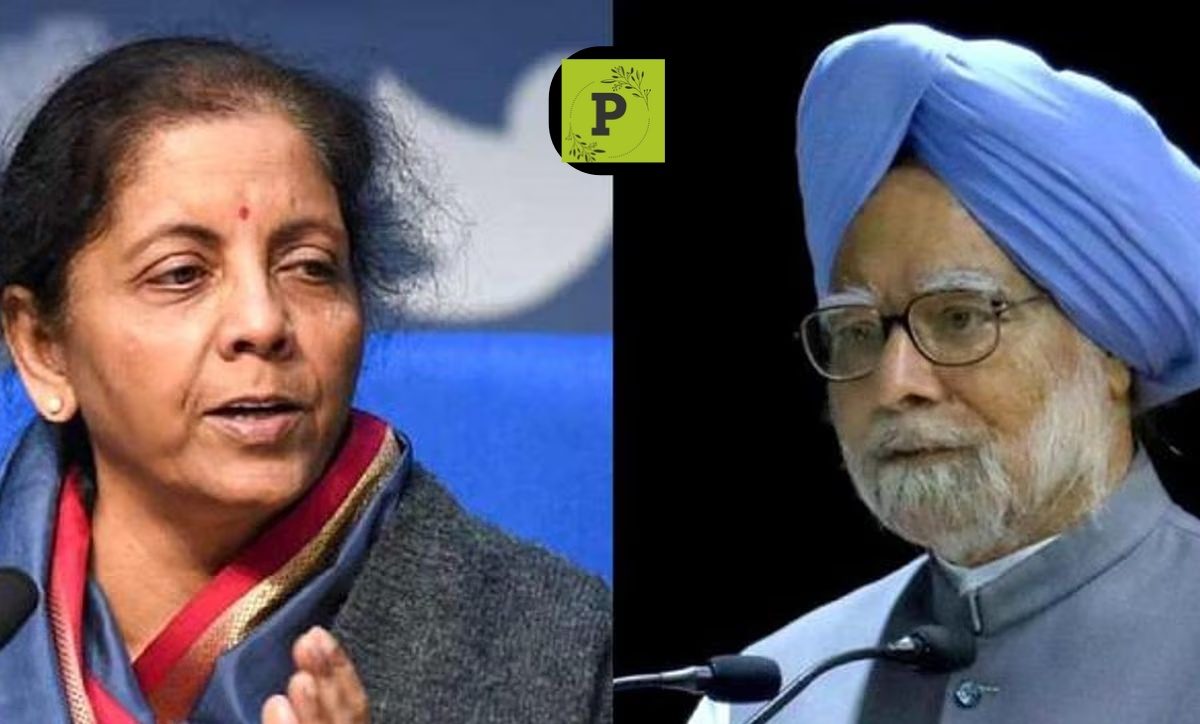
Why Late Dr Manmohan Singh is a Better Finance Minister of India than Nirmala Sitharaman: India’s economic journey over the past few decades has been shaped by the vision, policies, and leadership of its finance ministers. Among the prominent figures in this domain, Dr. Manmohan Singh’s tenure as Finance Minister from 1991 to 1996 is often hailed as a transformative period in India’s history. In contrast, Nirmala Sitharaman’s tenure, which began in 2019, has faced significant scrutiny. While both leaders have had unique challenges and opportunities, Dr. Singh’s impact on India’s economy is widely considered more profound and effective. This article delves into the reasons behind this perception.
(You can now subscribe to our Ponder Page WhatsApp channel)

Table of Contents
Visionary Leadership During a Crisis
Dr. Manmohan Singh assumed the role of Finance Minister in 1991, a time when India was facing one of its worst economic crises. The country was on the brink of bankruptcy, with foreign exchange reserves barely enough to cover two weeks of imports. Inflation was soaring, and economic growth was stagnant. In this dire situation, Dr. Singh, under the leadership of Prime Minister P.V. Narasimha Rao, introduced a series of groundbreaking economic reforms that liberalized the Indian economy.
Key reforms included:
- Dismantling the License Raj: By reducing bureaucratic hurdles, Dr. Singh created an environment conducive to entrepreneurship and private sector growth.
- Opening Up the Economy: He allowed foreign direct investment (FDI) in key sectors and reduced import tariffs, integrating India into the global economy.
- Financial Sector Reforms: These included the deregulation of interest rates and the establishment of stronger banking norms.
These measures not only pulled India out of the crisis but also set the stage for decades of robust economic growth. The liberalization policies are often credited with transforming India into one of the fastest-growing economies in the world.
In contrast, Nirmala Sitharaman’s tenure as Finance Minister has been marked by challenges such as the economic slowdown pre-COVID-19, the pandemic’s aftermath, and global inflationary pressures. While she has introduced measures like the Production Linked Incentive (PLI) scheme and corporate tax cuts, critics argue that her policies lack the transformative vision that characterized Dr. Singh’s tenure.

Economic Reforms vs. Incremental Changes
Dr. Singh’s reforms were not just about crisis management; they were aimed at overhauling the structural foundations of the Indian economy. The liberalization policies of the 1990s reduced the government’s role in business and empowered the private sector. This shift was instrumental in fostering competition, innovation, and efficiency across industries.
Nirmala Sitharaman, on the other hand, has focused on incremental changes rather than sweeping reforms. While her measures like the Insolvency and Bankruptcy Code (IBC) amendments and GST rationalization are important, they have not delivered the kind of transformative impact seen during Dr. Singh’s era. Moreover, critics argue that some of her policies, such as increased indirect taxation through GST and excise duties, have disproportionately burdened the middle and lower-income groups.
Handling Public Perception and Communication
Dr. Singh was known for his calm demeanor and ability to build consensus. His academic background and extensive experience earned him respect from political leaders, economists, and the general public. Even during tough times, his clear communication and transparency instilled confidence in his policies.
In contrast, Nirmala Sitharaman has faced criticism for her handling of public perception. Her statements on the economy, such as attributing the automotive sector’s slowdown to millennials’ preferences for ride-sharing apps, have been seen as out of touch with ground realities. This has, at times, eroded public trust in her leadership.
Economic Growth and Employment
During Dr. Singh’s tenure, India witnessed a significant uptick in economic growth, with GDP growth rates averaging around 6-7% annually. The liberalization era also created millions of jobs, particularly in sectors like IT, manufacturing, and services. These developments improved living standards and lifted millions out of poverty.
Under Nirmala Sitharaman, India’s economic growth has been uneven. While the government has claimed a recovery post-COVID-19, unemployment rates remain a concern. Critics argue that the growth has been concentrated in a few sectors, with rural and informal economies still struggling.
Political Constraints
Both finance ministers operated under political constraints, but their approaches differed. Dr. Singh worked within the framework of a coalition government, yet he managed to push through bold reforms by leveraging his expertise and building alliances. His success was a testament to his ability to navigate complex political landscapes.
Nirmala Sitharaman, despite having the advantage of a strong majority government, has faced challenges in implementing policies effectively. For instance, the rollout of GST faced significant hurdles, and the initial implementation was criticized for being overly complicated.
Legacy and Long-Term Impact
Dr. Manmohan Singh’s tenure as Finance Minister is often described as a turning point in India’s economic history. His reforms laid the foundation for India’s rise as a global economic power. The benefits of his policies continue to be felt decades later.
Nirmala Sitharaman’s legacy is still in the making. While she has faced unprecedented challenges, her tenure so far has not demonstrated the same level of transformative impact. Her policies are seen as more reactive than proactive, focused on short-term solutions rather than long-term structural changes.


Why Late Dr Manmohan Singh is a Better Finance Minister in Short
The comparison between Dr. Manmohan Singh and Nirmala Sitharaman highlights the critical role of vision, leadership, and execution in economic policymaking. Dr. Singh’s tenure stands out for its boldness and far-reaching impact, while Nirmala Sitharaman’s term has been characterized by incrementalism and crisis management. While both leaders have contributed to India’s economic story, Dr. Singh’s transformative reforms continue to serve as a benchmark for effective economic governance.
What are your thoughts on this article? Let us know in the comments below.
If you enjoyed this article, be sure to subscribe for more engaging content in the future! Stay updated on the latest developments and discussions by clicking the subscribe button above. Thank you for your support!
📢 Dive into the latest discussions on social & trending topics! 🌍💬 Subscribe to Ponder Page for thought-provoking articles and interviews that dissect current issues. Don’t miss out on insightful content—hit that like & subscribe button now!





Leave a Reply