
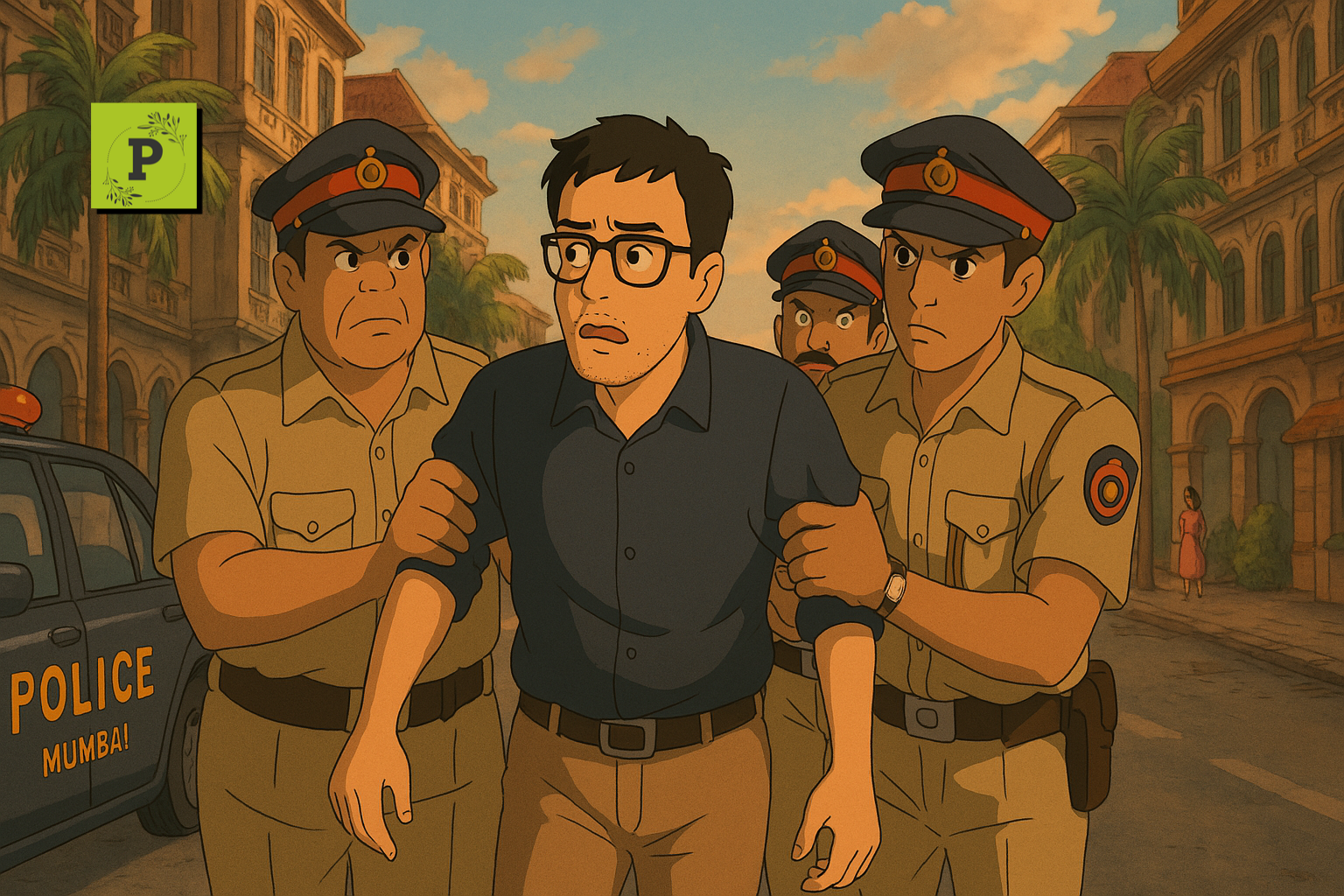
The Thin Line Between Free Speech and Political Retaliation: A banking professional from Mumbai, who was on a trip to Tamil Nadu and Kerala, had to cut his visit short and rush back to Mumbai. The reason? A notice from the Mumbai Police. However, his alleged crime had nothing to do with the underworld, the builder mafia, or a drug cartel. It was something far graver—he attended Kunal Kamra’s satirical show.
(You can now subscribe to our Ponder Page WhatsApp channel)

Table of Contents
The Crime? Attending a Comedy Show
At Kamra’s show, there was an alleged remark about Maharashtra Deputy Chief Minister Eknath Shinde. Interestingly, Kamra never explicitly mentioned Shinde’s name. However, certain Shiv Sena workers believed the reference was clear. Acting swiftly, they turned the venue, Habitat, into a scene reminiscent of Wankhede Stadium during a high-voltage cricket match.
The year 1992 saw the release of the film Aaj Ka Goonda Raaj, a portrayal of lawlessness. Fast forward to 2025, and one need only switch on the news to witness a live telecast of similar events.
While the Mumbai Police now denies summoning any audience member, leading newspapers like Times of India and Hindustan Times have reported otherwise. The police, under Section 179 of the CrPC, sought to call audience members as witnesses in Kamra’s defamation case. Meanwhile, three FIRs have been registered over Kamra’s so-called Gaddar joke, and the comedian has already received a third summons.
Harassment Tactics: The Intimidation of Kamra and His Family
The situation escalated as the police’s focus shifted to Kamra’s parents’ home. The level of police presence there suggested they were monitoring a high-risk terrorist hideout. This intimidation isn’t new. Kamra, well aware of the system he mocks, anticipated this response. He relocated to Tamil Nadu, only for Shiv Sena workers to question, “How can he escape to Tamil Nadu?”
Mumbai Police, with an unusual display of humor, assured Kamra of “full protection” if he returned.
Resistance and Reality
Kamra has since secured anticipatory bail from the Madras High Court, protecting him from arrest until April 7. But silence is not his response. He continues to speak out, much to the discomfort of those in power.

His satirical post on April 1 detailed a formula on “how to kill an artist“—an eerie reflection of the actual suppression of dissent in India today. The method is simple: first, scare the brands into pulling sponsorships. Then, intimidate corporate entities into avoiding collaborations. Deny venue permits and police approvals, ensuring the comedian’s performances never see the light of day. If all else fails, threaten the audience itself, ensuring that even those willing to listen stay away out of fear.
In a country where forcing comedians to apologize or remain silent is the norm, Kamra stands alone against an entire system. Even those who don’t necessarily agree with his views acknowledge his courage. But for how long? Most comedians have already been silenced. The few remaining voices in digital spaces face an expiration date—everyone knows this.
The Priorities of Law Enforcement
Amidst all this, one must ask: is the Mumbai Police’s crackdown on comedy truly a priority? A quick Google search on Mumbai’s crime rate would reveal an increasing trend. In just one year, crime has surged by 15%, with the highest number of thefts recorded. Crimes against women in Mumbai have risen by 21%, particularly under the POCSO Act. Yet, in high-profile rape cases, accused individuals often walk free due to “lack of evidence.” Perhaps this isn’t surprising, given that 61% of positions in Mumbai’s Crimes Against Women Cell remain vacant.
One wishes this were another April Fool’s Day prank. But it isn’t.
The Hypocrisy in Free Speech Laws
Many argue that Kamra should be punished if he indeed disrespected Shinde. If so, let the courts decide the boundaries of free speech. If Kamra’s joke constitutes defamation, then by the same logic, cases should also be filed against right-wing IT cells and media channels that hurl baseless accusations of “traitor” against citizens daily.
However, the real issue is that Kamra’s case is unlikely to hold in court. This is precisely why extra-legal methods, such as police intimidation, are being employed to silence him. Had Kamra still been in Mumbai, he might have been arrested without substantial evidence, simply for daring to mock those in power.
The Double Standards of Indian Politics
The irony is glaring. Certain politicians have the liberty to make outright offensive remarks—be it calling a female leader a “bar dancer” or labeling a former President of India a “terrorist.”
When Kunal Kamra jokes, he faces police action. But when politicians from the ruling party do the same, they face no repercussions.
One example is Subramanian Swamy, who made a shocking claim about Sonia Gandhi’s past without any legal consequences. Similarly, BJP’s national spokesperson, Shehzad Poonawalla, once accused Modi of dividing the country. Today, he is a staunch Modi supporter. Had he been a comedian, he would have been making rounds at police stations by now.

The Betrayal of Public Interest
While Maharashtra’s assembly discusses Kamra’s case, it remains silent on pressing issues like farmer suicides. This barely made headlines. Instead, outrage is reserved for a comedian.
Unemployment in Maharashtra has reached alarming levels, with viral videos showing thousands of youth lining up for walk-in interviews. Despite being India’s economic powerhouse, Maharashtra’s economy is slowing. Yet, no one in power seems concerned.
Who, then, is betraying the people? Those suppressing dissent? Or those prioritizing political vendettas over governance?
The Supreme Court’s Reminder on Free Speech
In a recent ruling, the Supreme Court dismissed an FIR against Congress MP Imran Pratapgarhi, calling Gujarat Police’s actions “overzealous.” The court reminded the nation that free speech is fundamental, and suppression is not the answer.
The reality is that comedy, satire, and art encourage critical thinking. They enable us to question power structures and demand accountability. The real “traitors” are not those who challenge authority but those who stifle dissent for political gain.


The Thin Line Between Free Speech and Political Retaliation: The Choice Before Us
Will we, as citizens, remain silent and enable this erosion of free speech? Or will we recognize the real betrayers—the ones who manipulate narratives for their gain?
At a time when speaking the truth feels like a crime, those who dare to do so fulfill their duty to the nation. The question is: will you stand with them, or with those who seek to erase dissent?
The answer will determine where India heads in the next five years.
What are your thoughts on this article? Let us know in the comments below. If you enjoyed this article, be sure to subscribe for more engaging content in the future! Stay updated on the latest developments and discussions by clicking the subscribe button above. Thank you for your support!
📢 Dive into the latest discussions on social & trending topics!
🌍💬 Subscribe to Ponder Page for thought-provoking articles and interviews that dissect current issues. Don’t miss out on insightful content—hit that like & subscribe button now!



Leave a Reply