
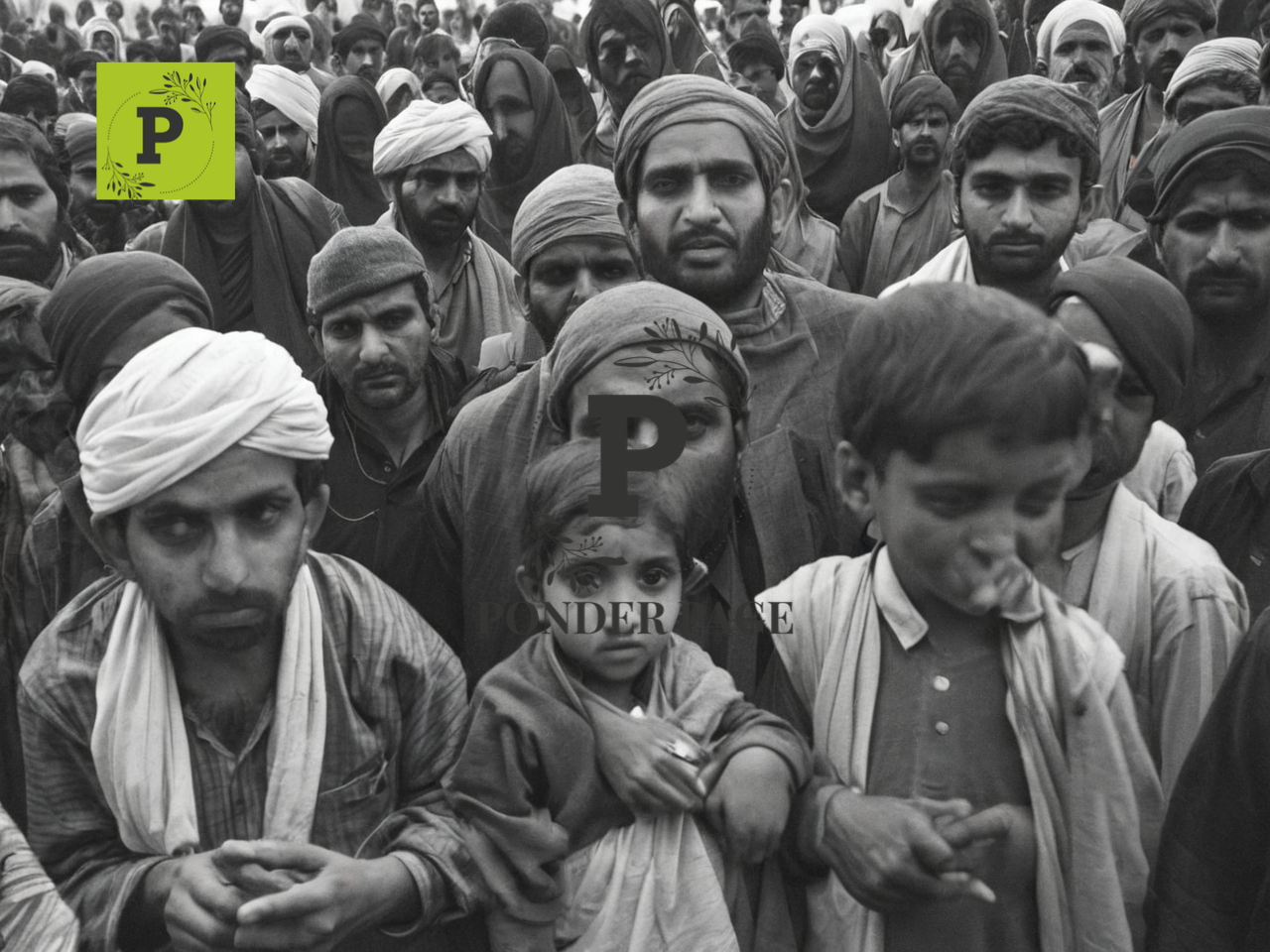
The Kashmiri Pandits’ Plight and the Tumultuous History of Kashmir: Back in the day, Kashmir was a place where people coexisted peacefully, without the specter of religious riots haunting their daily lives. But then, something changed. Between 1983 and 1990, over those seven years, the harmony fractured, and the once-loving community found itself torn apart by turmoil.
During that period, circumstances arose, orchestrated by a few, that led to a tragic chapter in Kashmiri history—the plight of the Kashmiri Pandits. But who was truly pulling the strings behind this tragedy? What motivations lay beneath the surface, driving events to such a devastating conclusion?
Let’s delve into the heart of the matter without getting tangled in semantics. Whether we refer to them as Kashmiri Pandits or simply as Hindus, the essence remains the same—their suffering demands understanding and acknowledgment.
As we go through this complex narrative, let’s set aside our preconceptions and biases. Instead, let’s strive for a deeper comprehension of the events that unfolded. It’s not about pushing a particular agenda; it’s about grasping the truth, however uncomfortable it may be.
So, let’s embark on this journey together, seeking clarity and insight.

(You can now subscribe to our Ponder Page WhatsApp channel)
Table of Contents
From Historical Roots to Modern Struggles
Kashmiri Pandits hold a significant place in the historical tapestry of Kashmir. Before the 13th century, Kashmir was predominantly Hindu, and the Kashmiri Pandits were integral to its cultural and religious fabric. However, the winds of change swept through the region around the 14th century, as Muslim rulers ascended to power.
This shift in leadership marked a tumultuous period for the Kashmiri Pandits. Faced with persecution and upheaval, many were compelled to leave their homeland—a mass exodus that echoed through the annals of history. This exodus, the first of its kind, stood as a stark testament to the challenges faced by the Kashmiri Pandits in their own land.
Yet, not all yielded to the pressures of displacement. Some left and then returned back. They are known as “Banmasi. “
Some chose to remain steadfast in their ancestral homes, earning the moniker “Malmasi.”
Others adapted to changing circumstances, engaging in trade and commerce as “Buhir Pandits.”
Over the centuries that followed the Muslim invasion, Kashmir underwent a demographic transformation, with the majority embracing Islam. Despite these changes, the Kashmiri Pandits endured, albeit as a minority within their homeland.
By the turn of the 20th century, the Kashmiri Pandit community remained resilient, albeit diminished in numbers. The 1981 census recorded their presence at 4.43%, totaling around 124,000 individuals. However, even as their population slightly increased by 1990, their plight remained a topic of grave concern.
Against this backdrop, the years between 1983 and 1990 emerge as a critical juncture in Kashmiri history—a period marred by upheaval and tragedy. It is within this timeframe that the seeds of discord were sown, leading to profound repercussions for the Kashmiri Pandit community.
In our exploration of this pivotal era, we shall unravel the events that unfolded, seeking to understand the complexities and nuances that shaped the fate of Kashmir and its people.
-
 Ceasefire Politics and Rise of Pakistan as a Global Mediator
 -
 From Protest to Turning Point: The Story of Jallianwala Bagh and Its Aftermath
 -
 The Roots of the India China Border in Ladakh
 -
 The Origins of the Indian National Congress: A Turning Point in Colonial India
 -
 The Evolution of Money: Life Before Currency
Power Shifts and Political Gambits
The political landscape of Jammu and Kashmir underwent a significant transformation following the passing of Sheikh Abdullah, with his son, Farooq Abdullah, assuming the mantle of leadership as the Chief Minister. In 1983, amidst the electoral process, Farooq Abdullah formed a coalition government with the Congress party, securing his position as CM.
Farooq Abdullah’s stance on Kashmir’s allegiance to India reverberated as per the situation both in Delhi and across the border in Pakistan, where he reiterated his commitment to Kashmir.
Within the corridors of power, tensions simmered, particularly within Farooq Abdullah’s own party, the National Conference. His brother-in-law, Ghulam Mohammad Shah, harbored ambitions of assuming the role of Chief Minister himself. The Congress party, astute in its political maneuvering, recognized this internal rift and saw an opportunity.
Exploiting the discord within the National Conference, Ghulam Mohammad Shah broke away, forming the Awami National Conference and attracting defectors from his brother-in-law’s party. Sensing an advantageous moment, Congress swiftly withdrew its support from Farooq Abdullah’s government and forged an alliance with Ghulam Mohammad Shah, propelling him into the coveted position of Chief Minister.
But why did Congress make this strategic move? The answer lies in the intricate web of political calculations and power dynamics. By aligning with Ghulam Mohammad Shah, Congress aimed to consolidate its influence in the region while capitalizing on the internal rifts within the National Conference.
In the realm of politics, alliances shift and strategies evolve, often driven by a quest for power and influence. The events surrounding Farooq Abdullah’s ousting and Ghulam Mohammad Shah’s ascension underscore the intricate interplay of ambition, rivalry, and pragmatism that defines the political landscape of Jammu and Kashmir.
The Unintended Consequences of Political Maneuvering in Jammu and Kashmir
Indeed, the dynamics between Farooq Abdullah and the Congress party were complex, marked by a degree of ambivalence and wavering allegiance. Farooq Abdullah’s inclusive approach, engaging with various stakeholders and voicing opinions across the spectrum, might have seemed diplomatically prudent to him. However, it didn’t align with Congress’s vision of a Chief Minister who would toe the party line.
In their quest for a compliant Chief Minister, Congress chose Ghulam Mohammad Shah, believing they could exert control over his administration. However, this decision backfired spectacularly. Instead of being a puppet of Congress’s whims, Ghulam Mohammad Shah asserted his independence in an unexpected manner.
Rather than adhering to Congress’s directives, Ghulam Mohammad Shah veered off course, delving into religious rhetoric and lending support to separatist elements. This deviation from Congress’s expectations caught them off guard and undermined their strategy significantly.
In hindsight, political analysts view Congress’s decision to install Ghulam Mohammad Shah as a grave miscalculation—a move that ultimately boomeranged on them. Instead of a pliable ally, they inadvertently empowered a figure who pursued his own agenda, contrary to their interests.
What was intended as a strategic move to consolidate power ended up destabilizing the political landscape, with far-reaching consequences for Jammu and Kashmir.

The Varied Agendas of Kashmiri Separatist Groups
These separatist groups represent various factions with distinct goals and ideologies within the broader movement for Kashmiri autonomy or independence. At the forefront are organizations like the Jammu and Kashmir Liberation Front (JKLF), Hizbul Mujahideen (HM), and the All Party Hurriyat Conference (Hurriyat).
JKLF advocates for complete independence for Kashmir, rejecting both Indian and Pakistani rule. Their approach involves armed resistance, but questions persist about their ability to govern and manage a sovereign state effectively.
Hizbul Mujahideen, on the other hand, seeks to merge Kashmir with Pakistan. Their agenda aligns more closely with Pakistani interests, and they aim to achieve their objectives through armed struggle.
The All Party Hurriyat Conference (Hurriyat) serves as a political platform representing various separatist groups and factions. While their ultimate goal may vary among members, they generally advocate for Kashmir’s separation from India and assert the right to self-determination for the Kashmiri people.
Each of these groups embodies different aspirations and strategies, reflecting the complex dynamics and competing narratives surrounding the Kashmir conflict. While their objectives may differ, they all contribute to the ongoing discourse and struggle for Kashmiri autonomy or independence.
Contrasting Visions of Freedom
You might have heard tales of freedom struggles, but have you ever encountered a narrative where the quest for freedom involves hoisting another nation’s flag post-liberation? It’s a unique scenario, indicating a strong ideological backing from Pakistan.
On the other hand, Hurriyat presents a different stance. They advocate for separation from both India and Pakistan, opting for dialogue over arms. It’s a nuanced approach, amidst a complex landscape where resolutions are sought through peaceful means.
Ghulam Mohammad’s strategy, for instance, highlights the disparities in representation, showcasing the dominance of Kashmiri Pandits in key sectors despite their lesser population—a testament to their literacy and historical roles.
The political landscape further unfolds with events like the unlocking of the Babri Mosque by Congress in 1986, a move aimed at appeasing Hindu sentiments amidst the backdrop of the Shah Bano case. However, this action inadvertently fueled tensions in Kashmir, exacerbating an already delicate situation and leading to further unrest.
Political Ambitions and Religious Tension
It appears Ghulam Mohammad’s aspirations extended beyond mere chief ministership—he sought perpetual dominance, leveraging the Muslim majority to ensure consistent electoral victories, regardless of the political landscape. This echoes the familiar game of politics played across India’s diverse regions.
His decision to propose the construction of a grand mosque at the site of an old temple in the New Civil Sachivalaya area ignited a powder keg of religious tensions. Kashmiri Hindus vehemently opposed, triggering riots.
The outcry against Ghulam Mohammad’s actions reached such a crescendo that even Congress, recognizing its blunder, swiftly ousted him on March 6th, 1986, ushering in a period of governor’s rule under Jagmohan’s stewardship. Jagmohan, a figure who operated in alignment with the ruling party’s directives, later transitioned his allegiance to the BJP, further complicating the political landscape.
Meanwhile, Farooq Abdullah’s admission in a Times of India interview on February 7th, 1991, sheds light on the murky undercurrents of cross-border tensions, with training and infiltration tactics being openly discussed. Benazir Bhutto’s threats towards Jagmohan further highlight the volatile atmosphere, hinting at potential provocations orchestrated from across the border.
Amidst these political maneuvers, Ghulam Mohammad’s removal did little to quell animosities, as enmity simmered and tensions escalated over the subsequent years.
The 1987 Political Shift in Kashmir
In a surprising turn of events, all the separatist factions coalesced, uniting under the banner of the Muslim United Front (MUF), determined to carve out their own political destiny. When the 1987 elections arrived, MUF boldly entered the electoral fray, leveraging religious rhetoric to amass significant support, buoyed further by backing from Pakistan.
However, Congress, wary of the potential implications for national security, couldn’t countenance MUF’s ascendance. Fearing the emergence of leaders who once contested elections under MUF’s banner as potent threats to stability, they forged an unlikely alliance with Farooq Abdullah, prioritizing their shared objectives over past animosities.
The electoral outcome mirrored this strategic realignment, as Farooq Abdullah and Congress once again clinched victory, reaffirming their grip on power. Farooq Abdullah resumed his position as Chief Minister, highlighting the pragmatism that often governs political alliances amidst the volatile landscape of Kashmir.
Electoral Discontent and the Rise of Militancy: The 1987 Kashmir Elections
The Muslim United Front (MUF) alleged electoral fraud, citing irregularities and discrepancies in the voting process. These allegations struck a chord with the common people, who witnessed firsthand the questionable practices during the elections.
The swift declaration of results from areas where Farooq Abdullah contested, contrasted with delays and anomalies in MUF-contested areas, raised suspicions of foul play. Reports, including those from the BBC, corroborated these concerns, with even Congress leaders acknowledging irregularities.
In response to the perceived injustice, MUF launched large-scale protests, demanding accountability and fair treatment. However, instead of addressing the grievances and punishing those responsible for electoral malpractice, the government resorted to crackdowns, imprisoning MUF leaders, including Yasin Malik.
This heavy-handed approach further fueled public anger and sympathy toward separatist leaders. Disillusioned with the political system, many turned away from conventional politics, opting instead to support separatist movements advocating for independence through armed resistance.
The convergence of anti-government sentiments and separatist aspirations catalyzed a unified front against the establishment. This unity saw various factions, including JKLF, mobilizing on a significant scale, with young Kashmiris being sent to Pakistan for training, and former MUF leaders transitioning into roles within militant organizations like Hizbul Mujahideen (HM), led by figures such as Syed Salahuddin.
The Impact of Global Dynamics on the Kashmir Conflict
The conflict in Kashmir became intertwined with global geopolitics during this period, mirroring the tumultuous events unfolding in Afghanistan. The retreat of the superpower Russia from Afghanistan marked a significant moment, attributed to America’s strategic backing of Jihad, channeling resources through Pakistan to support the Mujahideen.
Pakistan, inspired by this model, applied similar tactics in its proxy war against India, diverting funds and arms received from America to fuel insurgency in Kashmir. Leveraging the narrative of Jihad’s triumph over a superpower, Pakistan sought to galvanize Kashmiris by portraying India as a conquerable foe, as explicitly stated by Pakistani leaders.
The visible shift from Kashmiri separatist flags to Islamic banners reflected this religious turn in the Kashmiri freedom movement, morphing anti-India sentiments into anti-Hindu sentiments. This transformation highlighted the effectiveness of religious rhetoric in mobilizing the populace against the Indian government.
This proxy warfare strategy, manipulating local grievances and religious fervor to sow instability and detach regions from their parent countries, became a global trend. Exploiting discontent with governance, insurgents capitalize on religious and cultural identities to garner support, often with devastating consequences for both Hindus and Muslims in Kashmir.
JKLF, despite its religious rhetoric, pursued a ruthless agenda of eliminating those who aligned with or supported India, regardless of their religious affiliation. Their ruthless tactics exemplify the uncompromising stance of separatist forces, driven by a singular objective: the severance of ties with India, at any cost.

The Brutal Realities of Conflict in Kashmir
The interview with Bitta Karate sheds light on the grim reality of violence perpetrated against both Hindus and Muslims in Kashmir. Karate’s admission of targeting individuals based on greed and misinformation highlights the extent of manipulation and brutality inherent in the conflict.
Among the victims were Kashmiri Pandits, targeted not only for their perceived allegiance to India but also for the material gains that their properties offered to opportunistic informants. Even prominent figures like Mohammad Farooq Shah, the Mirwais of his time, fell victim to this insidious campaign, highlighting the ruthless tactics employed by militants to instill fear and assert control.
The transformation of the Mirwais position into a political tool, exemplified by its current incarnation within the All Party Hurriyat Conference, illustrates the evolution of strategies aimed at achieving Kashmiri separatism. The shift towards non-violent methods advocated by Hurriyat reflects a recognition of the limitations posed by armed resistance against the Indian army’s formidable presence in the region.
Local Muslims in Kashmir found themselves going through a precarious situation, where their safety hinged on avoiding actions that could be construed as pro-India. Conversely, Kashmiri Pandits faced persecution even in their silence, as their mere presence was perceived as a threat to the separatist cause.
Pakistan’s Evolving Role in the Kashmir Conflict
Pakistan’s involvement in the Kashmir conflict has been strategic and multifaceted. While Pakistan initially supported groups like the Jammu and Kashmir Liberation Front (JKLF), which advocated for an independent Kashmir, it later shifted its support to organizations like Hizbul Mujahideen (HM), which aimed to merge Kashmir with Pakistan.
Pakistan’s support for JKLF, despite its stance on an independent Kashmir, can be understood within the context of its broader strategic goals. By backing JKLF, Pakistan aimed to foster instability in the region and exert pressure on India without directly engaging in conflict. Supporting a group advocating for an independent Kashmir allowed Pakistan to maintain plausible deniability while still furthering its interests in the region.
However, as the dynamics of the conflict evolved, Pakistan recalibrated its strategy. Recognizing the limitations of supporting a group seeking independence, Pakistan shifted its support to HM and similar organizations, which explicitly sought to merge Kashmir with Pakistan. This shift aligned more closely with Pakistan’s long-term objective of annexing Kashmir and reflected a pragmatic approach to advancing its territorial ambitions.
Targeted Violence and Intimidation in Kashmir
The targeted killings of prominent Kashmiri Pandits marked a chilling escalation in the conflict, designed to instill fear and assert dominance over the populace. The murders of figures like Pandit Tika Lal Taploo and retired judge Neelkanth Kajloo sent shockwaves through the community, serving as a grim reminder of the dangers faced by those perceived as aligned with India.
The brazen abduction of the daughter of India’s home minister, coupled with the release of militants in exchange, showcased the audacity of the militants and their ability to manipulate the highest echelons of power. With each act of violence, the militants’ confidence soared, and the government of India found itself grappling with an increasingly emboldened adversary.
The savagery displayed by the militants, as they paraded through the streets brandishing AK-47s and chanting slogans, struck fear into the hearts of civilians and law enforcement alike. The publication of newspapers and mosque announcements calling for the expulsion of Kashmiri Pandits, coupled with the circulation of hit lists containing their names, further heightened tensions and terror within the community.
The night of January 19th stands as a harrowing testament to the meticulously orchestrated campaign of violence and intimidation, leaving the populace reeling from the coordinated onslaught. The events of that fateful night highlighted the calculated nature of the insurgency, leaving no doubt that these atrocities were executed with precision and planning.
A Tumultuous Period for Kashmiri Pandits
The appointment of Jagmohan as governor on November 19th, amid Farooq Abdullah’s resignation, ushered in a period of uncertainty and vulnerability for Kashmiri Pandits. With the seasonal shift of the capital between Jammu and Srinagar, government officials found themselves concentrated in Jammu, leaving Srinagar devoid of authority during a critical juncture.
The absence of effective governance created a vacuum, wherein Kashmiri Pandits were left exposed to the escalating violence and unrest gripping the valley. Despite Pakistan’s denial of involvement, the coordinated nature of the attacks and the sophisticated weaponry uncovered belied the notion of spontaneous, grassroots agitation.
Rajesh Pilot’s report to the Rajya Sabha from 1990 to 1993 laid bare the extent of external interference, with the seizure of rocket launchers, firearms, explosives, and communication equipment highlighting the orchestrated nature of the insurgency. Such resources, beyond the means of ordinary Kashmiris, pointed unmistakably to external sponsorship, despite Pakistan’s disavowal.

The Exodus of January 19th: A Night of Terror for Kashmiri Pandits
The night of January 19th unleashed a wave of horror and chaos upon Kashmiri Pandits, as murders, rapes, and looting ravaged their communities, forcing them to flee for their lives, leaving behind everything they held dear. What began as a night of terror soon escalated into a mass exodus, with lakhs of Kashmiri Hindus abandoning their homes in search of safety.
In the ensuing months, thousands more joined the ranks of the displaced, seeking refuge in makeshift camps as they grappled with the loss of their homes and livelihoods. While some were fortunate enough to have the means and support of relatives to rebuild their lives elsewhere, many others found themselves trapped in a perpetual state of uncertainty and longing, yearning to return to the homes they were forced to abandon.
Initially hopeful that the upheaval would be temporary, they clung to the belief that they would soon be able to reclaim their homes and resume their lives. However, as years turned into decades, the dream of returning home remained elusive, leaving them stranded in a painful limbo, forever yearning for the day when they can once again set foot in their beloved Kashmir.
Gawkadal Bridge Incident: A Flashpoint in Kashmir’s Tumultuous History
The events of January 21st at Gawkadal Bridge etched a tragic chapter in Kashmir’s history, as clashes between protesters and CRPF soldiers turned deadly. Conflicting reports from Indian authorities, international human rights organizations, and survivors paint a grim picture of the toll exacted on human lives, with varying figures indicating the magnitude of the tragedy.
Amidst the chaos and bloodshed, voices within the Muslim community expressed opposition to the exodus of Kashmiri Pandits, fearing the consequences of their departure, particularly the potential for heightened military intervention in the valley. Allegations surfaced, suggesting deliberate actions by authorities to facilitate the Pandits’ relocation, ostensibly to create a conducive environment for security operations.
The debate surrounding Jagmohan’s role in facilitating the Pandits’ departure highlights the polarizing perspectives on his actions. While some view his intervention as a necessary measure to prevent further bloodshed and safeguard lives, others see it as a calculated maneuver to assert control over the region, at the expense of communal harmony.
In the aftermath of the tragedy, discussions regarding casualty figures and narratives of victimhood often overlook the sacrifices made by security personnel, who have borne the brunt of the conflict in Kashmir. The staggering toll of soldiers martyred in the line of duty serves as a poignant reminder of the human cost of the ongoing strife, underscoring the need for a holistic approach to addressing the complex challenges facing the region.
Discrepancies and Displacement
The stark disparities between official figures and the accounts of survivors paint a troubling picture of the true extent of the tragedy endured by Kashmiri Pandits. While official records may understate the scale of violence and loss, the firsthand experiences of survivors attest to the devastating toll exacted by militancy in the region, with thousands of lives irrevocably altered or lost.
The exodus of both Kashmiri Pandits and supportive Muslims reflects the erosion of communal harmony and the breakdown of trust in the government’s ability to ensure security and protection for all its citizens. The departure of thousands from their homeland, whether due to violence, fear, or disillusionment, highlights the failure of governance and administration to uphold the rights and safety of its people.


The Kashmiri Pandits and their Ongoing Crisis
The reluctance to confront the escalating violence in Kashmir, coupled with the release of militants by political figures, only served to exacerbate the crisis and perpetuate the suffering of innocent civilians.
The exorbitant expenditure on the security of separatist leaders, juxtaposed with inadequate measures to address the needs of displaced Kashmiri Pandits, underscores the skewed priorities of successive governments. It’s a bitter irony that while promises are made in manifestos and assurances given in speeches, the ground reality remains unchanged for Kashmiri Pandits who continue to languish in displacement.
The disparity between rhetoric and action, exemplified by the failure to allocate land for the resettlement of Kashmiri Pandits despite repeated pledges, speaks volumes about the hollow nature of political promises. The prolonged displacement of Kashmiri Pandits, coupled with the lack of tangible progress in their rehabilitation, stands as a damning indictment of the political establishment’s indifference and ineffectiveness.
Until political expediency gives way to genuine commitment and concrete action, the plight of Kashmiri Pandits will continue to be relegated to the realm of rhetoric and political posturing, while they remain stranded in a perpetual limbo, yearning for the day when they can finally return home.
If you enjoyed this blog post, be sure to subscribe for more engaging content in the future! Stay updated on the latest developments and discussions by clicking the subscribe button above. Thank you for your support!



Leave a Reply