
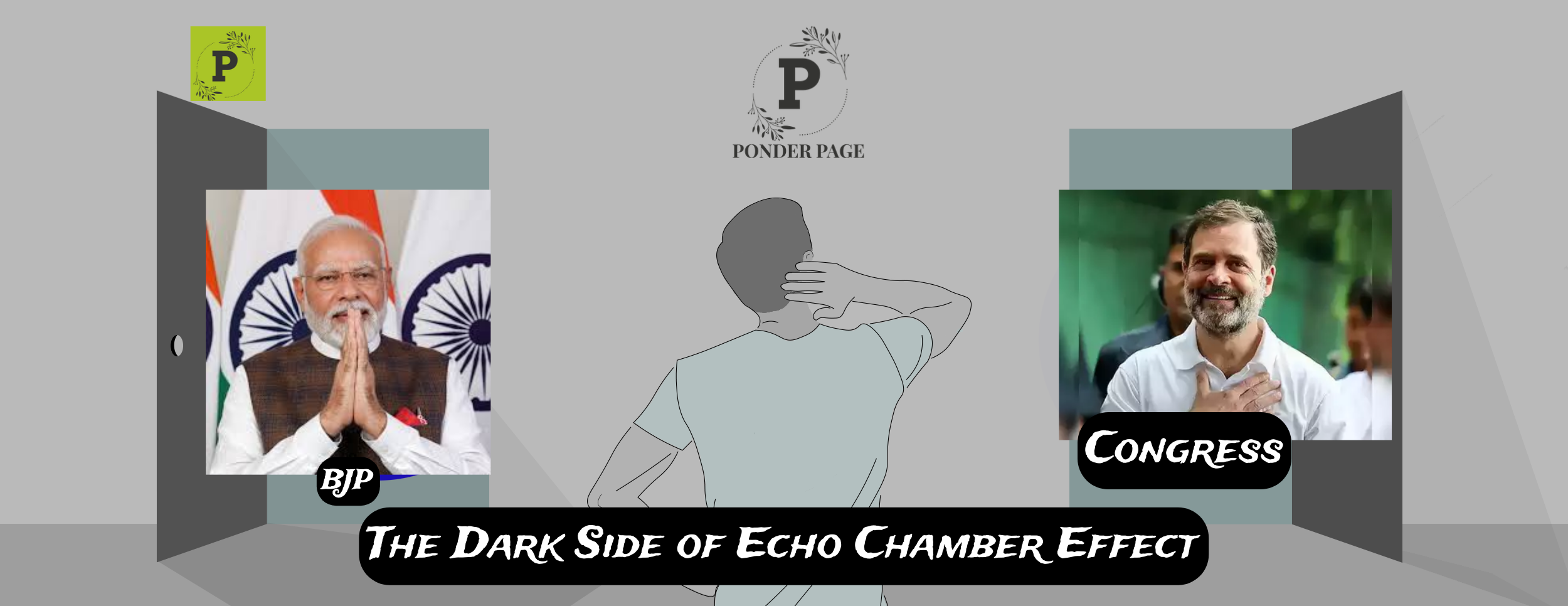
The Dark Side of Echo Chamber Effect: In today’s digital age, information flows faster than ever before, largely driven by social media and online communities. While this has democratized access to knowledge, it has also given rise to the phenomenon known as the “echo chamber effect.” This effect profoundly influences public discourse, personal beliefs, and societal polarization. In this article, we will delve into what the echo chamber effect is, its causes, consequences, and potential ways to mitigate its impact.
(You can now subscribe to our Ponder Page WhatsApp channel)

Table of Contents
What is the Echo Chamber Effect?
The echo chamber effect occurs when individuals are exposed predominantly to opinions and information that reinforce their own beliefs, creating a feedback loop of similar ideas. This phenomenon is particularly prevalent on social media platforms, where algorithms tailor content to users’ preferences, often at the expense of diverse perspectives. Consequently, individuals become isolated from differing viewpoints, leading to a homogenized and often radicalized view of the world.
-
 Ceasefire Politics and Rise of Pakistan as a Global Mediator
 -
 From Protest to Turning Point: The Story of Jallianwala Bagh and Its Aftermath
 -
 The Roots of the India China Border in Ladakh
 -
 The Origins of the Indian National Congress: A Turning Point in Colonial India
 -
 The Evolution of Money: Life Before Currency
Causes of the Echo Chamber Effect
Several factors contribute to the formation and persistence of echo chambers:
1. Algorithmic Personalization
Social media platforms and search engines use complex algorithms to personalize content for users. These algorithms prioritize information that aligns with users’ past behavior, likes, and shares, thereby creating a curated experience that reinforces existing beliefs.
2. Selective Exposure
Humans have a natural tendency towards selective exposure, seeking out information that confirms their preconceptions while avoiding contradictory information. This cognitive bias drives individuals to interact with like-minded people and consume media that supports their views.
3. Homophily
Homophily is the tendency of individuals to associate and bond with similar others. In online communities, this leads to the formation of groups where members share similar ideologies, further entrenching shared beliefs and values.

Consequences of the Echo Chamber Effect
The echo chamber effect has significant implications for individuals and society as a whole:
1. Polarization
One of the most notable consequences is societal polarization. As people are increasingly exposed to one-sided information, their views become more extreme. This can lead to a divided society where common ground is difficult to find.
2. Misinformation and Fake News
Echo chambers can perpetuate misinformation and fake news. Within these closed networks, false information can spread unchecked and be accepted as truth, as there is little exposure to factual counterarguments.
3. Erosion of Critical Thinking
Continuous exposure to homogenous viewpoints can erode critical thinking skills. Individuals may become less willing to question their beliefs or consider alternative perspectives, leading to intellectual stagnation.
4. Impact on Democracy
In democratic societies, the echo chamber effect can undermine healthy public discourse and informed decision-making. A well-functioning democracy relies on a well-informed citizenry that is exposed to diverse viewpoints and capable of engaging in reasoned debate.

Mitigating the Echo Chamber Effect
While the echo chamber effect poses significant challenges, there are strategies that individuals and platforms can employ to mitigate its impact:
1. Diversifying Information Sources
Individuals can make a conscious effort to seek out diverse information sources. Following news outlets, social media accounts, and thought leaders from different ideological spectrums can provide a more balanced view of current events and issues.
2. Encouraging Critical Thinking
Education systems and media literacy programs should emphasize critical thinking skills. Encouraging people to question information, consider its source, and evaluate its credibility can help combat the spread of misinformation.
3. Algorithmic Transparency and Reform
Social media companies can play a crucial role by improving algorithmic transparency and reforming their recommendation systems to promote diverse content. This includes reducing the emphasis on engagement metrics that prioritize sensational or polarizing content.
4. Fostering Inclusive Communities
Creating online and offline spaces that encourage respectful dialogue and the exchange of diverse ideas can help bridge ideological divides. Initiatives that promote understanding and empathy among different groups can counteract the isolating effects of echo chambers.


The Dark Side of Echo Chamber Effect: Editorial Opinion
The echo chamber effect is a complex phenomenon with far-reaching implications for individuals and society. By understanding its causes and consequences, and by actively seeking solutions, we can work towards a more informed and cohesive society. It requires the combined efforts of individuals, educators, media organizations, and technology platforms to ensure that diverse perspectives are valued and that the flow of information contributes to a healthier public discourse.
If you enjoyed this blog post, be sure to subscribe for more engaging content in the future! Stay updated on the latest developments and discussions by clicking the subscribe button above. Thank you for your support!





Leave a Reply