
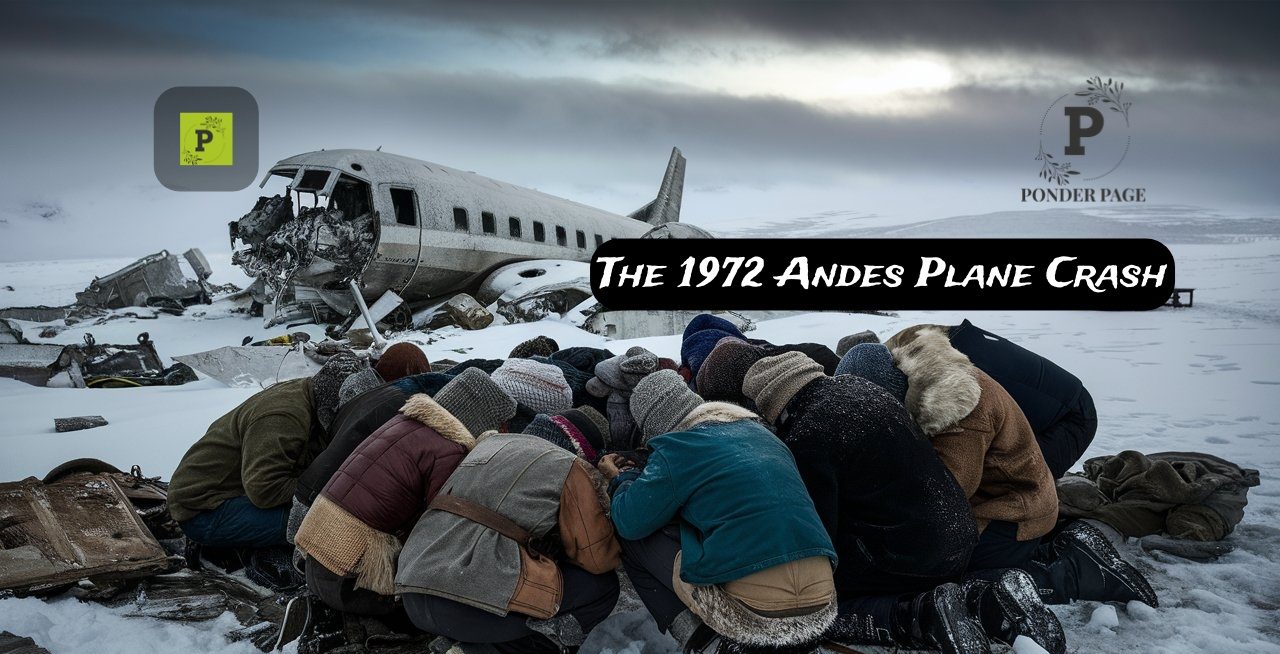
The 1972 Andes Plane Crash: The 1972 Andes Plane Crash is a harrowing tale of survival that has captivated the world for decades. It is a story of human resilience, the will to survive, and the extreme measures people will take when faced with the most dire circumstances. On October 13, 1972, a Uruguayan Air Force Fairchild FH-227D aircraft carrying 45 passengers, including members of a rugby team, their friends, and family, crashed in the Andes Mountains. The events that unfolded over the next 72 days would become one of the most remarkable survival stories in history.
(You can now subscribe to our Ponder Page WhatsApp channel)

Table of Contents
The Flight and the Crash
The plane took off from Montevideo, Uruguay, en route to Santiago, Chile. Onboard were members of the Old Christians Club rugby team, who were traveling to Chile for a match. The flight had a stopover in Mendoza, Argentina, before continuing its journey. However, the weather conditions were poor, and the pilots made the fateful decision to fly through the Andes instead of taking a safer route around them.
As the aircraft navigated through the mountains, visibility was low, and the pilots misjudged their position. The plane struck a mountain peak, severing the right wing. It then hit another peak, losing its left wing and tail section before crashing into a remote valley at an altitude of 3,570 meters (11,710 feet). Out of the 45 passengers and crew, 12 died instantly, and several others succumbed to their injuries in the following days.
The Struggle for Survival
The survivors were left stranded in one of the most inhospitable environments on Earth, surrounded by snow-covered mountains with temperatures plunging to -30°C (-22°F) at night. With limited food supplies, no proper clothing for the freezing conditions, and no means of communication, their situation seemed hopeless.
The survivors initially rationed the small amount of food they had, which included chocolate, wine, and a few snacks. They melted snow for water and used the wreckage of the plane for shelter. As days turned into weeks, the food ran out, and the survivors faced an unthinkable decision: to stay alive, they would have to eat the bodies of their deceased friends.

The Decision to Cannibalize
The decision to resort to cannibalism was not made lightly. The survivors were deeply religious, and the thought of consuming human flesh was horrifying to them. However, they were also aware that without food, they would not survive. They rationalized their decision by comparing it to the Christian sacrament of Holy Communion, where bread and wine symbolize the body and blood of Christ. They believed that their deceased friends would have wanted them to survive, even if it meant using their bodies as sustenance.
This act of survival became one of the most controversial aspects of the story, yet it was a choice born out of sheer desperation. The survivors knew that if they were to have any chance of being rescued, they would need the strength to endure the harsh conditions of the Andes.
Attempts to Signal for Help
Throughout their ordeal, the survivors made several attempts to signal for help. They used the aircraft’s radio to listen for any news of a search operation but were unable to transmit messages. They also tried to create large signs in the snow using suitcases and other debris, hoping that rescue planes would see them from the air. However, their efforts were in vain, as the search had been called off after eight days, with the assumption that there were no survivors.
Despite the overwhelming odds, the survivors refused to give up hope. They made makeshift sleeping bags from the plane’s insulation and used whatever materials they could find to keep warm. They organized themselves into groups, with each person taking on specific roles to ensure their collective survival.

The Trek for Rescue
As time passed and hope of rescue dwindled, the survivors realized that they would have to take matters into their own hands if they were to be saved. Two of the strongest survivors, Nando Parrado and Roberto Canessa, volunteered to embark on a perilous journey across the mountains to find help. After weeks of planning and preparation, they set out on December 12, 1972, with a small amount of food, homemade snowshoes, and the determination to survive.
The trek was grueling, and the two men faced numerous challenges, including extreme cold, altitude sickness, and treacherous terrain. They climbed to altitudes of over 4,600 meters (15,000 feet) and were forced to navigate through deep snow and steep cliffs. After ten days of arduous travel, they finally reached civilization when they encountered a Chilean shepherd named Sergio Catalán.
Catalán provided them with food and shelter and alerted the authorities. The news of the survivors spread quickly, and a rescue mission was immediately launched. On December 20, 1972, after 72 days of being stranded in the mountains, the remaining 14 survivors were rescued and brought back to safety.
Aftermath and Legacy
The story of the Andes Plane Crash quickly became a global sensation. The survivors were hailed as heroes, but they also faced criticism and moral questioning due to the cannibalism they had resorted to. Despite this, they remained steadfast in their belief that they had made the only choice possible to survive.
The crash and the subsequent survival story have been the subject of numerous books, documentaries, and films. The most famous of these is the 1993 movie “Alive,” based on the book “Alive: The Story of the Andes Survivors” by Piers Paul Read. The survivors themselves have also written books and given interviews, sharing their experiences and the lessons they learned from their ordeal.
One of the most significant legacies of the Andes Plane Crash is the strength of the human spirit. The survivors demonstrated incredible resilience, resourcefulness, and courage in the face of unimaginable adversity. Their story has inspired countless people around the world and serves as a reminder of the power of hope and determination.
The Psychological and Emotional Impact
The psychological and emotional toll on the survivors was immense. Many of them suffered from post-traumatic stress disorder (PTSD) and struggled to come to terms with the decisions they had to make to survive. The bond between the survivors, however, remained strong, as they had shared an experience that few others could understand.
The survivors formed a close-knit group, often meeting regularly to support one another. They also established a foundation to provide assistance to others who have experienced traumatic events. Over the years, they have continued to speak out about their experiences, offering insights into the human capacity for survival and the importance of community and solidarity in overcoming adversity. PP


The 1972 Andes Plane Crash: A Tale of Survival
The 1972 Andes Plane Crash is a story that transcends the boundaries of time and geography. It is a tale of survival, of the strength of the human spirit, and of the difficult choices that people must make when faced with life and death. The survivors of the crash demonstrated remarkable courage and resilience, and their story continues to inspire and resonate with people around the world. Their ordeal serves as a powerful reminder of the will to survive and the lengths to which humans will go to protect and sustain life.
What are your thoughts on this article ‘The 1972 Andes Plane Crash’? Let us know in the comments below.
If you enjoyed this article ‘The 1972 Andes Plane Crash’, be sure to subscribe for more engaging content in the future! Stay updated on the latest developments and discussions by clicking the subscribe button above. Thank you for your support!
📢 Dive into the latest discussions on social & trending topics! 🌍💬 Subscribe to Ponder Page for thought-provoking articles and interviews that dissect current issues. Don’t miss out on insightful content—hit that like & subscribe button now!





Leave a Reply