
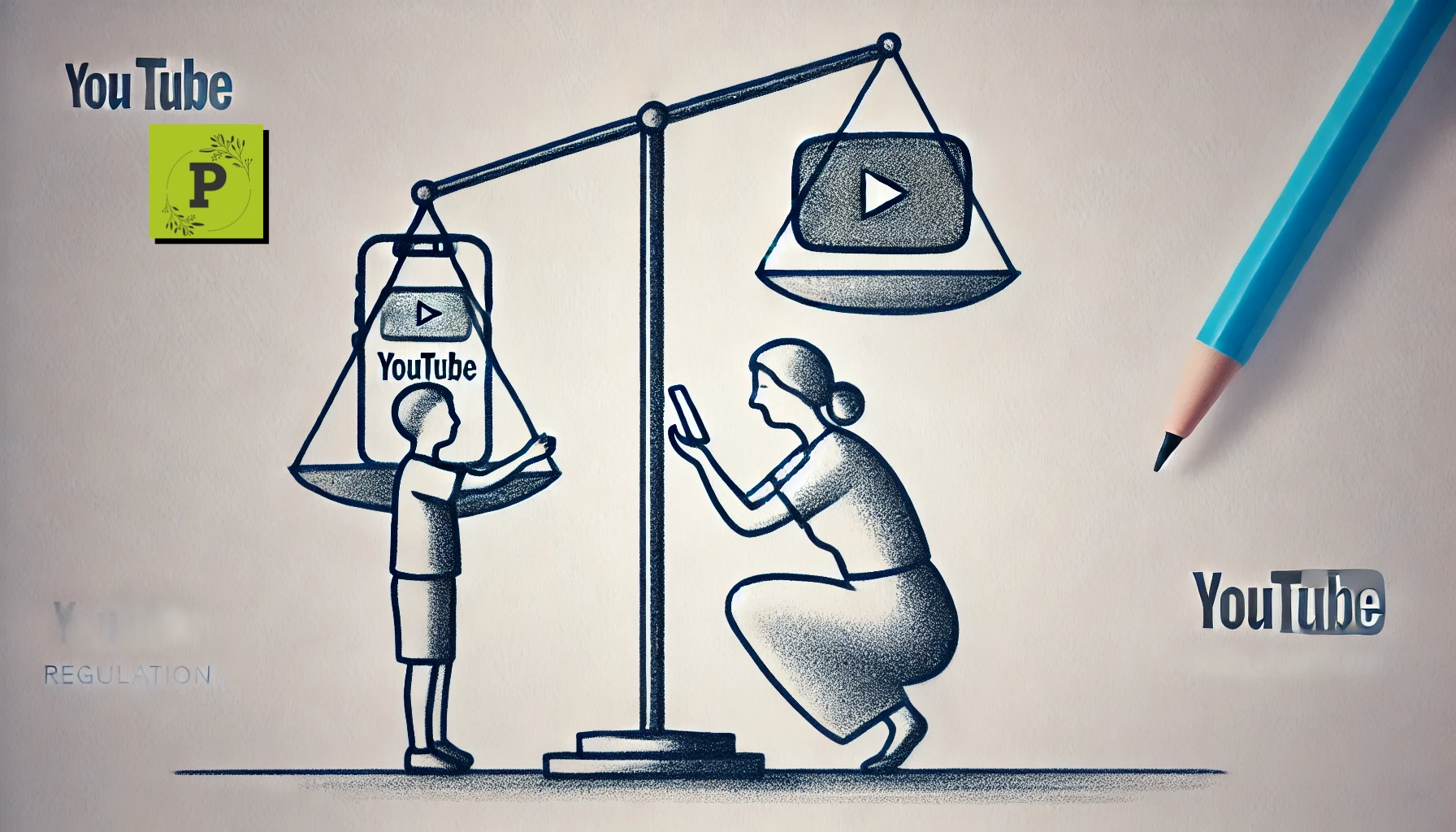
Should YouTube Be Regulated to Protect Children? The recent controversy surrounding Ranveer Allahbadia and Samay Raina’s comments on India’s Got Talent has sparked a new wave of discussions about regulating YouTube in India. Many voices have risen in favor of stricter control over content on the platform, arguing that it is necessary to shield children from inappropriate material. However, is regulating YouTube really the right approach? Or should the responsibility lie with parents who provide unrestricted access to smartphones at an early age?
(You can now subscribe to our Ponder Page WhatsApp channel)

Table of Contents
The Call for YouTube Regulation
The demand for regulating YouTube stems from concerns about children being exposed to obscenity, inappropriate jokes, and content that might not align with societal values. With the rise of social media influencers and content creators, the influence of online platforms on young minds has increased significantly.
Advocates of regulation argue that:
- Unrestricted Content Exposure: YouTube is home to an endless array of videos, ranging from educational materials to adult-oriented content. Unlike traditional television, which follows censorship guidelines, YouTube remains largely free from regulatory oversight.
- Impact on Children’s Mental and Emotional Health: Exposure to mature content at an early age can have adverse effects on children’s behavior, thought processes, and emotional well-being.
- Lack of Accountability from Creators: Many YouTubers create content that is entertaining but not necessarily appropriate for all age groups. Without stringent guidelines, the responsibility of filtering content falls on viewers, which may not always be effective.
While these arguments highlight legitimate concerns, imposing strict regulations on YouTube may not be the most practical solution.

The Problem with Over-Regulation
Although protecting children from inappropriate content is a valid concern, attempting to regulate YouTube raises several issues:
1. Threat to Free Speech
Content regulation, if taken too far, can hinder freedom of speech and creative expression. Many content creators rely on YouTube as a platform to express their views, share knowledge, and entertain audiences. Over-regulation could lead to excessive censorship, preventing valuable content from reaching viewers.
2. Feasibility of Content Moderation
Given YouTube’s massive scale, it is nearly impossible to regulate every single video uploaded daily. While the platform does have community guidelines, enforcing stricter rules could result in the removal of content that is not necessarily harmful but might be perceived as controversial by certain groups.
3. Burden on the Government and Regulatory Bodies
If the government intervenes to regulate YouTube, it would require a dedicated body to monitor content, assess its suitability, and impose penalties. This could lead to bureaucratic inefficiencies and potential misuse of power.
Parental Responsibility: The Right Approach
Instead of demanding government intervention, the responsibility should shift to parents who provide smartphones and internet access to their children. Here’s why parental control is a more viable solution:
1. Awareness and Supervision
Parents must be aware of what their children are watching online. Instead of blindly handing over multimedia phones to 12- or 14-year-olds, they should:
- Set clear rules for screen time.
- Monitor browsing history and YouTube watch history.
- Use parental control apps to restrict access to inappropriate content.
2. Educating Children About Online Content
Rather than relying on external regulation, parents should educate children about responsible internet usage. Teaching them about the potential dangers of online content, privacy issues, and ethical digital behavior will have a lasting impact.
3. Implementing YouTube’s Built-In Controls
YouTube itself provides several features to help parents control what their children watch, such as:
- YouTube Kids: A dedicated platform with child-friendly content.
- Restricted Mode: Filters out potentially harmful content.
- Supervised Experience: Allows parents to monitor their child’s viewing activity.
Using these tools effectively can help ensure that children are not exposed to inappropriate material while still allowing them to explore the vast educational resources available on the platform.
The Balanced Solution: Shared Responsibility
Rather than pushing for unnecessary government regulations, a balanced approach would involve YouTube continuing to improve its moderation policies, parents taking responsibility for their children’s internet usage, and content creators being mindful of their influence.
It is unrealistic to expect a single entity to bear the entire burden of protecting children online. A collaborative effort between platforms, parents, and educators can create a safer digital space without stifling creativity and free expression.


Should YouTube Be Regulated to Protect Children? Final Thoughts
While concerns about children’s exposure to inappropriate content on YouTube are valid, outright regulation of the platform is an extreme measure that could have unintended consequences. The more effective approach is to encourage responsible parenting, raise awareness about digital literacy, and utilize available content control tools.
Instead of blaming YouTube or content creators for what children consume online, the onus should be on parents to ensure responsible digital habits. After all, the internet is a vast space, and safeguarding children’s experiences should start at home.
What are your thoughts on this article? Let us know in the comments below. If you enjoyed this article, be sure to subscribe for more engaging content in the future! Stay updated on the latest developments and discussions by clicking the subscribe button above. Thank you for your support!
📢 Dive into the latest discussions on social & trending topics! 🌍💬 Subscribe to Ponder Page for thought-provoking articles and interviews that dissect current issues. Don’t miss out on insightful content—hit that like & subscribe button now!



Leave a Reply