
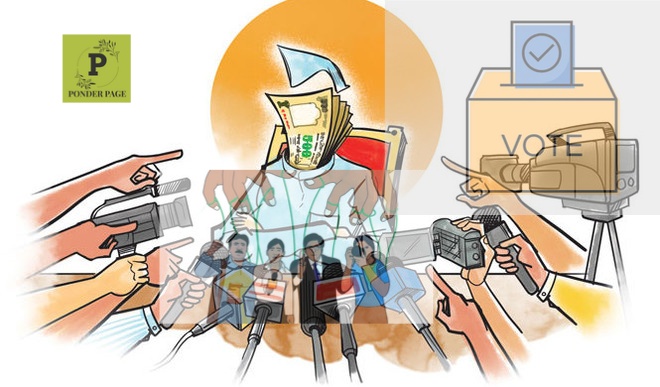
The Role of Indian Media in Misinforming Citizens During Elections: In contemporary democracies, the media holds immense sway over public sentiment, particularly during elections. India, known for its robust democracy and extensive electoral processes, sees the media’s influence magnified. Yet, the surge of digital platforms and the race for sensational news often steer Indian media towards disseminating misinformation during elections. This article delves into the myriad ways through which Indian media can misguide citizens and the consequential impacts thereof.
Table of Contents
Sensationalism Over Substance
During elections, Indian media frequently resorts to sensationalism, relying on exaggerated headlines and stories lacking substance. In the upcoming 2024 general elections, certain news channels are prominently featuring trivial incidents, diverting attention from crucial policy discussions and issues directly impacting citizens. This sensationalism not only distorts facts but also misrepresents candidates, fostering unnecessary panic among the electorate.

By prioritizing sensationalism over informative reporting, the media fails in its responsibility to provide accurate and balanced coverage during this critical period. Such practices undermine the democratic process by influencing public perception and diverting attention from the substantive issues that voters should consider when making informed decisions at the ballot box. It’s imperative for media outlets to uphold journalistic integrity and prioritize the dissemination of factual information to ensure an informed electorate and a healthy democracy.
Biased Reporting
Biased reporting poses another significant issue during elections. With many media houses having political affiliations, partisan coverage favoring specific parties or candidates becomes rampant. This bias often results in selective reporting, emphasizing the positive aspects of favored candidates while exaggerating or neglecting the negatives of others. As the 2024 general elections approach, several media outlets are already engaging in biased reporting, openly aligning with particular political factions and compromising their journalistic integrity. Such partiality not only distorts public perception but also undermines the democratic process by influencing voter decisions based on skewed information.
Fake News and Misinformation
Fake news and misinformation proliferate swiftly, particularly during electoral periods. Indian media outlets, encompassing both traditional and digital platforms, have faced accusations of disseminating false information to sway public opinion. A recent instance involved a news anchor falsely claiming that Dr. Abhishek Manu Singhvi was charging Rs. 1 crore per hearing from AAP candidates across all courts. This unverified and exaggerated report highlights the alarming trend of media outlets failing to verify facts before broadcasting. Such irresponsible journalism not only misleads the public but also undermines the credibility of the media and erodes trust in the democratic process.
Lack of Fact-Checking
In the race to be the first to report news, Indian media frequently overlooks the crucial step of fact-checking, leading to the spread of inaccurate information. Misattributed quotes, misleading statistics, and outright falsehoods can all contribute to the perpetuation of misinformation, leaving the public confused. Prior to the 2024 general elections, numerous news outlets are irresponsibly broadcasting unverified claims and rumors, adding to voter skepticism and mistrust. This lack of diligence not only damages the credibility of the media but also jeopardizes the integrity of the democratic process.

Polarization and Divisiveness
The role of Indian media in misinforming citizens not only spreads falsehoods but also deepens polarization and division within society. Biased reporting and sensationalism worsen existing rifts along religious, caste, and regional lines, fragmenting the electorate. Rather than encouraging informed discussion, media outlets propagate divisive narratives that manipulate communities against each other for political advantage. This not only erodes trust in the media but also undermines the social fabric of the nation, hindering progress and unity. It’s crucial for media organizations to prioritize responsible journalism that fosters understanding and unity, rather than exacerbating tensions for short-term gains.
Consequences of Misinformation
The consequences of Indian media misinforming citizens during elections are profound. Misinformation can distort electoral outcomes, undermine democratic institutions, and erode public trust in both the media and the political process. When voters are inundated with false information, they may make uninformed choices, leading to the election of unsuitable candidates or policies that do not reflect public sentiment. Moreover, misinformation perpetuates ignorance and apathy, hindering the development of an informed and engaged citizenry.

The Role of Indian Media in Misinforming Citizens and Editor’s View
The role of Indian media in misinforming citizens during elections is a significant concern. Sensationalism, biased reporting, fake news, lack of fact-checking, and polarization contribute to misinformation, undermining democracy and societal well-being. It is crucial for media organizations to uphold journalistic integrity, prioritize accuracy, and serve as responsible guardians of democracy. Only then can Indian media fulfill its duty to inform and empower citizens during elections effectively.
Subscribe
If you enjoyed this blog post, be sure to subscribe for more engaging content in the future! Stay updated on the latest developments and discussions by clicking the subscribe button above. Thank you for your support!
You can now subscribe to our Ponder Page WhatsApp channel



Leave a Reply