
(You can now subscribe to our Ponder Page WhatsApp channel)
Table of Contents
Introduction
Ram Mandir Dispute: Chapter I – In India, nestled within the state of Uttar Pradesh, lies a region of profound historical significance, specifically within the Ayodhya district. Once known as the Faizabad district, it has undergone a renaming, now aptly termed Ayodhya. Along the banks of the serene Saryu river, a parcel of land spanning 2.77 acres, designated as plot number 583, commands attention. This land holds a pivotal place in India’s narrative, serving as the epicenter of a longstanding and expansive land dispute. Presently, it witnesses the monumental construction of the Ram Temple, heralding a transformative chapter in its chronicles.
Across the broader expanse of 67.7 acres, the contentious area narrows down to a specific portion of 2.77 acres, demarcated as plot number 583. However, the focal point of dispute dwindles further to a mere 0.313 acres, where the construction of the Ram Temple diligently progresses.

The Sacred Grounds of Ayodhya
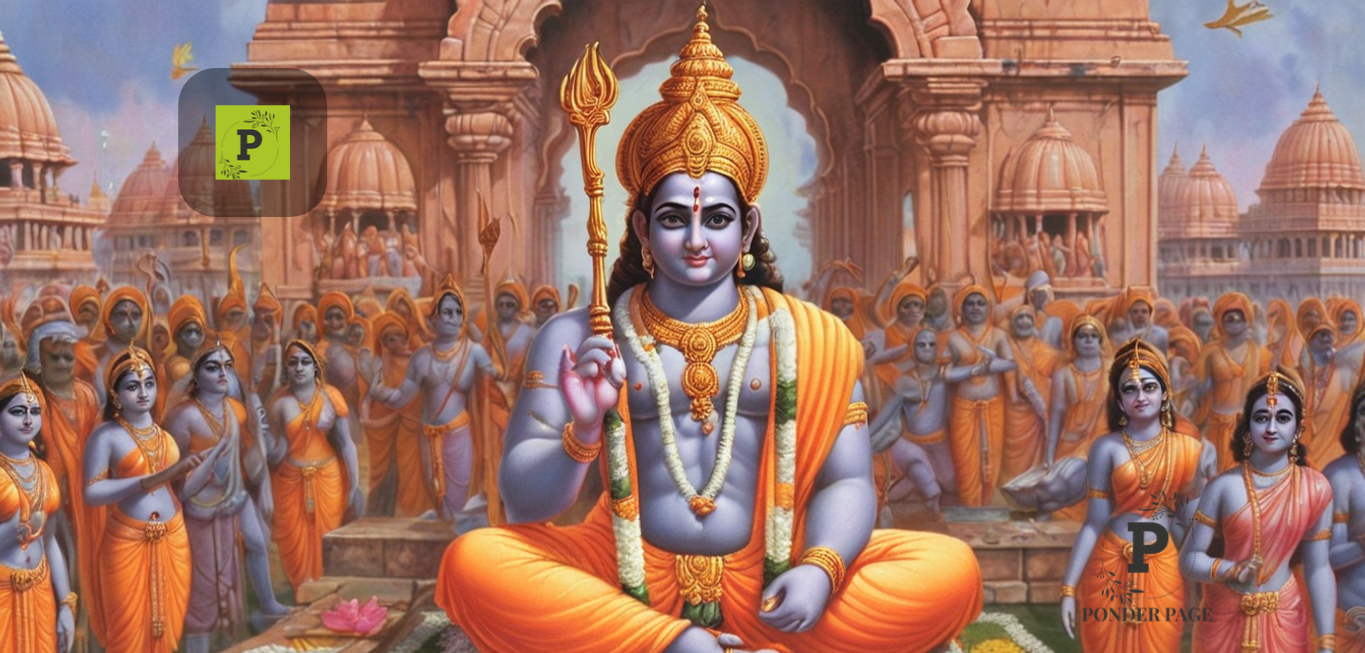
Tracing back to the annals of 500 BC, Ayodhya flourished as the proud capital of the illustrious Kingdom of Kosala. It was during this epoch that Maharaja Kush, the revered son of Lord Ram, raised the inaugural Ram Temple at his father’s birthplace in Ayodhya, paying homage to his esteemed lineage. Through successive generations, a lineage of 44 monarchs ascended the throne, steering the destiny of the land.
The culmination of this lineage arrived with Brihadbala, the final sovereign during the era of the Mahabharata. Alas, tragedy marred Brihadbala’s tenure as Abhimanyu vanquished him on the battlefield, leading to his demise. With his passing, the fate of Ayodhya and the Ram Temple plunged into uncertainty, teetering on the precipice of decline.
The Rise and Fall of Empires: Ayodhya Through the Ages and the Ram Mandir Dispute
Continuing the narrative, in the year 57 AD, Maharaja Vikramaditya of Ujjain embarked on a hunting expedition that led him to the sacred grounds of Ayodhya. Amidst the verdant surroundings, he encountered Saints and was profoundly moved upon learning of the rich history embedded within the land. Inspired by the tales of antiquity, Maharaja Vikramaditya undertook a momentous endeavor – the reconstruction of the Ram Temple and the revitalization of the entire city of Ayodhya. Under his patronage, Ayodhya blossomed into a hub of cultural and architectural splendor, with the Ram Temple standing as a testament to his reverence for the legacy of Lord Ram.
However, the tranquility of Ayodhya was soon disrupted by the tumultuous events of the year 1526. The pivotal Battle of Panipat unfolded, culminating in the decisive victory of Mohammad Babur over Ibrahim Lodhi. With Babur’s triumphant entry into India on 20th April 1526, a seismic shift in the socio-political landscape ensued. It marked the dawn of an era where the ascendancy of a ruler heralded profound transformations, particularly in matters of faith and architecture. Religious structures belonging to communities other than the conquering ruler’s were systematically replaced with edifices reflective of their own religious creed.
-
 The Bermuda Triangle Mystery: The Shocking Truth Behind Flight 19, Mary Celeste, and Ghost Ship Disappearances
 -
 Pakistan Army Business Empire Explained | How the Military Controls Pakistan's Economy, Real Estate & Politics
 -
 Israel vs Palestine Explained | How Low-Cost Missiles, Security Policies, and Territorial Disputes Have Shaped the Israel–Palestine Conflict
 -
 Operation X | The Secret Naval Mission That Helped Isolate East Pakistan Before the 1971 War | The Crisis in East Pakistan During 1971
 -
 The 2002 Godhra Train Burning and Gujarat Riots: A Detailed Account of One of India's Most Controversial Tragedies
Babur’s Directive: The Genesis of Conflict
Two years following his conquest of India, in the year 1528, Babur summoned his trusted commander, Mir Baqi. He issued a directive concerning Kot Ram Chandra, a village nestled within Ayodhya, possessing a parcel of land spanning 2.77 acres. In a move that would reverberate through history, Babur instructed Mir Baqi to oversee the construction of a mosque on this site. It’s crucial to note that the area was already home to the revered Ram Temple, a sanctuary deeply entrenched in the spiritual fabric of the region. Tragically, the realization of Babur’s edict entailed the demolition of the existing Ram Temple to make way for the construction of the mosque.
Following the directive, the Babri Masjid was erected on the grounds of Kot Ram Chandra in the Faizabad district, now known as the Ayodhya district, situated within its Sadar Tehsil, Pargana Haveli Avadh. The significance of this mosque cannot be overstated, as it became the focal point of a series of consequential events that would shape the course of history.
Upon its construction, local inhabitants voiced their discontent in subdued tones, recognizing the sanctity of the land as the birthplace of Ram. However, their grievances went unheeded amidst the enduring Mughal rule, which persisted for generations until the twilight years of the empire, nearly reaching its conclusion by 1857.
Colonial Intricacies: British Intervention and Documentation
During this period, a pivotal development occurred, profoundly impacting the trajectory of the Babri Masjid dispute. Seven English travelers traversing the northern and western realms of India meticulously documented their observations, including detailed accounts of Ayodhya, the Ram Temple, and the religious practices of the local populace. These meticulous travel notes would later assume critical significance in the unfolding legal and historical discourse surrounding the contested site. William Foster’s book “Early Travels in India” provides crucial insights into the historical context surrounding Ayodhya, including the observations made by travelers such as Joseph Tiefenthaler and William Finch.
As the influence of the Mughal Empire waned and the British colonial era dawned, Sawai Jai Singh emerged as a prominent figure deeply invested in the fate of the Ram Temple. Sensing the shifting tides of power, Sawai Jai Singh took proactive measures to safeguard the Hindu faith. Following the construction of the Babri Masjid, he acquired land adjacent to the mosque and erected a Ram Chabutra, providing a space for Hindus to offer prayers in close proximity to the revered site. This gesture allowed devotees to express their reverence, albeit from outside the confines of the mosque, facing towards its central dome as a symbol of their enduring devotion.

Division Created
After the construction of the Chabutra in the same location, a division was created, with a designated area for Namaz on one side and Lord Ram’s worship on the other. Subsequently, the Mughal era concluded, and the British presence began in India.
Upon the arrival of the British, concerns were raised by local groups regarding the Ram Temple, alleging that the mosque had supplanted its original site, leading to disturbances among the populace. In 1838, the British authorities, under the administration of Robert Montgomery Martin, tasked him with conducting a thorough survey of the area to ascertain its historical context and provide a comprehensive report.
Martin’s Survey and the Ram Mandir Dispute
Following Martin’s survey, he produced a detailed report consisting of three parts. He concluded that the contested land, currently embroiled in disputes between Hindus and Muslims, had originally housed a temple. However, he could not definitively determine if someone had built the mosque upon the ruins of the temple or on undisturbed ground.
Following the submission of Martin’s report, tensions escalated as voices grew louder, asserting that the Babri Masjid stood on the very birthplace of Ram Lalla. Amidst these debates, in 1853, just a few yards away from Ram’s birthplace, Hanuman Garhi stood under the guardianship of Bairagi Saints affiliated with the Nirmohi Akhara.
Sectarian Strife: Riots and Discord
In the wake of Martin’s report, unrest simmered in the area. Eventually, the saints of Hanuman Garhi claimed that the Muslims erected the mosque upon the ruins of the Ram temple. Their assertion led to an attempt to assert control over the mosque’s premises, triggering the first documented riot in the region. This event catalyzed a surge in tensions between Hindu and Muslim communities, resulting in a series of riots over the next two years.

Assault on Hanuman Garhi
By 1855, Sunni Cleric Ghulam Hussain was contesting the narrative, claiming that Hanuman Garhi had originally been a mosque, and the temple had been constructed after its demolition. Incited by his rhetoric, nearly 500 Muslim followers launched an assault on Hanuman Garhi. However, the outnumbered Bairagi Saints, bolstered by 8,000 supporters, fiercely defended the site, resulting in significant casualties on the Muslim side, with 75 fatalities recorded.
The escalating riots posed a significant challenge for the British administration, prompting them to intervene by partitioning the disputed land between Hindus and Muslims in an attempt to restore order. However, this division failed to pacify either community. In 1857, recognizing the persistent unrest, the British authorities resorted to constructing a 6-7 feet tall wall using grill and bricks on the disputed site.
Subsequently, Hindus began offering prayers in the outer portion of the partitioned area, while Muslims commenced their Namaz in the inner section. Despite this arrangement, neither Hindus nor Muslims were satisfied with the imposed division, yet they acquiesced to British authority.
Elevation of the Ram Chabutra: Ram Mandir Dispute
On November 28, 1858, Mahant Nihang Singh Fakir from Punjab, accompanied by 25 Nihang Sikhs, arrived at the disputed site, the birthplace of Ram. They brazenly entered the mosque, chanting and praying fervently. Surrounding the mosque on all four sides, the Nihang Sikhs inscribed ‘Ram’ inside with coal and offered prayers to Guru Nanak Ji. Additionally, they elevated the Ram Chabutra, expanded the prayer area, and adorned it with Lord Ram’s image.
The Battle for Ownership: Legal Disputes and Tensions
Concerned about these developments, the mosque’s Muezzin, Sayyed Muhammed Khateeb, lodged a written complaint with the local authorities, led by Sheetal Dubey, the Thanedar of the area. Upon arrival, the authorities attempted to remove the Nihang Sikhs, but the confrontation persisted. Moreover, the simultaneous Azaan (Muslim call to prayer) and conch blowing further exacerbated tensions, leading to a surge in complaints from both sides, intensifying the already volatile situation.
Following this, we arrive at the year 1877, where the Hindu community asserts ownership over the outer portion of the disputed land. The authorities receive a request to open Singh Dwar for entry from two sides due to logistical issues arising from the single entry point. After negotiations, they agree, resulting in the establishment of two entry points. For six years, matters remain under control until the events of 1883 unfold. Mahant Raghuvar Das, the priest of Ram Chabutra, seeks permission to construct a temple measuring 17 by 21 feet.
However, on January 19, 1885, the Deputy Commissioner intervenes, halting the construction due to concerns about potential riots. Despite the Commissioner’s decision, Mahant Raghuvar Das argues that since the outer portion belongs to the Hindus, there should be no issue with construction on that side.
Shifts in Power: Mahant Raghuvar Das and the Temple Construction
Tensions escalate, leading Mahant Raghuvar Das to file a case in court on January 27, 1885. However, the District Judge dismisses the appeal on March 18, 1886, citing the need to maintain the status quo to prevent further unrest. Undeterred, Mahant Raghuvar Das appeals again on November 1, 1886. This time, the court rules against him, stating that he lacks ownership rights and therefore cannot lead the construction.
Turmoil and Tension: Incidents of the Early 20th Century
Moving forward to March 27, 1934, a significant incident occurs in the village of Shahjahanpur in Ayodhya, where a cow is slaughtered. This incident sparks widespread riots, culminating in an attack on the mosque, resulting in damage to its wall and dome. Despite the reconstruction efforts by the British India Government, Muslims feel insecure, and some refrain from offering prayers at the mosque due to perceived violations of ‘Shariyat’ arising from concurrent Hindu religious activities on the outer portion, such as singing bhajans and conducting rituals.
The Dawn of Independence: Ayodhya in 1947
Following these events on Ram Mandir Dispute, we reach the pivotal year of 1947, marking the independence of our country. In the next blog post, we will continue and discuss the developments and aftermath of this significant milestone, as the current blog has already extended in length.
If you enjoyed this blog post on Ram Mandir Dispute, be sure to subscribe for more engaging content in the future! Stay updated on the latest developments and discussions by clicking the subscribe button. Thank you for your support!
Source of Ram Mandir Dispute Blog Post: Civil Appeal Nos 10866-10867 of 2010 & Nitish Rajput





Leave a Reply