
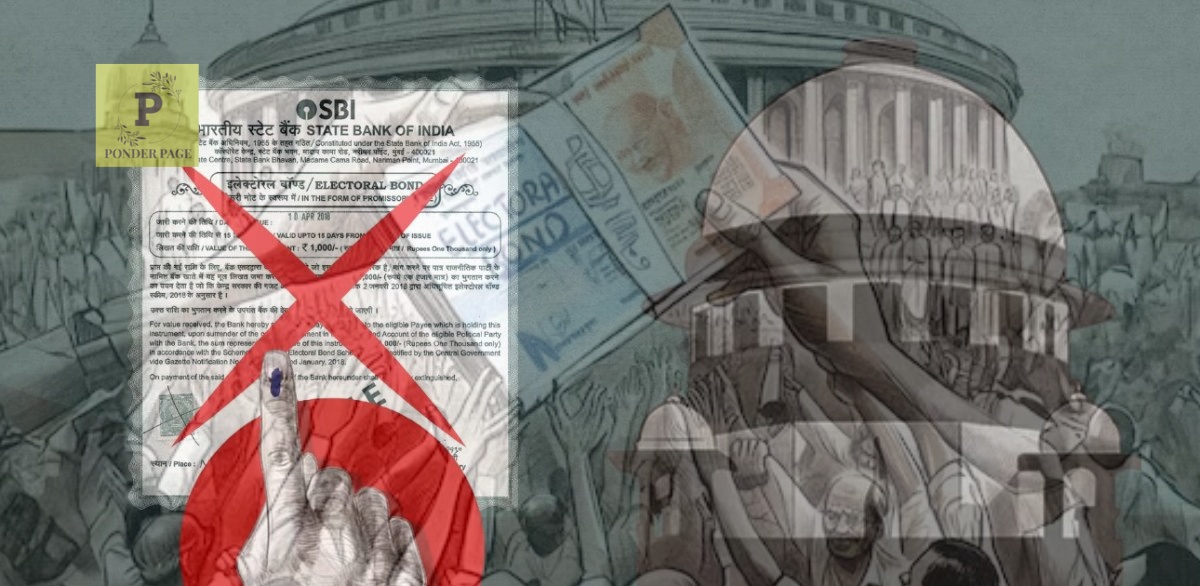
Understanding the Operation of Unconstitutional Electoral Bonds: Running a political party demands a staggering sum of money. It’s an endeavour where even defeat comes at a hefty price tag, measured in crores of rupees.
From sustaining the energy of volunteers with meals and beverages to arranging transportation, designing custom apparel like t-shirts and caps, and waving flags high, every aspect incurs its own expense. And let’s not forget the digital realm, where marketing strategies vie for attention and influence. Then there’s the complex process of securing votes, often involving the exchange of various incentives during election time. Considering the scale of operations spanning an entire nation, the financial burden becomes immense.
Table of Contents
Disparity in Election Spending and National Development
In the last Lok Sabha election, a staggering sixty thousand crores were poured into the fray. India holds the dubious distinction of topping the global charts in election spending, yet when it comes to investing in education, we barely scrape the 62nd rank. It’s a perplexing reality considering that political parties don’t manufacture goods or pioneer innovations to earn such colossal amounts.
So, where does this flood of funds originate? Certainly not from the personal coffers of all leaders, nor by selling off their ancestral properties. No, the source lies closer to home—it’s your hard-earned money. Money that could have paved roads or bolstered healthcare and education initiatives. Instead, it’s diverted to craft customized t-shirts and caps, mere trinkets in the grand scheme of national development.
Ethics of Charitable Giving
Imagine you find yourself blessed with an abundance of wealth, eager to make a difference through charitable giving. The choice seems straightforward: support an old age home or a child care center, organizations dedicated to providing care and comfort to those in need. Yet, in the realm of political donations, the landscape is murkier.
If you were to broach the topic with those around you, you’d likely encounter reluctance, perhaps even disdain, towards contributing to political causes. And yet, despite the apparent lack of enthusiasm from the public, political coffers swell with staggering amounts. Between 2017 and 2024 alone, political parties managed to amass a whopping INR. 16,000 crores in donations, shrouded in secrecy, leaving the identity of the donors veiled in obscurity.
In temples, donors often proudly inscribe their names in bold capitals beside the gifts they offer, even something as small as a fan. Yet, in the realm of political donations, anonymity reigns supreme as crores of rupees flow without a trace of acknowledgment. There’s a simple principle at play here: quid pro quo. Give with one hand, take with the other.
Pay-to-Play and the Influence of Big Business
It’s a vicious cycle perpetuated by political parties: they disrupt the system, impede its proper functioning, and then demand payment to navigate the very obstacles they’ve created. They cloak this transactional process under the guise of “fundraising” or “party funding,” but in reality, it’s a system of pay-to-play where influence is bought and sold.
This isn’t just about inconveniencing small businesses or the working class; it’s about catering to the interests of big businessmen who hold the keys to significant financial support. When these titans of industry donate, they expect favors in return, often shaping policies and regulations to suit their needs. It’s no wonder that when party representatives come knocking for contributions, refusal isn’t really an option.

Tax Incentives and Political Patronage
Furthermore, leaders have crafted rules that incentivize donations by offering legal benefits. Take, for instance, the tax exemption scheme: donate a portion of your earnings to a political party, and suddenly you’re granted a blanket of protection from taxes.
It’s a tempting proposition, especially for businesses looking to save on expenses and curry favor with those in power. And with each donation, the power dynamics shift further, with rules and regulations skewed in favor of those who open their wallets widest. It’s a system where money talks, and those who pay up get a front-row seat to shaping the future in their favor.
It’s interesting to note the disparity in tax benefits between donations to religious NGOs and political parties. While contributing to a religious NGO offers a 50% discount on taxes, the remaining 50% still incurs taxation without any additional benefits. This stands in stark contrast to the generous exemptions and protections afforded to political donors.
It raises questions about the priorities and values embedded within the tax system—why is there such preferential treatment for political contributions over donations to organizations dedicated to religious or charitable causes?
The Disparity in Regulations and Realities
The realm of political donations operates under an interesting dynamic where there’s no limit on how much one can donate to a political party. Donors are free to contribute as generously as they desire to the party’s coffers. However, it’s the leaders who face restrictions ‘on books’ on their spending.
According to the Election Commission, no leader can exceed a spending limit of 70 lakhs. Yet, this figure seems almost laughable in the face of contemporary campaign costs. The reality is that securing a party ticket alone often demands far more significant investments, let alone the expenses associated with campaigning.
In practice, leaders spend as they see fit, often surpassing the prescribed limits with impunity. While the Election Commission may issue notices regarding overspending, enforcement remains a challenge. This discrepancy highlights a systemic flaw in electoral finance regulation, where rules meant to promote fairness and accountability often fall short in the face of political realities.
Misuse of Financial Resources in Electoral Politics
Indeed, our constitution recognizes the importance of financial resources for leaders to effectively communicate their vision and manifesto to the people across the vast expanse of our country. It’s a crucial aspect of democracy ensuring that even those with limited resources can participate meaningfully in the electoral process.
However, what we witness in reality often deviates from this noble intention. Instead of utilizing funds to disseminate their message and engage with constituents, some leaders resort to distributing material goods like liquor and other incentives to sway votes. This misuse of funds contributes to India’s dubious distinction as the top spender in elections globally.
The Electoral Bond Conundrum
The dynamics of political donation underwent a significant transformation with the introduction of electoral bonds in 2017. Under this system, individuals must purchase electoral bonds from the State Bank. These bonds are then redeemable by political parties within a specified period. The government assured that the anonymity of donors would be maintained, with no details of the donor’s identity or the amount donated being disclosed in the bond.
However, concerns arose when investigations revealed the presence of an alphanumeric code embedded within the bonds, raising questions about the anonymity of donors. Despite clarifications from the then finance minister, the issue remained unresolved, leaving a cloud of uncertainty over the transparency of the electoral bond system.
Opposition parties, while initially silent on the matter, later raised concerns about the potential misuse of the system, particularly since banks conduct KYC procedures for bond purchases, thereby potentially exposing donor details to the ruling party.

Anonymity, Risk, and Trust
The scenario presented poses a dilemma of anonymity and trust in bribery, mirroring the complexities faced by political donors. In such a situation, the choice of whom to bribe would likely depend on various factors, including the potential repercussions and the trustworthiness of the individuals involved. While one person may have the advantage of anonymity, the other may pose a higher risk if they are aware of the bribe-giver’s identity.
Similarly, donors navigating the electoral bond system face a similar quandary. The anonymity promised by the electoral bonds provides a shield for donors, allowing them to contribute without fear of repercussions or favoritism. However, the inherent risk lies in the potential breach of anonymity, as evidenced by concerns surrounding the alphanumeric codes embedded in the bonds.
As a result, the majority of electoral bond funding tends to flow towards the ruling party, given the perceived assurance of anonymity and the potential repercussions donors may face if their identities are revealed to opposition parties. This dynamic highlights the broader issue of transparency and accountability in political financing, highlighting the need for reforms to ensure fairness and integrity in the electoral process.
A Disputed Tool Against Black Money and Expert Concerns
The introduction of electoral bonds was touted by the government as a measure to curb black money in political funding. However, both the Reserve Bank of India (RBI) and the Election Commission expressed concerns that the system could actually exacerbate the issue of black money. In fact, the Election Commission went as far as filing an affidavit stating its apprehensions about the potential increase in black money due to electoral bonds.
Despite these concerns raised by authoritative bodies, some leaders dismissed them, suggesting that the RBI simply didn’t understand the intricacies of electoral bonds. This dismissive attitude towards expert opinion raises questions about the government’s commitment to transparency and accountability in electoral financing.
Moreover, the fact that electoral bonds are primarily used for election purposes, yet the Election Commission’s reservations about them were disregarded, raises red flags about the approval process. It begs the question of who ultimately approved the implementation of electoral bonds, especially in light of the concerns raised by regulatory bodies.
The Call for Transparency and Accountability in Political Financing
The lack of transparency surrounding the entire process, coupled with suspicions of preferential treatment towards the ruling party, only serves to further erode public trust in the electoral system. It highlights the urgent need for greater transparency, accountability, and public scrutiny in matters pertaining to political financing to uphold the integrity of democratic processes.
The disparity in accountability between individuals and political entities regarding financial transparency is glaring. While individuals are subject to rigorous scrutiny and multiple notices if they fail to disclose their income, political parties seem to operate with impunity, evading such scrutiny altogether. Even private companies with modest turnovers undergo meticulous auditing, yet political parties seem to evade such scrutiny entirely.
The lack of transparency extends to the acceptance of donations as well. Further, during the demonetization period, while the public was restricted from using old currency notes, political parties were permitted to accept donations in these notes.

Operation of Unconstitutional Electoral Bonds and Safeguarding Democracy
In a democracy as vast as ours, it’s imperative that citizens are aware of the sources of funding for political parties. In countries like the United States, such information is readily available to the public, enabling voters to make informed decisions.
The recent ruling by the Supreme Court on Electoral Bonds, declaring the scheme unconstitutional, is a welcome step and highlighted the paramount significance of openness in issues concerning public welfare.
Ultimately, there’s a pressing need for greater transparency, accountability, and consistency in governance to uphold the principles of democracy and ensure the well-being of citizens.
Subscribe
If you enjoyed this blog post, be sure to subscribe for more engaging content in the future! Stay updated on the latest developments and discussions by clicking the subscribe button above. Thank you for your support!




Leave a Reply