
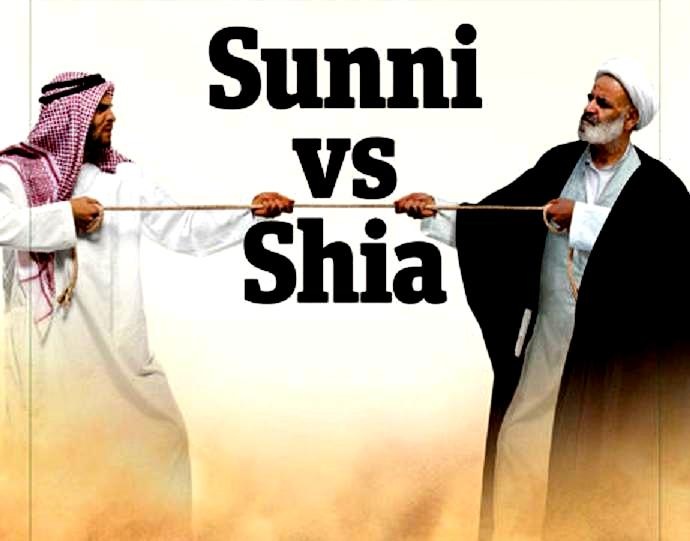
Historical Perspective on Sunni-Shia Muslims: The schism between Sunni and Shia Muslims, dating back to the early days of Islam, remains one of the most significant and enduring divisions in the Muslim world. This historical divide has shaped the religious, political, and social landscapes of various regions, influencing the beliefs and practices of millions of adherents. In this blog, we will delve into the origins and evolution of the Sunni-Shia split, exploring the key events and factors that have contributed to the complex relationship between these two major branches of Islam.
Table of Contents
The Early Days of Islam
The division between Sunni and Shia Muslims can be traced back to the aftermath of the death of Prophet Muhammad in 632 CE. The question of succession to lead the Muslim community, known as the Ummah, ignited a profound disagreement among the early followers of Islam.

While the majority of Muslims, who would later become known as Sunnis, believed in the principle of selecting a qualified leader through consensus (shura), a minority advocated for the appointment of Prophet Muhammad’s cousin and son-in-law, Ali ibn Abi Talib, as his rightful successor. These followers, who became known as Shi’atu Ali or Shia (the party of Ali), believed that leadership should remain within the Prophet’s bloodline.
The First Caliphs and the Battle of Jamal
The first three caliphs, Abu Bakr, Umar, and Uthman, were selected through consensus and enjoyed the support of the majority of Muslims. However, the assassination of Uthman in 656 CE led to the appointment of Ali as the fourth caliph. His leadership faced immediate challenges, particularly from those who held Uthman’s murder against him.

The Battle of Jamal in 656 CE, fought between forces loyal to Ali and those supporting Aisha (the Prophet’s wife), Talha, and Zubair, exacerbated tensions. The aftermath saw a temporary reconciliation between Ali and the rebels, but the seeds of division had been sown.
The Tragedy of Karbala
The turning point in Sunni-Shia relations came with the Battle of Karbala in 680 CE. Ali’s son, Husayn ibn Ali, confronted the Umayyad caliph Yazid I, refusing to pledge allegiance to him.

The tragic events that unfolded on the plains of Karbala, including the martyrdom of Husayn and his family, became a defining moment in Shia Islam. Shia Muslims annually commemorate the grief and sorrow of Ashura, the day of the battle.
The Establishment of Sunni and Shia Theology
The events at Karbala marked a pivotal moment in the divergence of theological and doctrinal perspectives between Sunni and Shia Islam. Following this tragedy, the schism deepened as each branch solidified its distinct approach to leadership and authority.

Sunni Muslims persisted in their adherence to a broader consensus-based model of leadership. Sunni Islam often determines leadership through consultation and consensus within the community, with caliphs serving as both political and religious leaders. This approach reflects a more collective decision-making process within the Sunni tradition.
Conversely, Shia Muslims, particularly following the events at Karbala, continued to uphold the belief in the divine appointment of Imams. Believers regarded these Imams not only as possessing spiritual authority but also as holding political authority, viewed as successors to Prophet Muhammad. The notion of divine leadership, tracing through the lineage of Ali and his descendants, remains a central tenet of Shia Islam.
Thus, the aftermath of Karbala solidified the divergence in leadership structures, with Sunni Islam favoring a consensus-based model and Shia Islam emphasizing the divine lineage of Imams as the legitimate leaders of the Muslim community.
The Umayyad and Abbasid Caliphates
The Umayyad and Abbasid Caliphates further solidified the Sunni-Shia divide. The Umayyads, who emerged victorious after the Battle of Karbala, pursued policies that marginalized the Shia community. In contrast, the Abbasids, who overthrew the Umayyads in 750 CE, initially sought to reconcile with the Shia. However, this goodwill diminished over time, leading to renewed persecution of Shia Muslims.
Theology, Jurisprudence, and Ritual Practices
Throughout the centuries, the Sunni and Shia branches of Islam have evolved distinctive theological doctrines, schools of jurisprudence, and ritual practices. Four major schools of thought—Hanafi, Maliki, Shafi’i, and Hanbali—characterize Sunni Islam, with each providing unique interpretations of Islamic law and practice. These diverse schools represent a rich tapestry of legal thought within the Sunni tradition.
In contrast, Shia Islam predominantly adheres to the Jafari school of thought, named after the sixth Imam, Jafar al-Sadiq. The Jafari school has its own set of theological principles, legal interpretations, and rituals, contributing to the distinct identity of Shia Islam. The theological divergences between Sunni and Shia scholars have not only shaped religious beliefs but have also influenced legal frameworks and the performance of religious duties, emphasizing the multifaceted nature of Islamic traditions that have developed over centuries.
Geographical Distribution and Political Impact
The Sunni-Shia split, a historical division within Islam, has wielded a profound impact on the political landscape of the Muslim world. Sunni-dominated nations, exemplified by Egypt, Turkey, and Saudi Arabia, stand in contrast to Shia-majority countries like Iran and Iraq. This schism extends beyond theological differences, shaping geopolitical dynamics and contributing to regional conflicts.

The tension between these sects has been a catalyst in the tumultuous scenarios of Iraq, Syria, and Yemen, where political strife converges with religious disparities. This intricate interplay has resulted in complex power struggles, as nations navigate a landscape influenced not only by strategic interests but also by the historical and doctrinal divisions entrenched in the Sunni-Shia split. The repercussions of this schism continue to reverberate across the Muslim world, illustrating how religious distinctions can intertwine with political complexities, creating a nuanced tapestry of conflicts and alliances.
In Closing : A Historical Perspective on Sunni-Shia Muslims
Sunni and Shia Muslims have woven a complex tapestry of history with theological, political, and cultural threads. While the initial schism emerged from a dispute over leadership, it has evolved into a multifaceted division with deep-rooted historical, doctrinal, and geopolitical dimensions. Understanding the origins and development of the Sunni-Shia split is crucial for fostering dialogue and promoting peaceful coexistence within the diverse Muslim world. In an era marked by global connectivity, bridging these historical divides is essential for cultivating unity and mutual understanding among all Muslims.
If you found this blog interesting, feel free to explore related articles by clicking here.
Subscribe
If you enjoyed this blog post, be sure to subscribe for more engaging content in the future! Stay updated on the latest developments and discussions by clicking the subscribe button above. Thank you for your support!




Leave a Reply