
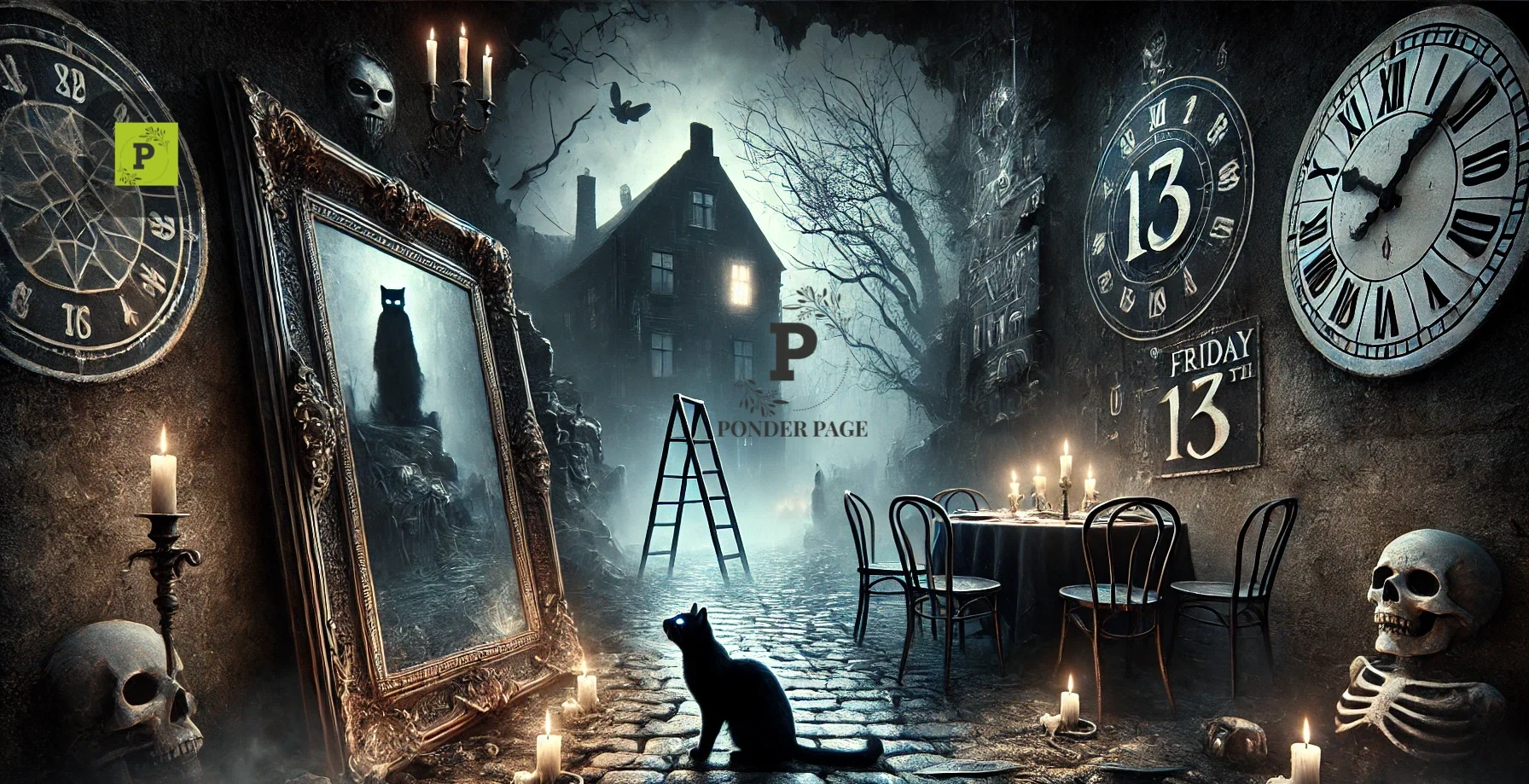
Friday the 13th: When Friday the 13th rolls around, an air of unease and superstition seems to permeate the atmosphere. For centuries, this day has been associated with bad luck, misfortune, and ominous events. But how did Friday the 13th earn its notorious reputation, and what superstitions surround it? Let’s delve deep into the origins, significance, and varied beliefs tied to this infamous day.
(You can now subscribe to our Ponder Page WhatsApp channel)

Table of Contents
Origins of Friday the 13th: A Blend of Fear and History
The superstition surrounding Friday the 13th is believed to be a combination of two long-standing fears: the number 13 and the day Friday. Each of these has roots in historical, religious, and cultural traditions.
The Number 13: A History of Fear
Fear of the number 13, also known as “triskaidekaphobia,” is a widespread superstition. Many buildings, especially hotels, skip labeling the 13th floor; some airlines avoid seating rows numbered 13. This aversion to 13 can be traced back to ancient times.
In Western cultures, the number 12 is often seen as the epitome of completeness—think of the 12 months in a year, 12 zodiac signs, 12 hours on a clock, and the 12 apostles of Jesus. Thirteen, being the number that follows 12, was perceived as irregular and incomplete.
The fear of 13 may also have roots in Norse mythology. According to one legend, 12 gods were having a dinner party in Valhalla when Loki, the trickster god, crashed as the 13th guest. Loki’s mischief ultimately led to the death of Balder, the god of joy and happiness. Thus, the number 13 became associated with chaos and misfortune.
Friday: A Day of Unlucky Events
The superstition around Fridays has both religious and cultural origins. In Christianity, Friday holds a somber place as the day Jesus Christ was crucified. This has led to the belief that Fridays are ill-fated days.
In medieval England, Fridays were known as “Hangman’s Day” because public executions were often held on Fridays. This contributed to the day’s grim reputation.
By combining the negative associations of both Friday and the number 13, Friday the 13th became an ultimate symbol of bad luck in Western cultures.
The Rise of Friday the 13th Superstitions in Modern Times
The superstition surrounding Friday the 13th may have ancient origins, but its modern infamy took root in the 20th century. It was popularized in 1907 by the publication of Thomas W. Lawson’s novel, “Friday, the Thirteenth,” which told the story of a stockbroker who chooses this day to create chaos on Wall Street. This book tapped into and amplified fears of the day, cementing its status in popular culture.
Later, Hollywood further fueled the superstition with the release of the horror movie franchise “Friday the 13th,” which began in 1980. The films, centered around a series of brutal murders, capitalized on the day’s eerie reputation and ingrained its association with horror and death.
Common Superstitions and Beliefs About Friday the 13th
Friday the 13th has become synonymous with a wide variety of superstitions. Here are some of the most common beliefs and practices associated with this day:
1. Avoiding Travel and Important Decisions
Many people believe that traveling on Friday the 13th brings bad luck. This fear is so pervasive that some avoid flights, train journeys, and even road trips on this day. Similarly, people may postpone important decisions, like business ventures, investments, or starting a new project, fearing that initiating something on this day may result in misfortune.
2. Breaking Mirrors and Spilling Salt
Superstitions around breaking mirrors and spilling salt take on extra significance on Friday the 13th. Breaking a mirror is said to bring seven years of bad luck, while spilling salt has been considered unlucky for centuries. On Friday the 13th, these acts are believed to bring even more severe consequences, leading people to take extra care to avoid mishaps.
3. Black Cats and Ladders
Black cats crossing one’s path and walking under a ladder are two superstitions that seem to intensify on Friday the 13th. In some cultures, black cats are associated with witchcraft and bad omens. Meanwhile, walking under a ladder is considered bad luck, possibly because ladders form a triangle, symbolizing the Holy Trinity, which should not be desecrated.
4. No 13th Guest
A widespread superstition is that having 13 guests at a dinner table invites bad luck. This belief is thought to be related to the Last Supper, where Judas, the betrayer of Jesus, was the 13th guest. On Friday the 13th, people may go out of their way to avoid having exactly 13 people at gatherings, fearing it might bring misfortune.
5. The Fear of Cutting Nails or Hair
In some cultures, it’s believed that cutting nails or hair on Friday the 13th can bring bad luck. This superstition is thought to stem from the notion that personal grooming on an unlucky day could somehow sever one’s health or fortune.
Is There Any Truth to the Superstitions?
While many believe in the unlucky nature of Friday the 13th, there is no scientific evidence to support the idea that it is inherently more dangerous or ill-fated than any other day. Studies examining the occurrence of accidents on Friday the 13th have produced mixed results. Some studies found a slight increase in car accidents, possibly due to heightened anxiety, while others showed no significant difference in the number of accidents compared to other Fridays.
Friday the 13th Around the World
Interestingly, not all cultures view Friday the 13th as unlucky. In Italy, for example, the number 13 is considered lucky. Italians might even buy lottery tickets on this day, believing it to be auspicious. However, Friday the 17th is viewed as unlucky in Italian culture.
In Spanish-speaking countries and Greece, it’s Tuesday the 13th, rather than Friday, that carries an unlucky stigma. This stems from the influence of ancient Greek culture, where Tuesday was associated with Ares, the god of war, making it a day feared for potential disaster.
Embracing or Overcoming the Superstition?
For some, Friday the 13th is simply a fun excuse to indulge in a bit of spooky or superstitious behavior. Haunted house attractions and horror movie marathons become especially popular on this day. Others may take the opportunity to face their fears, consciously going against the superstitions by doing things they would normally avoid on this day.
Psychologists argue that the superstition around Friday the 13th may be a form of “confirmation bias,” where people are more likely to notice and remember bad events on this day, reinforcing their beliefs. This is similar to how individuals might avoid walking under a ladder or stepping on cracks in the sidewalk as a way of feeling in control of their fate. PP


Friday the 13th: A Day Shrouded in Mystery
Friday the 13th, with its complex blend of cultural, historical, and religious origins, continues to evoke curiosity, fear, and fascination. While the superstitions surrounding this day may have no factual basis, they reveal much about human nature and our need to find patterns and meaning in the chaos of life. Whether you’re a staunch believer in the day’s bad luck or a skeptic who enjoys its eerie reputation, Friday the 13th remains an intriguing part of our cultural fabric.
So, the next time this day comes around, you might choose to carry on as usual—or maybe take a little extra care, just in case. After all, when it comes to Friday the 13th, a small part of us often wonders, “What if the superstitions are true?”
What are your thoughts on this article? Let us know in the comments below.
If you enjoyed this article, be sure to subscribe for more engaging content in the future! Stay updated on the latest developments and discussions by clicking the subscribe button above. Thank you for your support!
📢 Dive into the latest discussions on social & trending topics! 🌍💬 Subscribe to Ponder Page for thought-provoking articles and interviews that dissect current issues. Don’t miss out on insightful content—hit that like & subscribe button now!





Leave a Reply