
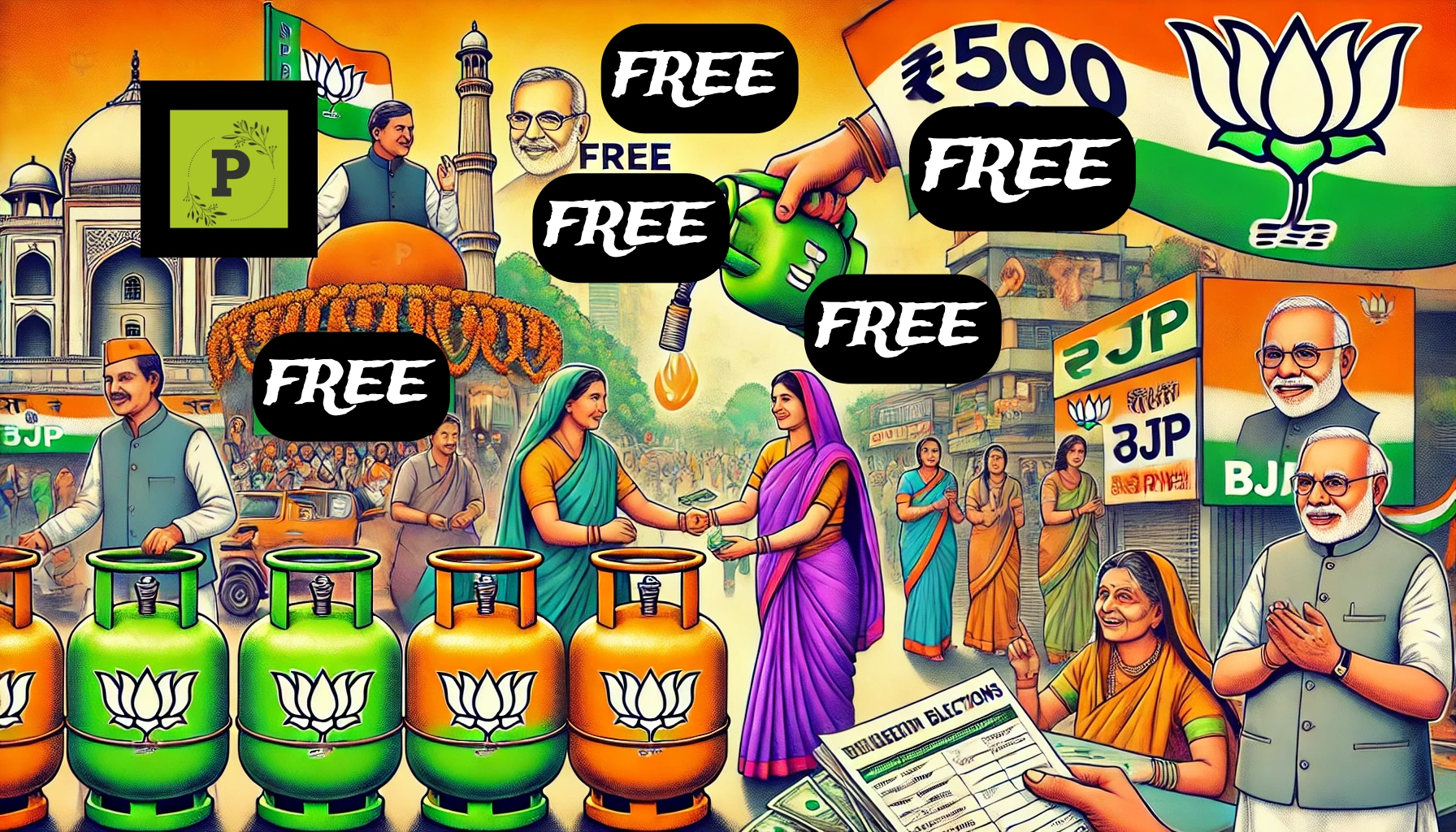
BJP Also Got Involved in Freebie Politics: In the realm of Indian politics, election campaigns often transform into a battleground where parties employ a variety of strategies to capture voter attention. One of the most prominent and controversial tactics is the promise of “freebies,” which has become a hallmark of elections in India.
While the Bharatiya Janata Party (BJP) has historically criticized its opponents for indulging in “freebie politics,” its approach during the Delhi Assembly elections revealed a strategic shift. The BJP, too, embraced this contentious method to gain a competitive edge. This post delves into how the BJP became part of the freebie culture and the implications of this shift on Indian electoral politics.
(You can now subscribe to our Ponder Page WhatsApp channel)

Table of Contents
The Context of Freebie Politics
Freebie politics refers to the practice of offering incentives, subsidies, or free goods and services to voters in exchange for electoral support. While these promises can address immediate needs, critics argue that they often disregard long-term economic sustainability. In Delhi, freebie politics gained significant traction with the Aam Aadmi Party (AAP), which campaigned extensively on promises such as free electricity, water, healthcare, and education.
The BJP, which often positions itself as a party focused on development and governance, initially criticized AAP’s approach. However, the high-stakes nature of the Delhi Assembly elections prompted the BJP to recalibrate its strategy and adopt similar tactics.

BJP’s Shift in Strategy
The BJP’s engagement in freebie politics during the Delhi Assembly elections of 2025 is a calculated move to counter AAP’s narrative and appeal to the urban electorate. On January 17, 2025, the BJP released its “Sankalp Patra” (manifesto), focusing on women, economically disadvantaged groups, and senior citizens. Some key promises made by the BJP included:
- LPG Subsidies: The BJP pledged a subsidy of ₹500 on LPG cylinders for poor women, along with one free cylinder on Holi and Diwali.
- Financial Support for Women: Under the Mahila Samridhi Yojana, the BJP promised a monthly aid of ₹2,500 for women to empower them economically.
- Maternity Benefits: A provision of ₹21,000 for pregnant women has been proposed to ensure proper nutrition and healthcare during pregnancy.
- Senior Citizen Pensions: The BJP promised an increase in pensions for individuals aged 60 to 70 from ₹2,000 to ₹2,500, and for those above 70 years, widows, and destitute women from ₹2,500 to ₹3,000.
- Affordable Meals: The manifesto proposed the introduction of Atal Canteens in slum clusters, providing full meals at ₹5 to address urban hunger and malnutrition.
- Healthcare Expansion: The BJP promised the full implementation of the Ayushman Bharat scheme in Delhi, offering a total health cover of ₹10 lakh per family by combining central and state contributions.
The Impact of BJP’s Freebie Politics
The BJP’s foray into freebie politics during the Delhi elections has both immediate and long-term implications:
- Competitive Electoral Landscape: By promising freebies, the BJP attempted to neutralize AAP’s advantage and present itself as a viable alternative for Delhi voters. This strategy aimed to reduce AAP’s monopoly over welfare-centric policies.
- Polarization of Campaigns: The shift led to a campaign environment where both parties competed to outdo each other in announcing attractive schemes. The focus on freebies often overshadowed discussions on governance, structural reforms, and sustainable development.
- Economic Concerns: Critics argue that the BJP’s promises are not backed by a clear financial roadmap. Offering subsidies and free goods without addressing the revenue implications raised questions about fiscal responsibility and economic sustainability.
- Dilution of Ideological Standpoint: The BJP’s adoption of freebie politics blurred the ideological distinctions between the party and its opponents. This move sparked debates on whether electoral pragmatism was overshadowing the party’s commitment to development-centric governance.
Criticism and Political Reactions
The BJP’s manifesto is drawing criticism from political opponents, particularly the AAP. Delhi Former Chief Minister Arvind Kejriwal accused the BJP of emulating AAP’s strategies, stating, “The BJP is copying our model because they have realized that this is what people want.” He further questioned the BJP’s commitment to these promises, given its previous stance against freebie politics.
On the other hand, BJP leaders defended their approach, arguing that the promises were aligned with the party’s broader vision of inclusive growth and not mere electoral gimmicks.


BJP Also Got Involved in Freebie Politics: The Magic of Indian Politics
The BJP’s engagement in freebie politics during the 2025 Delhi Assembly elections marked a significant departure from its traditional campaign strategies. While it helped the party remain competitive in a politically charged environment, it also raised questions about the sustainability and ideological consistency of its approach.
What are your thoughts on this article? Let us know in the comments below.
If you enjoyed this article, be sure to subscribe for more engaging content in the future! Stay updated on the latest developments and discussions by clicking the subscribe button above. Thank you for your support!
📢 Dive into the latest discussions on social & trending topics! 🌍💬 Subscribe to Ponder Page for thought-provoking articles and interviews that dissect current issues. Don’t miss out on insightful content—hit that like & subscribe button now!




Leave a Reply