
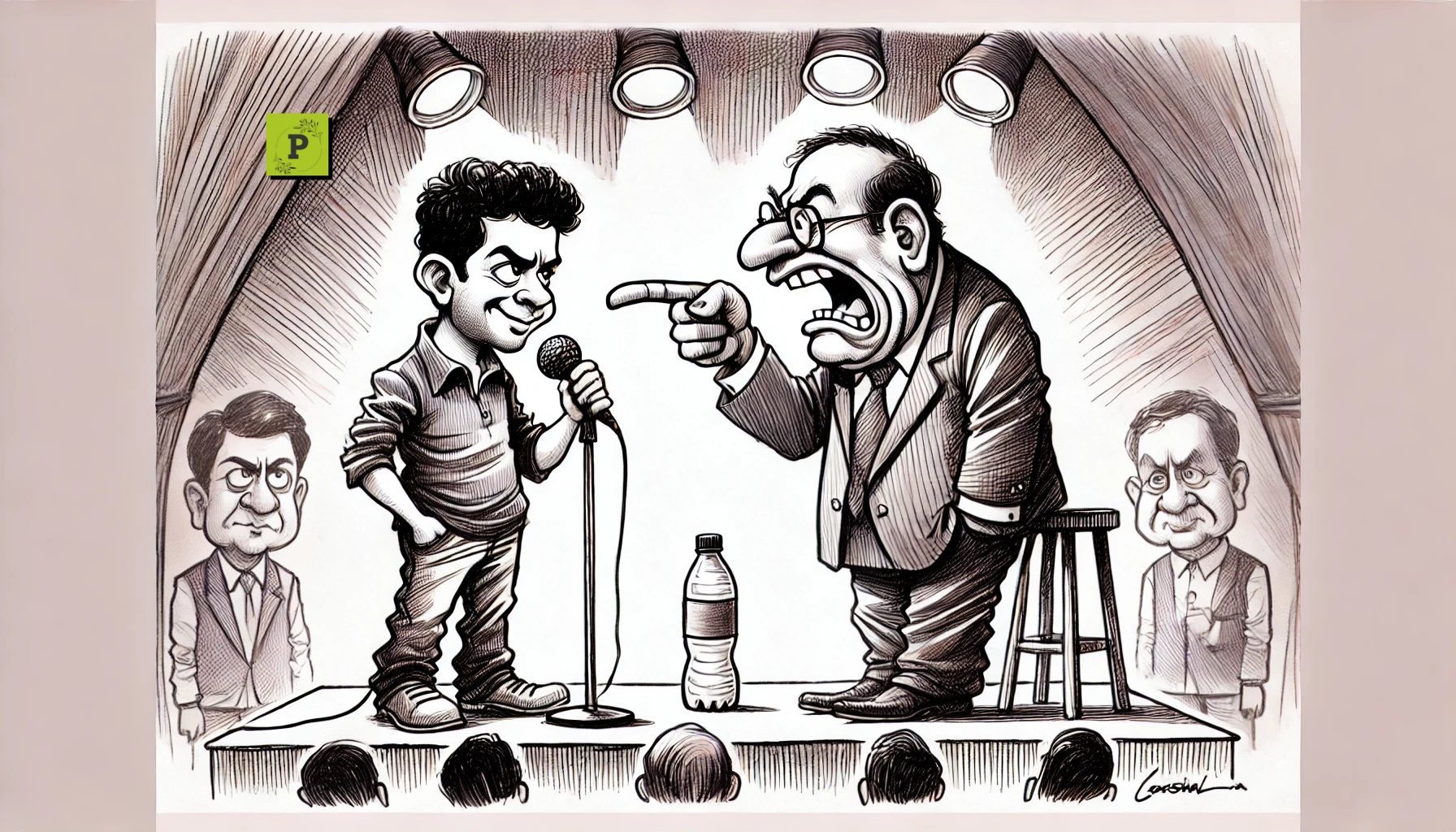
The Kunal Kamra Controversy: In recent times, stand-up comedian Kunal Kamra has once again found himself in the middle of a political storm. His latest comedy skit has sparked outrage among certain political factions, leading to vandalism, threats, and heated debates on the boundaries of free speech in India.
(You can now subscribe to our Ponder Page WhatsApp channel)

Table of Contents
Comedy, Satire, and the Political Fallout
Kunal Kamra’s latest comedy video featured satirical songs and dialogues critiquing the current political scenario. One particular line from a song, “Meri nazar se tum dekho, gaddar nazar wo aaye,” was perceived as a direct attack on a political leader, despite not explicitly naming anyone. This led to an aggressive reaction from supporters of Maharashtra’s Deputy Chief Minister, Eknath Shinde, who interpreted the lyrics as a personal insult to their leader.
Vandalism and Threats in Response
Following the release of the video, a group of Shinde supporters stormed the venue where Kamra’s show was recorded, Habitat Studio, and caused significant damage. This act of vandalism mirrored the growing trend where any form of criticism against certain political figures leads to violent reactions rather than intellectual discourse. Additionally, Kamra began receiving death threats, with individuals calling him and demanding his address in a threatening manner. His satirical response to these threats was characteristic of his comedic style—referring to Tamil Nadu as his location to highlight the absurdity of the situation.

Misplaced Outrage and Hypocrisy
The mob that protested against Kamra made a significant blunder: they kept chanting “Kunal Kalra murdabad,” mistakenly replacing Kamra’s surname. This small but telling error reflects the mindless nature of their protests, raising questions about whether they genuinely understood the reason behind their anger or if they were merely following orders.
Moreover, the irony in this entire episode is striking. In contemporary India, actions deemed criminal often go unpunished if the individuals involved have the right political connections. Conversely, those who engage in legitimate critique through satire or art face backlash, censorship, and even physical threats.
Political Endorsement of Vigilantism
Adding fuel to the fire, Eknath Shinde, instead of condemning the violence, justified it by stating, “Every action has a reaction.” This statement, coming from a high-ranking political leader, implicitly endorses the idea that mob justice is acceptable. It highlights the growing atmosphere of intolerance where dissent is met with brute force rather than dialogue.
The Battle for Free Speech
Kamra’s response to the controversy has been steadfast. He has made it clear that he will not apologize for his content, emphasizing that his satire remains within the constitutional framework of free speech. He pointed out that India’s Constitution provides for reasonable restrictions on free speech—prohibiting hate speech, incitement of violence, and defamation—but his content does not violate these boundaries.
The real irony, however, lies in the selective enforcement of these restrictions. While comedians, filmmakers, and independent journalists face scrutiny and censorship, certain media personalities and political figures who openly spread divisive rhetoric continue to operate without consequences.
A Dangerous Precedent for Democracy
The Kunal Kamra controversy is not just about one comedian and his jokes; it is about the larger issue of freedom of expression in India. When humor and satire become grounds for vandalism and threats, it signals a dangerous shift towards authoritarianism. It raises an important question: If a society cannot tolerate humor and satire, can it truly claim to be a democracy?
As this debate continues, one thing remains clear—India’s battle between free speech and political intolerance is far from over. Kamra’s resilience in the face of threats serves as a reminder that humor, no matter how controversial, is an essential part of any healthy democracy.
The Legal Perspective
From a legal standpoint, Kamra’s case highlights the pressing need for judicial intervention in matters of free speech. The Supreme Court of India has time and again reiterated that criticism of public officials, even if harsh, is a legitimate part of democracy. However, the increasing tendency of political groups to resort to extrajudicial means like vandalism and intimidation raises concerns about the effectiveness of legal safeguards.
Under the Penal Code, hate speech and acts intended to incite violence are punishable offenses. Yet, these laws are often used selectively against dissenters while political mobs acting in bad faith go unchecked. This selective application of the law poses a threat to India’s democratic values and constitutional morality.


The Kunal Kamra Controversy: Where is Free Speech
The Kunal Kamra controversy is not just about a comedian and his jokes—it is about the very fabric of India’s democracy and the ability of its citizens to express themselves freely. If every satirical remark or critique is met with violence and censorship, it sets a troubling precedent. The real test for Indian democracy is whether it can uphold the right to free speech even when it is inconvenient for those in power.
What are your thoughts on this article? Let us know in the comments below. If you enjoyed this article, be sure to subscribe for more engaging content in the future! Stay updated on the latest developments and discussions by clicking the subscribe button above. Thank you for your support!
📢 Dive into the latest discussions on social & trending topics!
🌍💬 Subscribe to Ponder Page for thought-provoking articles and interviews that dissect current issues. Don’t miss out on insightful content—hit that like & subscribe button now!




Leave a Reply