
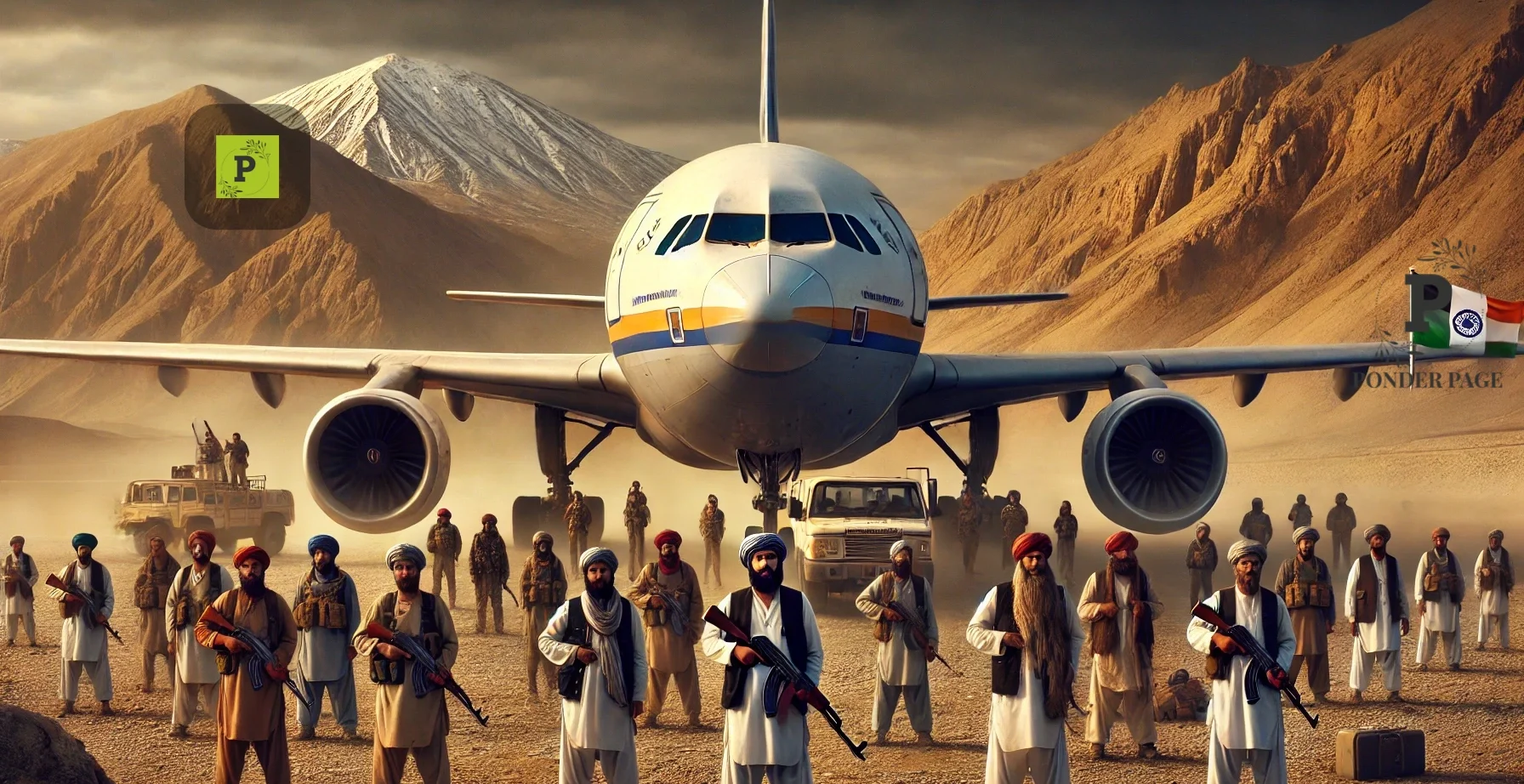
The Hijacking of Indian Airlines Flight IC-814: The evening of December 24th, 1999, is etched in the annals of Indian history as one of the most harrowing moments in its aviation sector. A routine flight, Indian Airlines IC-814, scheduled from Tribhuvan International Airport in Kathmandu, Nepal to Indira Gandhi International Airport in New Delhi, became the stage for a deadly hijacking by five Pakistani terrorists belonging to the militant group Harkat-ul-Mujahideen. The ensuing ordeal, lasting seven excruciating days, tested the resolve and strategy of the Indian government, led to diplomatic tensions, and left an indelible mark on the psyche of the nation.
(You can now subscribe to our Ponder Page WhatsApp channel)

Table of Contents
The Hijacking: The Calm Before the Storm
On December 24, 1999, Indian Airlines Flight IC-814, carrying approximately 180 passengers, took off from Kathmandu, Nepal, destined for New Delhi. The flight seemed routine, but as the plane entered Indian airspace, a sudden turn of events brought chaos. Five heavily armed militants from the Pakistani terrorist group Harkat-ul-Mujahideen stormed the cockpit, taking control of the aircraft. Their motives were not immediately clear, but their intentions were ominous.
The initial hours of the hijacking were filled with confusion and uncertainty. The terrorists ordered the pilots to redirect the plane towards Pakistan, but the pilots informed them that there wasn’t enough fuel to reach Pakistan. The terrorists, after a brief discussion, decided to land the plane at Amritsar in India to refuel before proceeding further.
The Amritsar Landing: A Missed Opportunity
Upon landing at Amritsar, the hijackers faced their first significant challenge. The Indian government, caught off-guard by the sudden hijacking, scrambled to respond. As the plane remained grounded at Amritsar, there was a brief window of opportunity for the Indian authorities to launch a counter-attack. However, a combination of hesitation, miscommunication, and concerns for the safety of the passengers meant that this opportunity was lost. The hijackers, growing suspicious of the delay, quickly ordered the plane to take off, this time directing it towards Lahore, Pakistan.
The Odyssey Continues: A Journey Through Hostile Skies
The plane’s journey took it through multiple countries, each time facing rejection or hesitation from local authorities. After leaving Amritsar, the hijacked plane landed briefly in Lahore, Pakistan. The Pakistani authorities, wary of the diplomatic repercussions, refused to allow the plane to stay on their soil for long. The hijackers then directed the plane to Dubai, where it made another stop. In Dubai, the hijackers released 27 passengers.
From Dubai, the plane took off for its final destination—Kandahar in Afghanistan. Kandahar, at the time, was under the control of the Taliban, a regime that was sympathetic to the cause of the hijackers. It was here that the terrorists made their final stand, and the real negotiations began.
The Negotiations: A Diplomatic Quagmire
The Indian government, realizing the gravity of the situation, quickly mobilized a team of negotiators to handle the crisis. Among the key members of this team was Ajit Doval, a seasoned intelligence officer with years of experience in handling similar crises. Doval had played a crucial role in negotiating during several other hijackings between 1971 and 1999, and his inclusion in the team was seen as a sign of the government’s determination to bring the situation under control.
The negotiations in Kandahar were fraught with tension. The hijackers, emboldened by their success in evading Indian security forces, made a series of demands that included the release of 36 militants imprisoned in India and a ransom of $200 million. The initial reaction of the Indian government was to reject these demands outright. However, the situation was complicated by mounting pressure from the families of the passengers, the Indian media, and the public, who were all desperate for a resolution.
Moreover, the Indian government’s options were severely limited. Conducting a military operation in Kandahar was out of the question due to the hostile terrain, the lack of support from neighboring countries like Pakistan, and the fear that any such action could lead to the loss of all the passengers on board. The Afghan Taliban, acting as intermediaries, were sympathetic to the hijackers and not inclined to cooperate with the Indian negotiators.
The Role of Ajit Doval: The Man Behind the Negotiations
Ajit Doval, with his extensive experience in intelligence and counter -terrorism, played a pivotal role in the negotiations. Realizing that the hijackers were constantly changing their demands, Doval urged them to put forth a concrete list of demands to avoid prolonging the crisis. Eventually, the hijackers presented a written list of their demands, which included the release of the 36 militants and the ransom.
Doval knew that acceding to all the demands would set a dangerous precedent, emboldening terrorists worldwide. However, with the lives of the passengers hanging in the balance, a compromise had to be reached. After intense negotiations, Doval managed to convince the hijackers to reduce their demands. Instead of the 36 militants, the Indian government agreed to release three—Maulana Masood Azhar, Ahmed Omar Saeed Sheikh, and Mushtaq Ahmed Zargar.
The Final Exchange: A Bitter Compromise
The decision to release the three militants was met with significant opposition within the Indian government, but the need to save the passengers’ lives outweighed all other considerations. On December 31, 1999, the exchange took place. The three militants were handed over to the Taliban in Kandahar, and in return, the hijackers released the passengers and crew of Flight IC-814.
The release of the militants was seen as a significant victory for the hijackers and a devastating blow to India. Maulana Masood Azhar, one of the released militants, would go on to found the Jaish-e-Mohammed, a terrorist organization responsible for numerous attacks in India, including the 2001 Indian Parliament attack and the 2019 Pulwama attack.
The Aftermath: A Nation in Mourning
The release of the hostages brought relief to the families of the passengers, but the cost of that relief was steep. India had been forced into a corner, and the government’s decision to release the militants was seen as a sign of weakness. The incident highlighted the vulnerabilities in India’s counter-terrorism apparatus and exposed the limitations of its diplomatic and military strategies.
In the years that followed, the hijacking of IC-814 became a case study in counter-terrorism and negotiation strategies. The Indian government undertook significant reforms in its aviation security protocols, including the creation of specialized counter-terrorism units and the introduction of stricter airport security measures.
The Legacy of IC-814: Lessons Learned
The IC-814 hijacking left an indelible mark on India’s national security policy. It exposed the flaws in the country’s intelligence and crisis management systems and underscored the need for better coordination between different arms of the government during emergencies.
One of the key lessons learned from the incident was the importance of swift and decisive action in the face of terrorist threats. The missed opportunity at Amritsar, where Indian authorities hesitated to storm the plane, is often cited as a critical moment that could have changed the outcome of the hijacking. The incident also highlighted the need for better international cooperation in counter-terrorism efforts, particularly in dealing with hostile or uncooperative regimes like the Taliban.
Moreover, the release of the three militants has had far-reaching consequences for India’s security landscape. The subsequent attacks carried out by groups associated with the released militants have claimed hundreds of lives and continue to pose a significant threat to the region’s stability. PP


The Hijacking of Indian Airlines Flight IC-814: Conclusion
The hijacking of Indian Airlines Flight IC-814 remains one of the most traumatic events in India’s modern history. It was a stark reminder of the dangers posed by international terrorism and the complex challenges faced by governments in dealing with such crises. While the immediate crisis was resolved with the safe return of the passengers, the long-term implications of the decisions made during those fateful days continue to resonate in India’s security and diplomatic policies.
The incident underscored the need for a robust counter-terrorism strategy, better intelligence gathering, and stronger international alliances to combat the ever-evolving threat of terrorism. As India continues to navigate the challenges of the 21st century, the lessons learned from the IC-814 hijacking remain as relevant as ever.
What are your thoughts on this article ‘The Hijacking of Indian Airlines Flight IC-814’? Let us know in the comments below.
If you enjoyed this article ‘The Hijacking of Indian Airlines Flight IC-814’, be sure to subscribe for more engaging content in the future! Stay updated on the latest developments and discussions by clicking the subscribe button above. Thank you for your support!
📢 Dive into the latest discussions on social & trending topics! 🌍💬 Subscribe to Ponder Page for thought-provoking articles and interviews that dissect current issues. Don’t miss out on insightful content—hit that like & subscribe button now!



Leave a Reply