
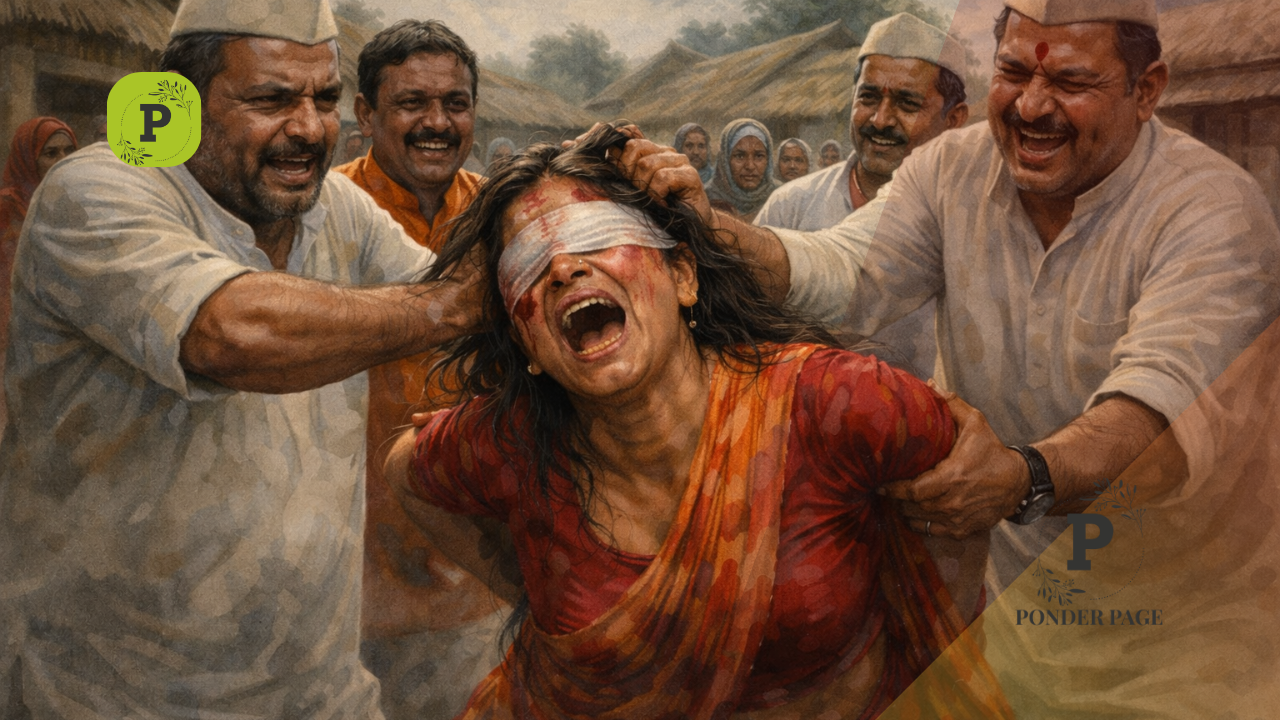
Former BJP Leader Kuldeep Sengar Gets Bail After Delhi HC Suspends Life Term: What unfolded in front of India Gate, the symbolic heart of the nation’s capital, offers a deeply unsettling answer. In harsh winter cold, three individuals, a survivor of sexual assault, her mother, and an activist, were forcibly dragged away by the Delhi Police. They were not terrorists. They were not part of any political organisation. They were not paid protesters or members of any so-called disruptive gang. They were citizens asking for justice.
The message sent by this incident is chilling. In today’s India, even a handful of people sitting peacefully with placards is apparently enough to be treated as a threat to national security. It suggests a country so fragile that a victim and her mother cannot protest injustice without being silenced.
(You can now subscribe to our Ponder Page WhatsApp channel)

Table of Contents
The Case That Refuses to Go Away
The protest at India Gate did not arise from whim or provocation. It stemmed from a long and painful legal battle that many believed had finally reached its conclusion. After years of struggle, a powerful politician was sent to jail. That achievement alone had taken immense courage, public outrage, and intervention from the highest court in the country. Yet, recent developments indicate that even in the most high-profile and horrific cases, political power still finds a way to dilute justice.
The name at the centre of this story is Kuldeep Singh Sengar, a former MLA from Unnao, widely regarded as a local strongman. Though not a national leader, his influence in his region was immense. In 2017, he committed a heinous crime against a minor girl. When she raised her voice, she was ignored. For over a year, her complaints went unheard.
In April 2018, driven to desperation, the survivor attempted to end her life outside the residence of the Uttar Pradesh Chief Minister. That act finally forced the case back into national focus. What followed, however, was a sequence of events that revealed the terrifying extent of power and impunity.
A Trail of Death and Intimidation
As the case gained momentum, tragedy struck again and again. The survivor’s father was arrested and brutally beaten in custody, leading to his death. Allegations emerged that this was orchestrated by those connected to the accused. Despite this, the survivor continued to pursue justice.

In July 2019, as court hearings were about to begin, the survivor was travelling with her lawyer and relatives when their car was rammed by a truck. The crash killed two of her aunts and left the survivor and her lawyer critically injured. Later, the investigative agency informed the court that the incident was planned. This was not just an attempt to intimidate but an apparent effort to eliminate the survivor entirely.
It was only after the Supreme Court took cognisance of the case that proceedings were transferred to Delhi, where regular hearings finally began. In December 2019, a Delhi trial court sentenced Sengar to life imprisonment under the Protection of Children from Sexual Offences Act, recognising the gravity of the crime and the abuse of power involved.
For many, this judgment symbolised hope, that even the powerful could be held accountable.
How Justice Began to Unravel
Years later, that hope has been severely shaken. The Delhi High Court recently suspended Sengar’s life sentence and granted him conditional bail. It is crucial to understand what this means. The conviction has not been overturned. The court has not declared him innocent. The case has not been quashed. The sentence has merely been suspended pending further hearings.
Yet, even this suspension sends a powerful and disturbing signal. It suggests that prolonged incarceration, combined with legal reinterpretation, can gradually soften even the strongest judgments.
The reasoning behind the suspension lies in a technical interpretation of the POCSO Act. The law provides stringent punishment for sexual offences against minors, with a minimum sentence of seven years, extendable to life imprisonment. For aggravated offences, such as those committed by individuals in positions of authority or trust, the punishment is far more severe.
The original trial court treated Sengar as a public servant, citing his position as an MLA and the immense power he wielded. On that basis, life imprisonment was imposed. The High Court, however, took a different view, stating that he could not be categorised as a public servant under the relevant provision. With this reclassification, the court noted that he had already served more than seven years, exceeding the minimum requirement, and therefore granted him conditional bail.
This reinterpretation raises uncomfortable questions. If an MLA, known locally as the most powerful individual in his area, does not qualify as a person in authority, then who does?
The Government’s Silent Role
Whenever such decisions are questioned, a familiar defence emerges: the courts are independent, and the government cannot interfere. While judicial independence is vital, this argument ignores the broader context.
The accused belonged to the ruling party at the time. The same leadership that repeatedly spoke of zero tolerance for crimes against women and popularised slogans about protecting daughters now appears conspicuously silent. Investigative agencies and statutory bodies were present during the hearings. Yet, no visible attempt was made to strongly oppose the bail.
There has been no unequivocal public assurance from the highest political leadership that such individuals will not be allowed to regain freedom through legal loopholes. Past experience only deepens public scepticism, as several convicted figures with political or religious influence have repeatedly received bail, parole, or furlough.
A Pattern That Cannot Be Ignored
This case does not exist in isolation. From religious leaders convicted of sexual crimes to politically connected individuals involved in serious offences, leniency often appears directly proportional to influence. Meanwhile, activists, students, and dissenters remain incarcerated for years without trials reaching completion.
When the law bends so visibly in favour of the powerful, it erodes faith in the rule of law itself. It also damages the country’s global image, particularly on issues of women’s safety. Outrage is often directed at international reports or criticism, yet the conditions that fuel such perceptions continue unchecked at home.
The Cost of Normalising Injustice
The most dangerous outcome of such cases is not just the release of one individual but the precedent it sets. It tells society that power can outlast outrage, that patience and influence can eventually wear down justice. It tells survivors that even after years of courage and sacrifice, the system may still fail them.
Peaceful protest is suppressed, victims are silenced, and technicalities are elevated over moral clarity. When this becomes normal, exemplary punishment disappears, fear of the law fades, and wrongdoing becomes easier to commit.
Former BJP Leader Kuldeep Sengar Gets Bail: The Responsibility of the People
History shows that court decisions can be challenged and revisited when public vigilance remains strong. Ultimately, democratic power lies not only in institutions but in collective conscience. Silence, mockery, or indifference today may turn into regret tomorrow, when injustice comes closer to home.
The scene at India Gate should not be forgotten. It stands as a stark contrast to the glossy images once sold to the nation. A truly rising India cannot be built by crushing victims, reinterpreting justice for the powerful, and treating dissent as disorder.
Awareness, engagement, and sustained pressure are the only safeguards left. Without them, the promise of justice risks becoming just another advertisement—convincing in appearance, hollow in reality.


What are your thoughts on this article? Let us know in the comments below. If you enjoyed this article, be sure to subscribe for more engaging content in the future! Stay updated on the latest developments and discussions by clicking the subscribe button above. Thank you for your support!
📢 Dive into the latest discussions on social & trending topics! 🌍💬 Subscribe to Ponder Page for thought-provoking articles and interviews that dissect current issues. Don’t miss out on insightful content—hit that like & subscribe button now!




Leave a Reply