
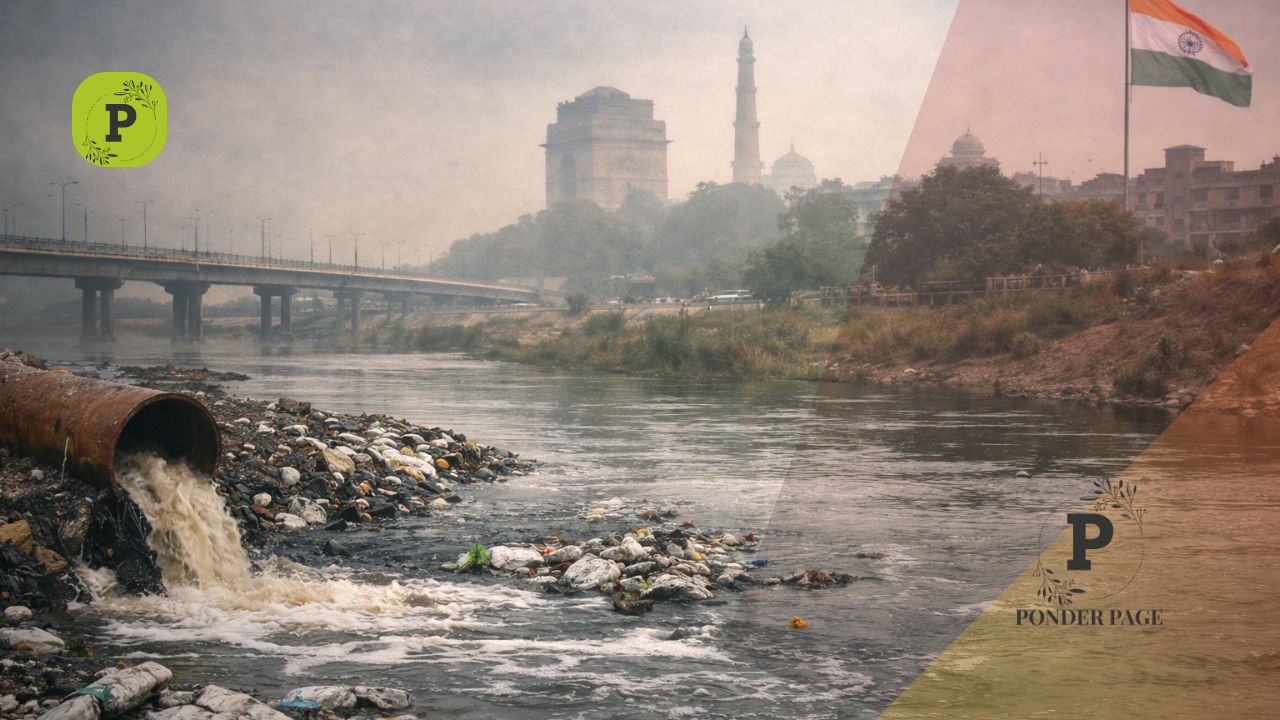
What Happened to the Promise of a Clean Delhi? Every election season brings with it a familiar ritual. Grand promises are made, glossy manifestos are released, and citizens are shown a hopeful picture of the future. Delhi has witnessed this cycle repeatedly. Among the many commitments made by political parties, environmental issues have always occupied a central place, especially pollution and the condition of the Yamuna river.
The Bharatiya Janata Party (BJP), in its manifesto, made bold and unambiguous claims. The words were not vague. They were specific, confident, and aspirational. But today, as months pass by, a troubling question arises: Do those promises still matter once power is secured? What Happened to the Promise of a Clean Delhi?
(You can now subscribe to our Ponder Page WhatsApp channel)

Table of Contents
What the BJP Manifesto Clearly Promised
Let us revisit what was stated, not interpreted, but clearly written in the manifesto.
The BJP committed itself to:
- Creating a pollution-free Delhi
- Cleaning up the Yamuna river
- Ensuring that Delhi becomes one of the cleanest and greenest cities
These were not side notes or footnotes buried in policy jargon. These were headline promises meant to inspire trust and win votes. For a city gasping for clean air and watching its river turn into a drain, such assurances carried weight.
People believed. People voted.

Ten Months Later: The New Excuse of “Not Enough Time”
Fast forward to the present. When citizens raise questions, the response has subtly changed. Now the argument being offered is that ten months are not enough to achieve anything substantial.
This raises an uncomfortable contradiction.
If ten months are too little to even begin visible action, then why were such sweeping promises made in the first place? Environmental recovery is not an overnight process, everyone understands that. But governance is about direction, intent, and accountability. Even within months, policies can be framed, timelines can be declared, and transparent action plans can be shared.
Instead, what citizens are being told now sounds more like an apology than a plan.
Does the Leadership Remember the Promise?
This brings us to a more pointed question: Does Rekha Gupta, or the current leadership, even remember what was promised?
Manifestos are not meant to be election-only documents. They are moral contracts between the government and the public. When leaders forget, or choose to ignore, what they stood for, it signals a deeper problem.
The concern is not just about pollution or the Yamuna. It is about whether words spoken before elections carry any value after the oath is taken.
Power Changes Priorities
Once in power, priorities often shift. The urgency to address everyday issues faced by ordinary people seems to fade. Pollution, which affects millions daily, becomes a long-term “vision” instead of an immediate crisis. The Yamuna continues to suffer, while files move slowly from one desk to another.
Those in power become “busy.” They attend meetings, events, and high-level discussions. They become “big people,” surrounded by protocol and insulation. Meanwhile, the average citizen continues to breathe toxic air and watch promises dissolve into press statements.
The Familiar Pattern: Silence Today, Subsidies Tomorrow
History has shown a recurring pattern. When governments are questioned mid-term, answers are evasive. But as the next election approaches, the narrative changes again.
Suddenly:
- Subsidies are announced
- Temporary relief measures are rolled out
- New slogans are coined
- Old promises are repackaged as future guarantees
Instead of accountability for past commitments, voters are offered short-term benefits to shift focus. This cycle weakens democracy because it replaces long-term governance with short-term appeasement.
Pollution and Yamuna Are Not Political Props
Delhi’s pollution crisis and the degradation of the Yamuna are not abstract policy challenges. They affect health, livelihoods, and dignity. Children grow up with respiratory issues. Elderly citizens struggle every winter. The river, once sacred and life-giving, has been reduced to a symbol of neglect.
Using these issues as election tools and then sidelining them once power is achieved is not just poor governance, it is a betrayal of public trust.
Accountability Is Not Opposition, It Is Democracy
Asking questions does not make citizens anti-government. It makes them responsible participants in a democracy. When people ask what happened to the promise of a clean and green Delhi, they are not demanding miracles. They are demanding honesty, effort, and visible intent.
If progress has been slow, say so transparently. If challenges exist, share them openly. But dismissing concerns by hiding behind timelines that were never mentioned before elections is unacceptable.


What Happened to the Promise of a Clean Delhi? Promises Should Not Expire After Elections
Manifestos should not have an expiry date that ends on election day. The promise of a pollution-free Delhi and a clean Yamuna was not a casual statement—it was a commitment made to millions.
Power does not grant immunity from accountability. In fact, it increases responsibility.
The real test of governance is not how convincingly promises are made, but how sincerely they are pursued. Delhi is still waiting, not for excuses, not for subsidies, but for action that matches the words once spoken so confidently.
And the next time promises are made, citizens will remember this silence.
What are your thoughts on this article? Let us know in the comments below. If you enjoyed this article, be sure to subscribe for more engaging content in the future! Stay updated on the latest developments and discussions by clicking the subscribe button above. Thank you for your support!
📢 Dive into the latest discussions on social & trending topics! 🌍💬 Subscribe to Ponder Page for thought-provoking articles and interviews that dissect current issues. Don’t miss out on insightful content—hit that like & subscribe button now!

Leave a Reply