
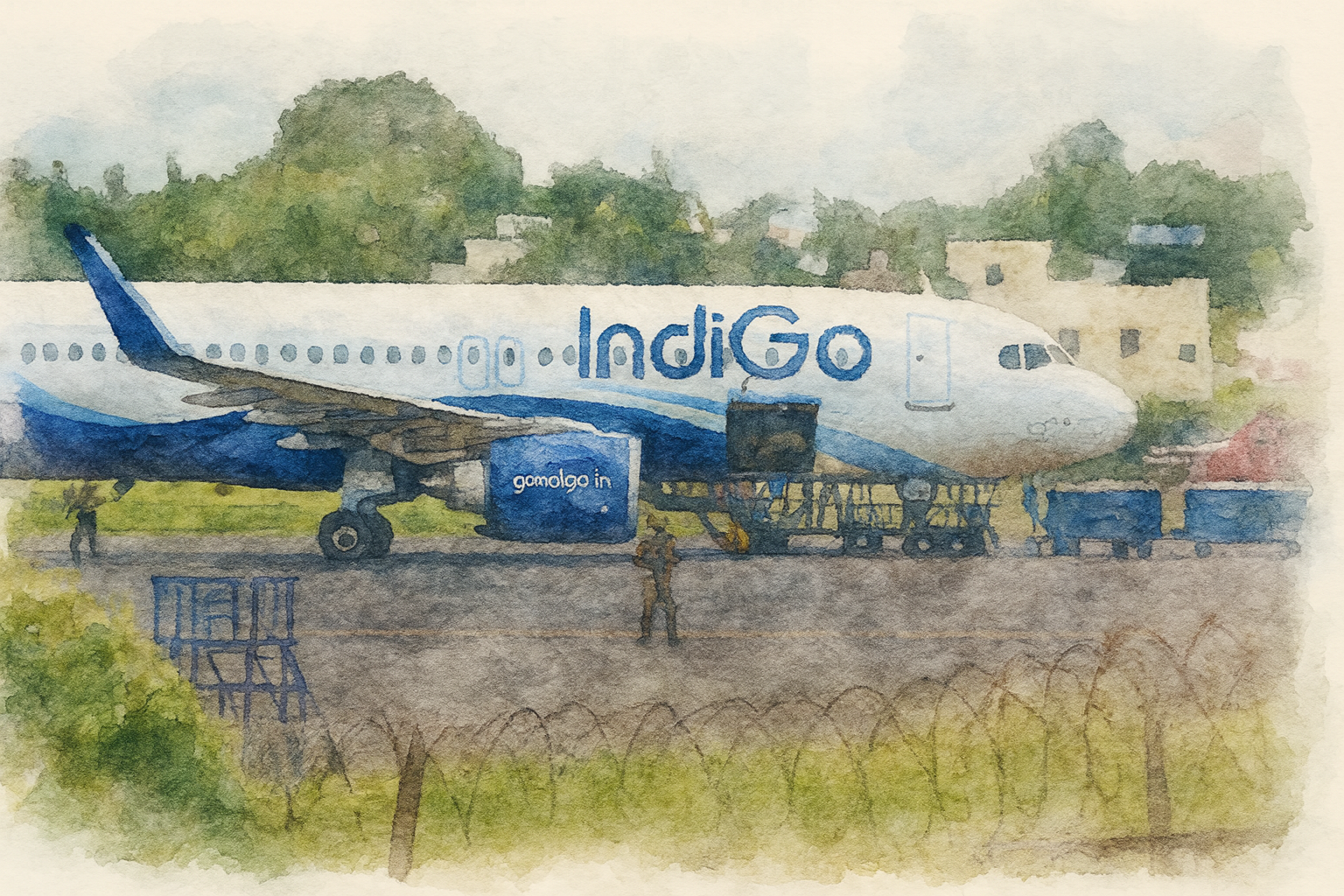
IndiGo and its Operational Collapse: In early December 2025, IndiGo triggered one of the biggest disruptions in India’s aviation history, with more than a thousand of its flights cancelled in just a few days. The collapse stemmed from the implementation of new crew duty- and rest-time regulations imposed by the Directorate General of Civil Aviation (DGCA).
These regulations, known as the Flight Duty Time Limitations (FDTL), raised mandatory weekly rest periods for pilots from 36 to 48 hours, cut down allowable night-time landings per pilot, and capped total flight duty hours. Though the rule changes had been notified well in advance (the final phase became effective November 1, 2025), IndiGo appears not to have sufficiently expanded its pilot workforce or adjusted its roster planning accordingly.
When the new norms kicked in, the strain showed, IndiGo’s domestic network collapsed almost immediately, leaving massive disruption in its wake.
(You can now subscribe to our Ponder Page WhatsApp channel)

Table of Contents
Early Signs Ignored: Expansion Without Reinforcement
What distinguishes IndiGo’s failure from other airlines is not just the rule change, but the contrast in how different carriers responded to it. While several airlines, faced with the same regulatory shift, increased their pilot hiring and revised schedules, IndiGo did not sufficiently ramp up resources.
Meanwhile, IndiGo continued expanding its flight network and adding routes, even as deadline for the new rules approached. This mismatch, aggressive capacity growth with minimal increase in crew strength, created a fragile system that was vulnerable to collapse.
Pilot associations criticized this approach, calling it a “lean manpower strategy” and arguing that despite ample notice, the airline had failed to build adequate buffer capacity.
The Chaos Unfolds: Cancelled Flights, Stranded Passengers, Escalating Panic
When the cancellations began, the scale was staggering. Over 1,000 flights cancelled across multiple airports in just a few days. Airports were overwhelmed by frustrated passengers, queues, confusion, luggage piling up, angry crowds, scenes of disruption rarely seen before.
On-time performance for IndiGo plunged. According to one report, OTP (on-time performance) slipped from its usual levels to as low as 8.5% at the peak of the disruption.
Passengers described distressing scenarios, reaching airports with no clear update, waiting for hours, missed flights, failed connecting journeys, and little or no support for rebooking or accommodations.
At the same time, fares on the few remaining available flights skyrocketed due to demand-supply imbalance. The sudden spike in airfare further aggravated the plight of stranded travellers.

Regulatory U-Turn: When the Crisis Forced a Policy Rollback
The disruption was so severe that the DGCA had to intervene. In an extraordinary move, it relaxed some of the FDTL provisions, allowing airlines to count paid leave as part of the weekly rest requirement, and granting IndiGo a temporary exemption from night-duty restrictions until February 10, 2026.
The decision to partially withdraw the strict rest norms, initially introduced to enhance safety and prevent pilot fatigue, underscores how deeply the IndiGo crisis threatened to destabilize the entire domestic air travel network in India.
Authorities indicated that the regulatory reprieve was purely temporary and aimed at restoring operational stability.
The government also stepped in to cap airfares and issued directives for the airline to complete refunds for affected travellers promptly.
The Larger Question: Was It Planning Failure, Corporate Risk, or Something More?
According to insiders and pilot bodies, the root cause was not unforeseen external factors, it was a decision by IndiGo to grow aggressively without building adequate crew strength. Despite having nearly 60% of the domestic market, the airline maintained an unusually lean pilot buffer.
Even though the FDTL norms had been announced well over a year ago, and the final phase, which reduced allowable flying hours and enforced stricter rest, was scheduled from November 1, 2025, IndiGo apparently chose to gamble: expand now, worry about compliance later.
Some in the aviation community have argued that the disruption may not have been purely accidental. They suggest that the chaos may have been used as leverage to push regulators to relax industry-wide rules.
While this remains speculative, what’s clear is that the impact was enormous, not just for the airline’s reputation, but for millions of passengers who relied on IndiGo’s massive footprint across the country.


IndiGo and its Operational Collapse: Why This Matters
This collapse exposed a structural vulnerability in India’s civil aviation sector: excessive reliance on a single airline. When the market leader falters, the ripple effects are massive.
It also highlights a disturbing possibility: safety-driven regulations (like rest requirements) may be downplayed or mismanaged when airlines prioritize expansion and short-term gains over long-term stability.
Finally, the incident raises important questions about regulatory oversight: How can authorities ensure that airlines are not just compliant on paper, but operationally equipped to handle capacity while meeting safety norms?
What are your thoughts on this article? Let us know in the comments below. If you enjoyed this article, be sure to subscribe for more engaging content in the future! Stay updated on the latest developments and discussions by clicking the subscribe button above. Thank you for your support!
📢 Dive into the latest discussions on social & trending topics! 🌍💬 Subscribe to Ponder Page for thought-provoking articles and interviews that dissect current issues. Don’t miss out on insightful content—hit that like & subscribe button now!


Leave a Reply